WEBi 51: Sustaining HIV Impact in MENA: Community Coalitions, Regional Coordination, and Leadership
Keywords
Summary
169 words
Critical Evaluation
Value of the Information & Strength of the Argument
The webinar provides valuable insights into the HIV epidemic in the MENA region, with concrete epidemiological data and expert perspectives. The argumentation is solid, grounded in WHO data and practical experiences from the field. The panelists effectively argue for a multi-pronged approach: strengthening national strategic plans, fostering political commitment, enhancing community systems, and promoting regional collaboration. The discussion is coherent and addresses both challenges and opportunities, making a compelling case for sustained investment and coordinated action.
Scientific Rigor, Source Quality, Title Accuracy
The scientific rigor is high, with data from WHO and references to The Global Fund’s mechanisms. The sources are credible and directly relevant to the topic. The title accurately reflects the content, focusing on sustaining HIV impact through community coalitions and regional coordination. The webinar is well-structured, with clear presentations and a moderated panel discussion. No comments were provided, so no analysis of public trends is included.
158 words
Title / Content Match
The title accurately reflects the webinar's focus on sustaining HIV impact through community coalitions, regional coordination, and leadership.
Quality & Reliability
8/10
The webinar features high-level experts from WHO, The Global Fund, and community coalitions, providing authoritative and current data on HIV epidemiology in the MENA region. The content is well-structured and evidence-based, though it is primarily an expert discussion rather than a peer-reviewed study.
Key Moments
Markers derived by PSI from the transcript: the creator did not define chapters.
- Introduction and welcome by moderator Dr. Deema Al-Bakri
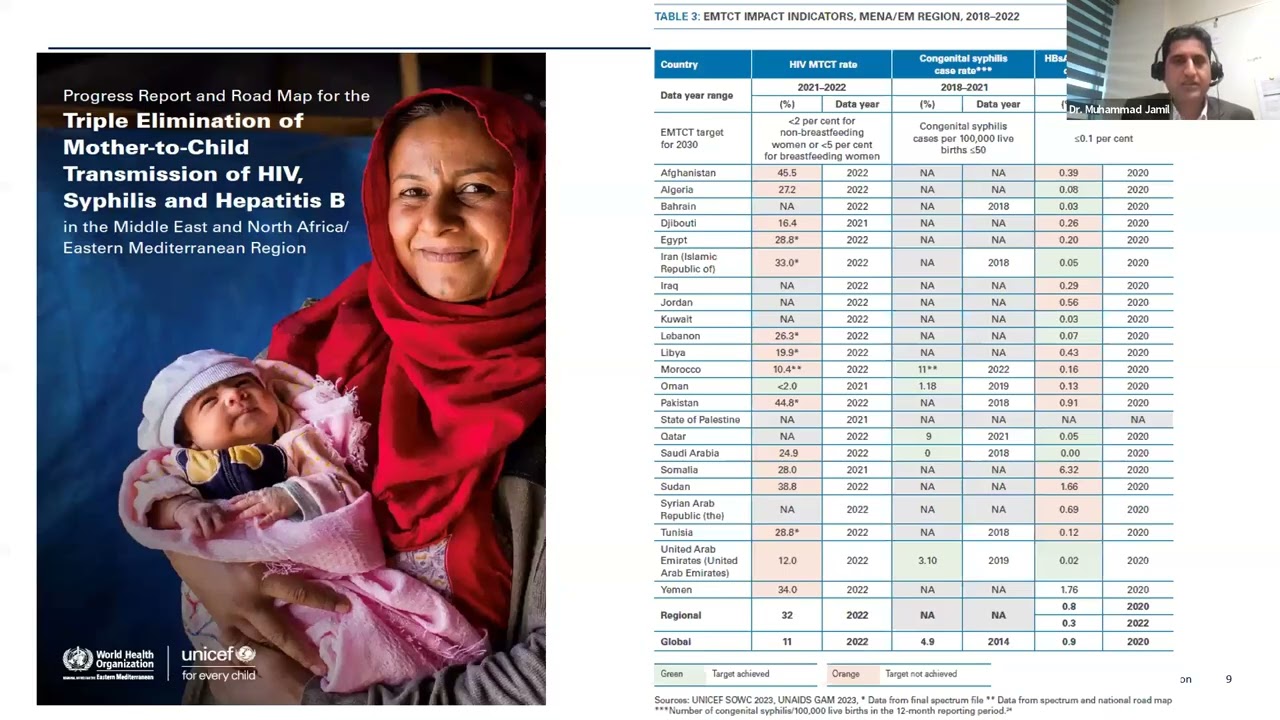
- Dr. Muhammad Shahid Jamil presents regional HIV epidemiology and gaps
- Panel discussion begins with Dr. Mohammed El Khammas on community coalitions
- Dr. Mohamed Chakroun discusses strengthening regional coordination and CCMs
- Dr. Martin van den Boom outlines urgent priorities for sustaining HIV response
- Q&A session and closing remarks
Cited Sources
- WHO Eastern Mediterranean Region — Referenced by Dr. Jamil as the source of regional epidemiological data.
- The Global Fund — Mentioned by Dr. Chakroun in the context of funding and coordination.
Concurring Sources
- UNAIDS Global AIDS Update 2024 — Provides global HIV statistics that align with the webinar's data on regional trends.
Contribution & Novelties
The webinar provides a comprehensive update on HIV in the MENA region, highlighting the urgent need for sustained action. It uniquely brings together perspectives from WHO, The Global Fund, and community coalitions, offering a multi-stakeholder view. The emphasis on community-led approaches and regional coordination as key to sustainability is a valuable contribution.
Pour aller plus loin :
- UNAIDS — Global HIV data and strategies.
- WHO HIV/AIDS fact sheet — Overview of HIV globally.
- The Global Fund’s MENA regional programs — Information on regional grants.
84 words
Radar Profile
The radar profile shows high scores in information quantity, quality, and technical level, indicating a dense and reliable content. The fiabilite_globale is also high, reflecting the credibility of the speakers and data. The overall shape suggests a well-rounded and authoritative webinar.