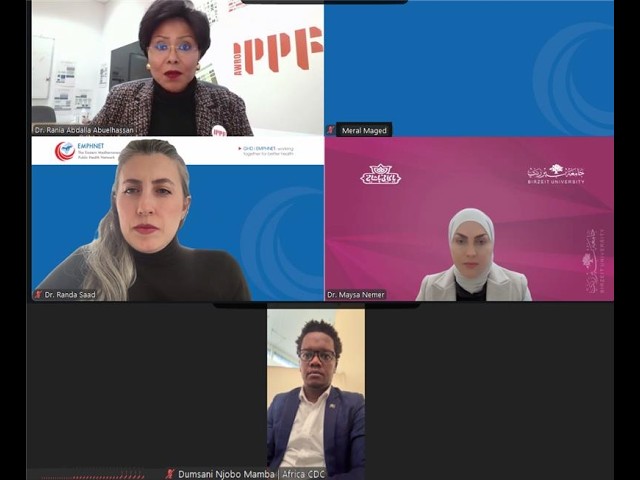
WEBi 52: Women’s Mental Health Addressing Challenges, Integrating Services, and Fostering Resilience
Keywords
Summary
142 words
Critical Evaluation
Value of the Information & Strength of the Argument
The webinar provides valuable insights into the integration of mental health services into reproductive health care, particularly in fragile settings. The speakers draw on their extensive field experience and implementation research, offering practical strategies such as task sharing, stepped care, and strengthening referral systems. The argumentation is coherent and grounded in real-world examples, though it lacks rigorous scientific evidence and detailed citations. The emphasis on system-level change and the need for gender-responsive governance is compelling and adds to the value of the discussion.
Scientific Rigor, Source Quality, Title Accuracy
The speakers are credible experts with relevant qualifications and experience. However, the webinar lacks explicit citations of scientific literature, and the sources cited are primarily programmatic and experiential. The title accurately reflects the content, which covers challenges, integration, and resilience. The presentation is well-structured and addresses the key themes, though the lack of detailed references reduces the overall scientific rigor.
158 words
Title / Content Match
The title accurately reflects the content, which addresses challenges, integration, and resilience in women's mental health.
Quality & Reliability
7/10
The webinar features expert speakers with relevant credentials and practical experience, but lacks detailed citations and rigorous scientific evidence. The content is largely based on anecdotal and programmatic experience rather than systematic research.
Key Moments
Markers derived by PSI from the transcript: the creator did not define chapters.
- Introduction by moderator Randa Sahed, welcoming participants and introducing the topic.
- Dr. Ramesa Nimir begins her presentation on integrating mental health into reproductive health care in Palestine.
- Discussion of the integration gap and the disconnect between reproductive and mental health services.
- Presentation of four key pillars for integration: systematic screening, task sharing, referral pathways, and governance.
- Examples from implementation research in adolescent SRH and maternal health projects.
- Priority actions for integrating mental health into national strategies and health information systems.
- Dr. Arana Abul Hassan begins her presentation on lessons learned from humanitarian settings in the Arab world.
- Discussion of the unique vulnerabilities of adolescent girls and the need for prevention-focused approaches.
- Emphasis on community-based psychosocial support and reducing stigma.
- Overcoming barriers to care, including the importance of psychoeducation and addressing cultural context.
Cited Sources
- No specific sources cited — The speakers did not cite specific sources during the webinar.
Concurring Sources
- WHO Mental Health and Substance Use — Provides global guidance on mental health integration.
Contribution & Novelties
The webinar provides a practical framework for integrating mental health into reproductive health services, drawing on implementation experience from Palestine and other humanitarian settings. It emphasizes the need for system-level change and gender-responsive governance. The discussion of the integration gap and the importance of task sharing and referral pathways offers actionable insights for health systems strengthening.
Pour aller plus loin :
- WHO Mental Health and Substance Use — Relevant for global mental health guidelines.
- Task sharing in mental health — WHO guidance on task sharing.
- Gender and mental health — WHO fact sheet on gender and mental health.
98 words
Radar Profile
The radar profile shows moderate to high scores across all dimensions, indicating a balanced and informative webinar. The highest scores are in information quantity and quality, reflecting the depth of discussion, while the technical level is slightly lower, suggesting accessibility to a broader audience.
💬 No comments were provided for analysis.