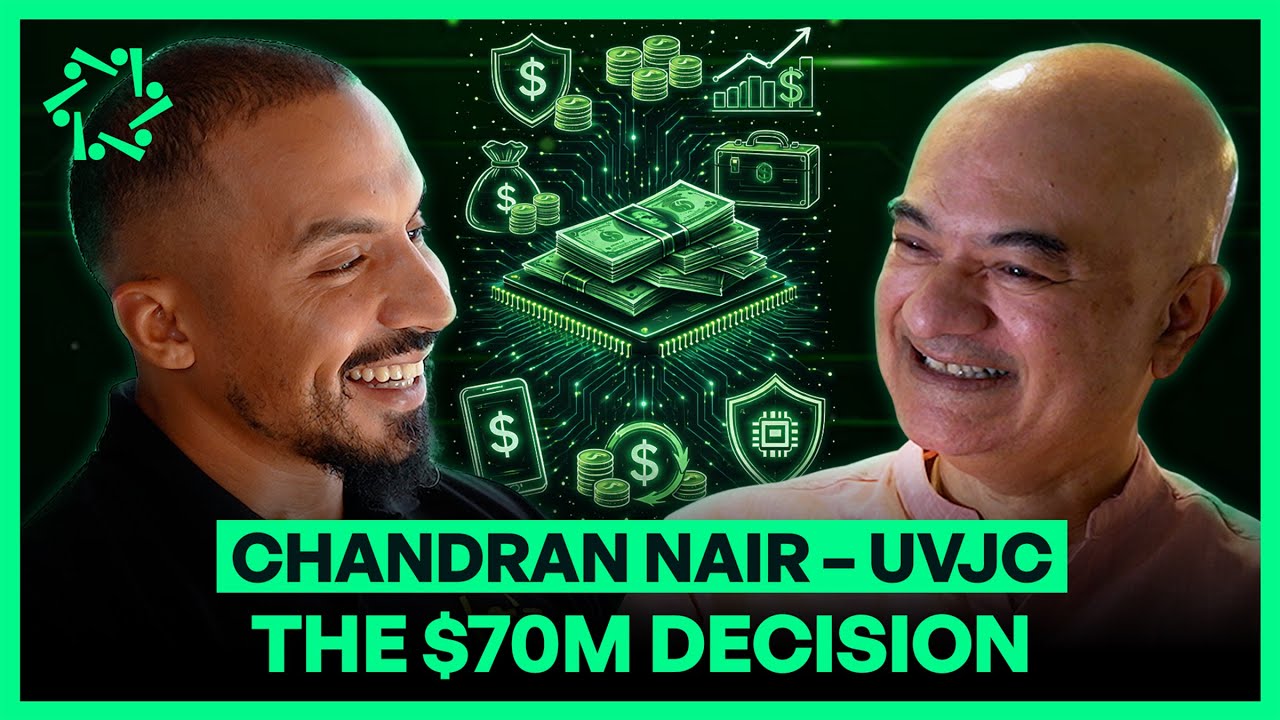
The Man Building the Hardware That Will Power the Next 10 Years of AI
Keywords
Summary
145 words
Critical Evaluation
Value of the Information & Strength of the Argument
The value of the information lies in the practical, experience-based insights from a senior executive. Nair provides concrete examples, such as the negotiation tactic that resulted in a $70 million deal, and discusses strategic considerations for advanced packaging and chiplet integration. The argumentation is coherent and grounded in real-world experience, though it lacks empirical data or references to support some claims. The discussion on customer-led innovation and the importance of understanding customer needs is well-articulated and provides actionable advice for entrepreneurs and industry professionals.
Scientific Rigor, Source Quality, Title Accuracy
The scientific rigor is moderate; the content is based on personal experience and industry knowledge rather than peer-reviewed research. No external sources are cited, and the claims are not independently verifiable. The title is somewhat misleading as it focuses on AI hardware, but the conversation is broader, covering leadership and business strategy. The adéquation between title and content is acceptable but not perfect, as the title overemphasizes AI hardware while the podcast covers a wider range of topics.
177 words
Title / Content Match
The title is somewhat sensationalist but broadly accurate: the guest is indeed building hardware (advanced packaging equipment) that could impact AI hardware. However, the title overpromises a focus on AI hardware, while the conversation is more about leadership and business strategy in semiconductors.
Quality & Reliability
7/10
The content is an expert interview with a seasoned semiconductor executive. The information is based on personal experience and industry insight, but lacks verifiable data or citations. The claims about specific deals and technologies are plausible but not independently verified.
Key Moments
Markers derived by PSI from the transcript: the creator did not define chapters.
- Introduction of guest Chandran Nair, CEO of UVJC, and his background.
- Discussion on the importance of listening to customers and reformulating problem statements.
- Story about walking away from a customer and winning a $70 million deal.
- Insights on leadership principles, including starting with respect and fostering shared fate.
- Discussion on advanced packaging, chiplets, and the need for standardized communication.
- Exploration of silicon photonics and the role of UVJC in printing waveguides.
- Advice for entrepreneurs: be willing to fail, pivot quickly, and focus on customer needs.
- Reflections on the future of semiconductor manufacturing and the cohabitation of humans and AI.
Contribution & Novelties
The podcast provides a unique perspective from a senior executive on the intersection of semiconductor equipment, advanced packaging, and leadership. It offers practical insights into customer negotiation and the importance of understanding customer needs. The discussion on chiplet communication and silicon photonics highlights emerging trends in the industry.
Pour aller plus loin :
- Advanced packaging — Overview of packaging technologies.
- Chiplet — Concept of modular chips.
- Silicon photonics — Use of light for data transmission in chips.
77 words
Radar Profile
The radar profile shows balanced scores across all dimensions, with slightly higher scores in information quantity and quality, reflecting the expert's experience. The technical level is moderate, suitable for a general audience interested in semiconductors. The overall reliability is moderate, as the content is based on personal experience rather than verified data.