MGV 3704 - Genética Quantitativa - Aula 5
Keywords
Summary
188 words
Critical Evaluation
Value of the Information & Strength of the Argument
The lecture provides a solid foundation in the statistical concepts underlying quantitative genetics. The instructor carefully explains the rationale behind each model and method, using clear examples and analogies. The argumentation is logical and builds progressively from basic algebra to regression analysis, making it accessible to students with a background in statistics. The emphasis on understanding the meaning of parameters (e.g., the slope as a measure of change) and the distinction between mathematical and statistical problems is valuable. The instructor also highlights the practical importance of statistical literacy for geneticists, which adds to the lecture’s value.
Scientific Rigor, Source Quality, Title Accuracy
The lecture is scientifically rigorous in its presentation of established statistical and genetic concepts. The instructor demonstrates a deep understanding of the material and provides clear derivations. However, no external sources are cited, which limits the ability to verify specific claims or explore further. The title accurately reflects the content, as the lecture indeed covers components of genotypic variance and related models. The lack of citations is a minor weakness, but the overall scientific quality is high.
188 words
Title / Content Match
The title accurately reflects the content: a lecture on quantitative genetics, specifically covering components of genotypic variance and models.
Quality & Reliability
8/10
The lecture is a formal academic tutorial on quantitative genetics, presented by an expert (likely a professor) with clear definitions and derivations. The content is consistent with established statistical and genetic theory. However, no external sources are cited, and the video is not peer-reviewed.
Key Moments
Markers derived by PSI from the transcript: the creator did not define chapters.
- Introduction to the lecture and key terms in quantitative genetics.
- Explanation of the dose model and gametic model for genotypic variation.
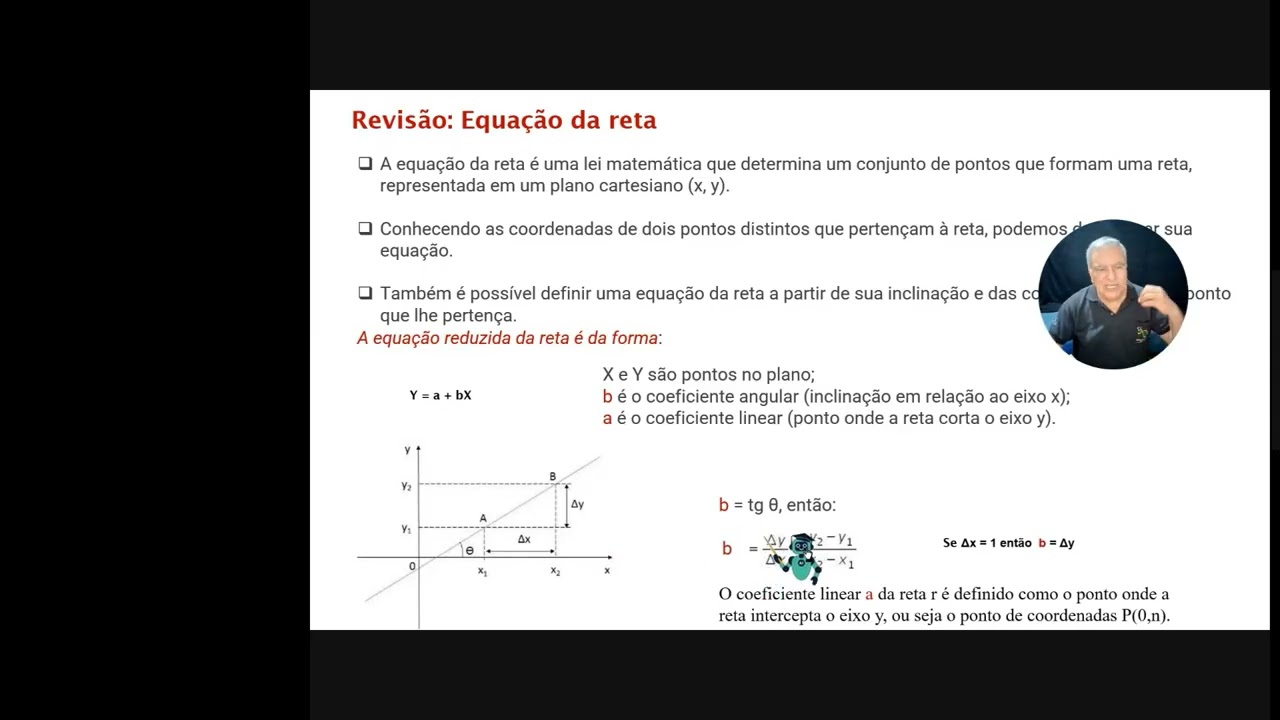
- Review of linear regression: equation of a line, slope, and intercept.
- Transition to multiple data points and the need for a consensus line.
- Introduction to least squares and maximum likelihood methods.
- Derivation of the regression coefficient as covariance divided by variance.
- Discussion on the decomposition of total variation into regression and error components.
- Emphasis on statistical literacy as a language for geneticists.
- Further elaboration on the importance of understanding derivations and the role of the biometrist.
Contribution & Novelties
The lecture provides a clear pedagogical approach to teaching quantitative genetics, linking statistical concepts to genetic applications. It emphasizes the importance of understanding the underlying mathematics and statistics, which is often underappreciated. The instructor’s analogy of statistics as a language is insightful. The lecture does not present new research but offers a comprehensive tutorial that could be valuable for students.
Pour aller plus loin :
- Quantitative genetics — Overview of the field.
- Linear regression — Statistical method discussed.
- Least squares — Estimation method.
- Maximum likelihood estimation — Alternative estimation method.
90 words
Radar Profile
The radar profile shows high scores across all dimensions, indicating a well-balanced and comprehensive lecture. The strong emphasis on technical level and information quality suggests that the content is both detailed and accurate, suitable for an advanced audience.