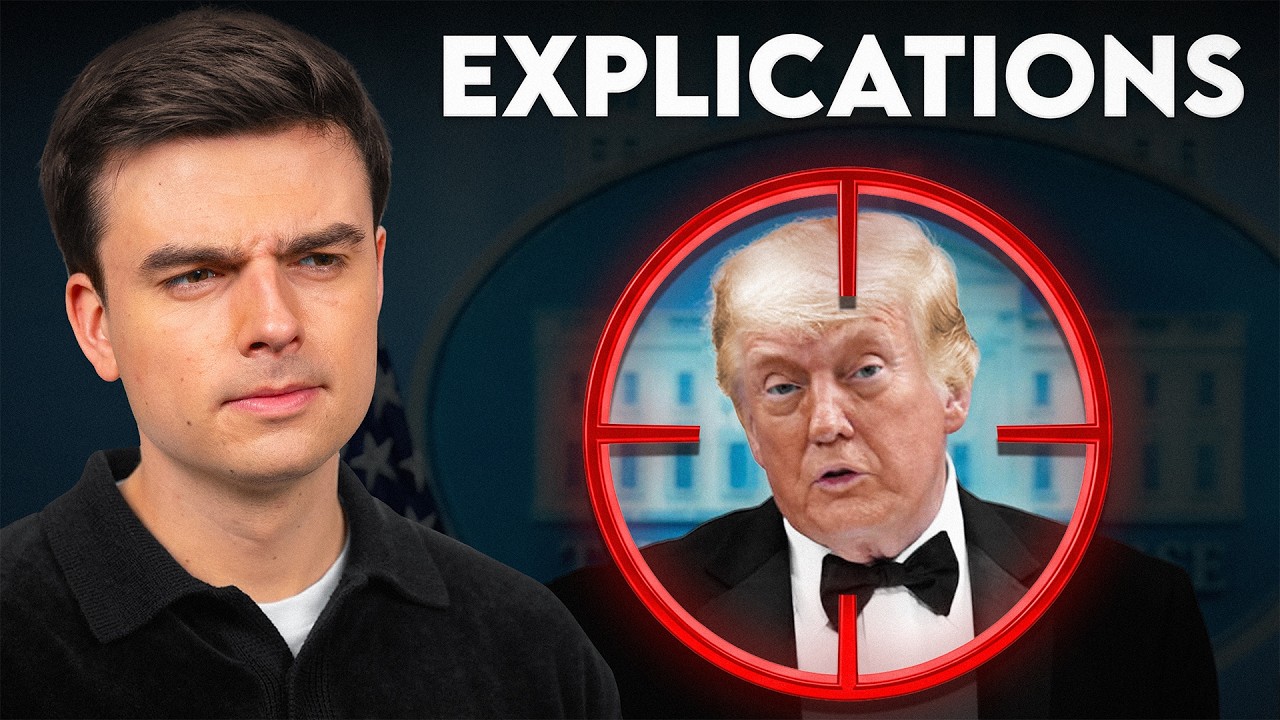
Ce que j’ai vu au dîner où des tirs visaient Trump
Keywords
Summary
162 words
Critical Evaluation
The video provides a timely and detailed first-hand account of a major breaking news event, which is its primary strength. Hugo clearly distinguishes between what he personally observed (the sound of shots, the evacuation, the confinement) and what he learned from other sources (suspect’s identity, writings, security details). This transparency enhances credibility. The inclusion of multiple reputable sources (Le Monde, BBC, NYT, AP) in the description and the video itself demonstrates an effort to ground the report in verified information. The host also takes time to address conspiracy theories, offering reasoned counterpoints based on context (e.g., the tradition of the dinner roast, the presence of journalists filming). This shows an awareness of the audience’s potential skepticism and a commitment to factual reporting. However, the analysis is necessarily limited by the early stage of the investigation. Some details, such as the suspect’s writings, are attributed to anonymous police leaks, which introduces uncertainty. The video could have benefited from more explicit sourcing for some claims (e.g., the exact number of shots, the timeline of the brother’s call). The discussion of security lapses is insightful but remains at a descriptive level; deeper analysis of systemic issues would have added value. The video’s structure is clear, with a logical flow from the main event to other news, but the latter segments are very brief and lack depth. The host’s personal perspective adds authenticity but also introduces a subjective element; while he maintains a professional tone, his presence at the event could be seen as a potential bias, though he acknowledges this. Overall, the video is a solid piece of journalism for a general audience, providing a reliable overview of a developing story with appropriate caution. The main weaknesses are the reliance on some unverified details and the superficial treatment of secondary topics.
298 words
Title / Content Match
The title accurately reflects the content: the host recounts his experience at the dinner where shots were fired at Trump, and provides context and analysis.
Quality & Reliability
The video provides a first-hand account of a breaking news event, with references to multiple credible news sources (Le Monde, BBC, NYT, AP). The journalist clearly distinguishes between observed facts and speculation, and addresses conspiracy theories with reasoned arguments. However, the analysis is limited by the early stage of the investigation, and some details (e.g., suspect's writings) come from anonymous police leaks, which reduces certainty.
Key Moments
- Introduction: Hugo announces he was at the dinner where shots were fired at Trump.
- Description of the White House Correspondents' Dinner and Trump's attendance.
- Hugo recounts hearing gunshots and the evacuation.
- Details about the suspect: identity, weapons, and background.
- Discussion of the suspect's writings and possible motives.
- Analysis of security lapses: hotel allowed non-attendees to book rooms.
- Addressing conspiracy theories about the event being staged.
- Transition to other news: attacks in Mali.
- Palestinian municipal elections results.
- Global military spending increase.
Cited Sources
- Le Monde: Ce que l'on sait des tirs survenus au dîner des correspondants de la Maison Blanche ✓ verified — Used for general facts about the shooting.
- BBC News: What we know about the shooting at the White House correspondents' dinner ✓ verified — Used for suspect details and timeline.
- New York Times: Suspect's Writings Before White House Dinner Shooting ✓ verified — Used for suspect's writings and motives.
- AP News: What to know about the shooting at the White House correspondents' dinner ✓ verified — Used for suspect's brother contacting police.
- Le Monde: Au Mali, la junte plus fragilisée que jamais ✓ verified — Used for Mali attacks segment.
- France Info: Ce que l'on sait des combats au Mali ✓ verified — Used for Mali attacks segment.
Concurring Sources
- Le Monde: Ce que l'on sait des tirs survenus au dîner des correspondants de la Maison Blanche — Provides similar factual account of the event.
- BBC News: What we know about the shooting at the White House correspondents' dinner — Corroborates details about the suspect and timeline.
- AP News: What to know about the shooting at the White House correspondents' dinner — Supports information on suspect's brother and police response.
Dissenting Sources
- New York Times: Suspect's Writings Before White House Dinner Shooting — The NYT reports that the suspect sent messages before the attack, while AP reports the brother contacted police after the shooting. The video notes this discrepancy.
Contribution & Novelties
The video offers a unique first-hand perspective from inside the venue during a high-profile assassination attempt, providing immediate context and personal observations that complement official reports. It also proactively addresses conspiracy theories with reasoned arguments, which adds value for viewers seeking clarity.
Pour aller plus loin :
- Political violence in the United States — Overview of historical and recent trends.
- Secret Service — Understanding the agency’s role and security protocols.
- White House Correspondents’ Dinner — History and significance of the event.
81 words
Radar Profile
The radar shows high quantity of information (8) due to the host's first-hand account and multiple news items, but moderate quality (7) and low technical level (3) as the analysis is not deeply technical. Reliability (7) is solid but tempered by reliance on anonymous leaks and early investigation.
💬 Mixed: Some viewers appreciate the first-hand account, while others criticize the host for perceived self-promotion or question his credibility. A few comments express skepticism about the event being staged.