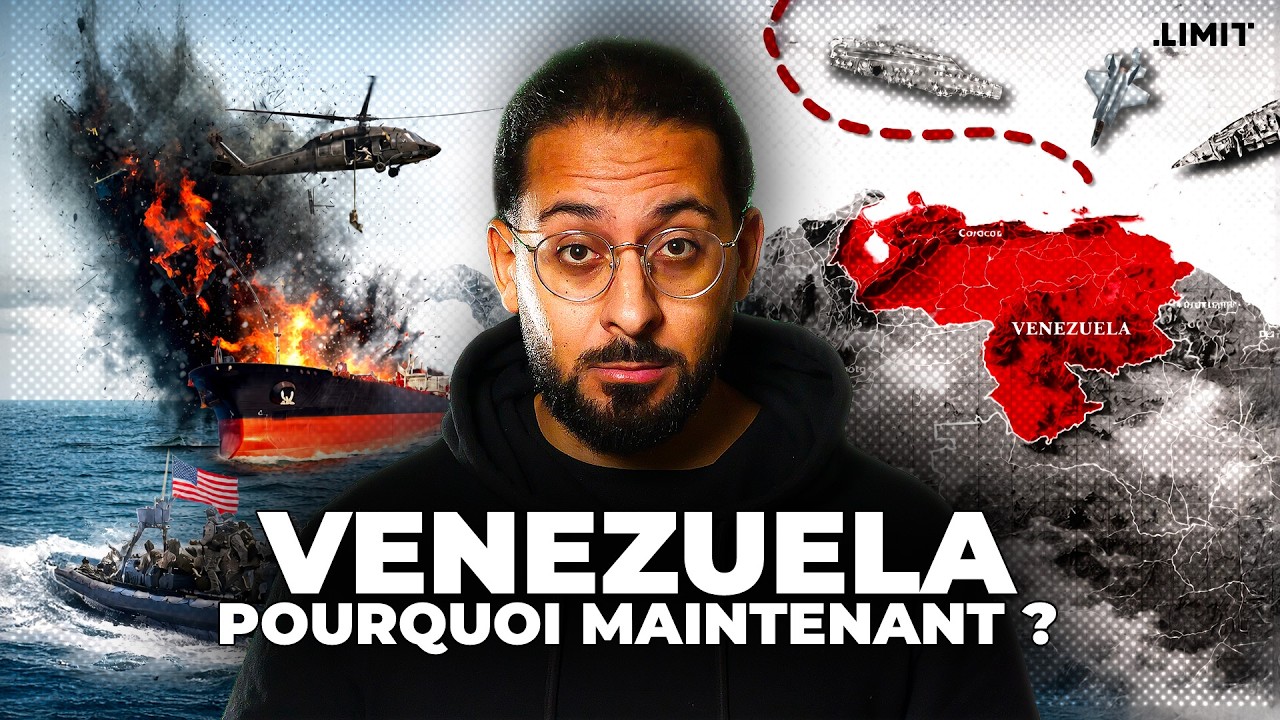
CETTE RESSOURCE REND FOU LE MONDE !
Keywords
Summary
147 words
Critical Evaluation
The video offers a compelling and well-structured narrative that connects historical events to current geopolitical tensions. It successfully avoids simplistic caricatures of ‘Trump the madman’ or ‘Maduro the dictator’ by focusing on structural factors like oil dependence and economic vulnerabilities. The use of the ‘Dutch disease’ concept is appropriate and well-explained, providing a solid framework for understanding Venezuela’s economic fragility. The historical timeline from the Caracazo to Chávez and Maduro is accurate and helps contextualize the current crisis. However, the video is not without biases. It tends to downplay the authoritarian aspects of the Maduro regime, focusing more on external factors like sanctions and US intervention. The claim that the US is acting primarily for oil is plausible but not fully substantiated; other factors such as regional influence and domestic politics are not deeply explored. The video also makes a somewhat controversial comparison between the US and Venezuela as both being ‘productivist’ societies, which may oversimplify the ideological differences. The sources are not directly cited within the video, but a link to a document is provided in the description, which is a positive step. The production quality is high, with clear visuals and engaging narration. The title is somewhat sensationalist but the content is substantive. Overall, the video provides a valuable perspective on a complex issue, though viewers should be aware of its analytical slant.
225 words
Title / Content Match
The title is catchy and somewhat clickbait, but the content does focus on oil as a resource that drives global conflict, so it is broadly aligned.
Quality & Reliability
7/10
The video provides a well-structured historical and economic analysis of Venezuela's oil dependence and geopolitical tensions, citing sources in a linked document. However, it is an opinion-driven narrative with potential bias, and some claims lack direct citations within the video itself.
Key Moments
Markers derived by PSI from the transcript: the creator did not define chapters.
- Introduction: Why now? Escalation over oil tankers.
- Narcos rhetoric and the Dutch disease concept.
- The Caracazo riots of 1989.
- Chávez's rise and the Bolivarian revolution.
- Maduro's succession and economic crisis.
- María Corina Machado and opposition.
- The buyer: China and global oil market.
- Oil and refining: Venezuela's infrastructure.
- US sanctions and their impact.
- What the US wants: Monroe Doctrine and control.
Cited Sources
- Sources document (Google Docs) — The video's description links to a document containing sources and references for the claims made.
- LIMIT Media website — Official website of the channel, providing additional context and content.
- LIMIT Media on Bluesky — Social media presence of the channel, possibly sharing related content.
Concurring Sources
- Wikipedia: Dutch disease — Supports the economic concept discussed.
- Wikipedia: Monroe Doctrine — Supports the historical context of US policy.
Dissenting Sources
- Human Rights Watch on Venezuela — Provides a contrasting view on the human rights situation under Maduro, which the video downplays.
Contribution & Novelties
The video provides a clear and accessible synthesis of Venezuela’s oil-driven geopolitical situation, connecting historical events to current tensions. It offers a nuanced perspective that goes beyond simple narratives.
Pour aller plus loin :
- Dutch disease — Economic concept central to the video’s analysis.
- Monroe Doctrine — Historical policy invoked in the video to explain US actions.
- Venezuelan crisis — Overview of the ongoing humanitarian and political crisis.
68 words
Radar Profile
The radar profile shows high scores in quantity of information and global reliability, with moderate technical depth. This indicates a well-researched but accessible analysis, suitable for a general audience interested in geopolitics.
💬 Très positif. Sur les 30 commentaires analysés, la majorité exprime une forte approbation, saluant la qualité de l'analyse et la clarté des explications, avec quelques critiques constructives sur des omissions.