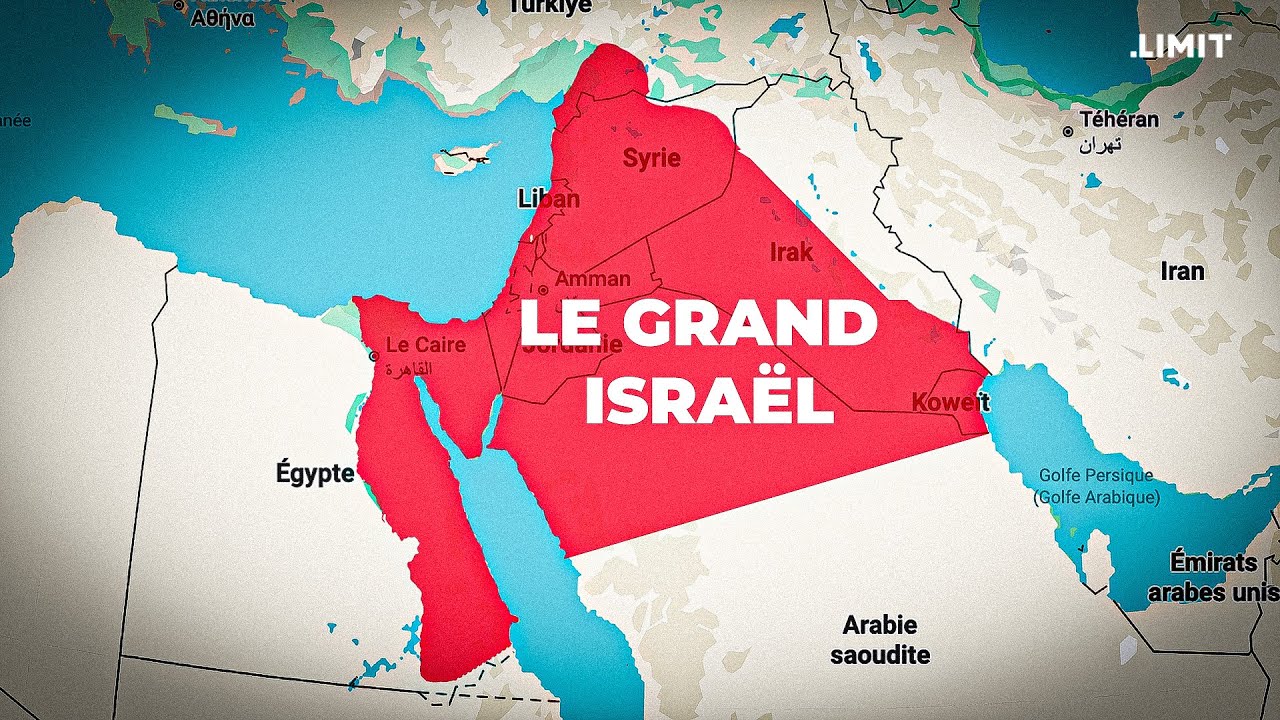
LE GRAND ISRAEL EXPLIQUÉ : PLAN DE CONQUÊTE DU MONDE ARABE ?
Keywords
Summary
174 words
Critical Evaluation
The video presents a compelling and well-structured argument about the ideological underpinnings of Israeli expansionism, but it is not without biases and methodological concerns. The investigation draws on a range of sources, including historical documents, academic references, and recent statements, which lends it a degree of credibility. However, the narrative is heavily one-sided, presenting the ‘Greater Israel’ project as an undisputed fact and downplaying alternative interpretations or complexities. The reliance on a single leaked interview segment, while intriguing, is used to make broad claims about Israeli policy, which may overstate its significance. The video also makes selective use of historical events, such as the 1948 Nakba and the 1967 war, to support its thesis, without engaging with counterarguments or the security concerns that have shaped Israeli policy. The inclusion of a Google Doc with sources is a positive step, but the video does not always clearly distinguish between factual claims and interpretation. The emotional tone and the use of terms like ‘colonial enterprise’ and ’nettoyage ethnique’ may alienate some viewers and reduce its perceived objectivity. Nevertheless, the video provides a valuable overview of an often-overlooked aspect of the conflict and encourages critical thinking about the motivations behind state actions. The production quality is high, with clear visuals and a coherent narrative, making it accessible to a broad audience. Overall, it is a thought-provoking piece that, while not fully balanced, offers a significant contribution to public discourse on the Israeli-Palestinian conflict.
240 words
Title / Content Match
The title accurately reflects the content, which explores the historical and ideological roots of 'Greater Israel' and its current political implications.
Quality & Reliability
7/10
The video presents a well-documented investigation into the concept of 'Greater Israel', citing historical sources, official documents, and recent statements. It includes references to a Google Doc with sources, and mentions the Jerusalem Post article (archived). However, the analysis is strongly opinionated and relies on selective interpretation, which affects its overall reliability.
Chapters
- Introduction
- Extrait Coupé de Netanyahou
- Le Grand Israël
- Aux origines
- Le Moyen-Orient redessiné
- L'idéologie de l'expansion
- Des frontières mouvantes
- PAUSE - Le projet secret de LIMIT
- L'invasion du Liban et le Kivunim
- Le HAMAS
- Application de la stratégie
- Bilan Humain
- Gaza Marine
- L'avenir ?
- Les mots du Général De Gaulle
Cited Sources
- Google Doc with sources — The video's description provides a link to a Google Doc containing the text and sources used for the investigation.
- LIMIT Media website — The channel's main website, mentioned in the description.
- LIMIT's secret project — A link to a secret project mentioned in the video, likely a promotional initiative.
- Book 'Reprendre le contrôle' — A book by the channel, mentioned in the description.
- Video: Comment déshumaniser un groupe ? - Albert Moukheiber — A related video referenced in the description, possibly for further context on dehumanization.
- Video: Extraits de ALAIN DIECKHOFF sur France Culture - Qu’est-ce que le 'GRAND ISRAËL' ? — A related video featuring Alain Dieckhoff discussing 'Greater Israel', referenced in the description.
- LIMIT on Bluesky — The channel's Bluesky profile, mentioned in the description.
Concurring Sources
- Alain Dieckhoff on France Culture — The video references an interview with Alain Dieckhoff, a specialist on Israel, which likely provides academic support for the concept of 'Greater Israel'.
- Albert Moukheiber on dehumanization — The video references a talk on dehumanization, which may align with the video's argument about the dehumanization of Palestinians.
Dissenting Sources
- Jerusalem Post article (deleted) — The video mentions an article from the Jerusalem Post that was deleted, which discussed whether Lebanon is part of the promised land. The deletion itself is a point of contention, and the video interprets it as censorship, but the original article is not available for verification.
Contribution & Novelties
The video provides a comprehensive and accessible synthesis of the ‘Greater Israel’ concept, tracing its historical roots and contemporary relevance. It brings together archival references, recent statements, and geopolitical analysis, offering a coherent narrative that is often fragmented in mainstream media. The inclusion of a leaked interview segment adds a novel element to the public discourse.
Pour aller plus loin :
- Sionisme — Wikipedia article on Zionism, providing background on the movement.
- Plan de partage de la Palestine — Wikipedia article on the UN partition plan, relevant to the historical context.
- Guerre des Six Jours — Wikipedia article on the Six-Day War, a key event in the expansionist narrative.
- Colonies israéliennes — Wikipedia article on Israeli settlements, directly related to the video’s topic.
- Droit international et conflit israélo-palestinien — Wikipedia article on international law and the conflict, useful for legal perspectives.
141 words
Radar Profile
The radar profile shows high scores in quantity of information and global reliability, indicating a well-researched video. The technical level is moderate, making it accessible to a general audience. The quality of information is good, but the strong ideological slant may reduce its perceived objectivity.
💬 The comments are predominantly positive, with viewers expressing gratitude for the video's clarity and courage in addressing the topic. Many comments reflect strong emotional reactions, including anger and despair, and some express support for the Palestinian cause. The overall sentiment is very positive towards the video, with a few critical voices but largely in agreement with the content.