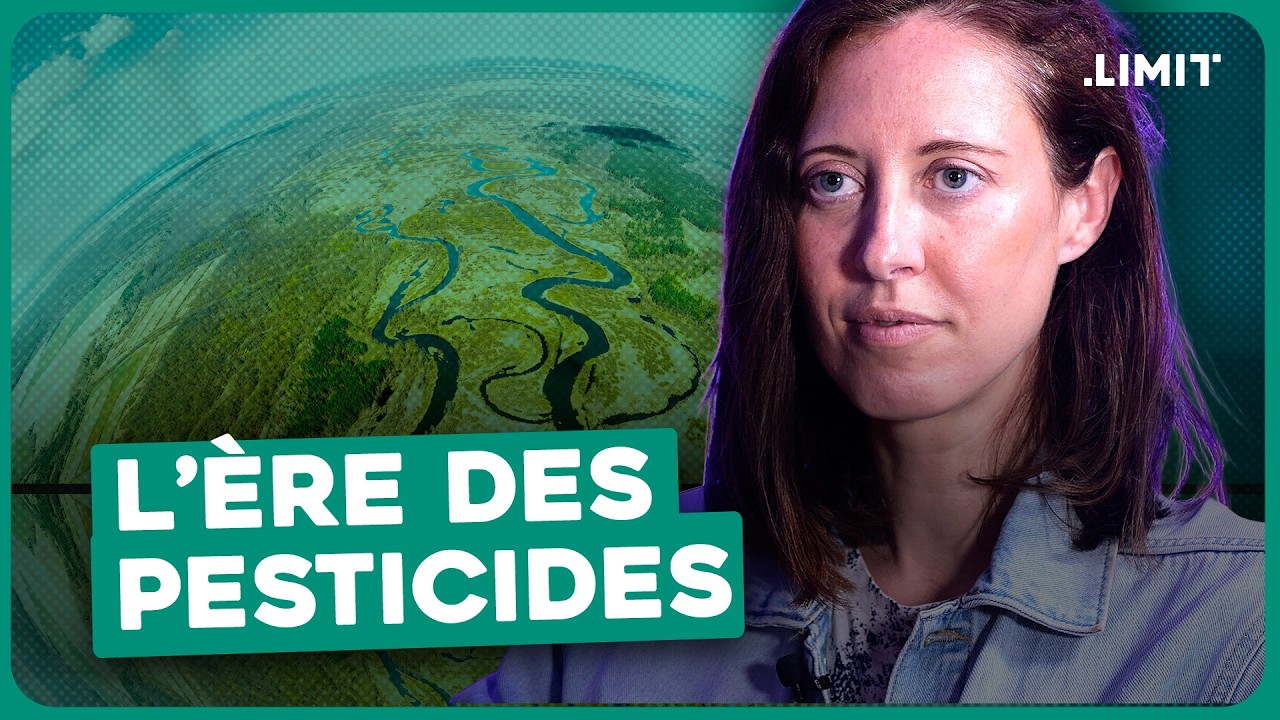
VOUS MANGEZ DU POISON - Hélène Grosbois
Keywords
Summary
170 words
Critical Evaluation
The interview presents a compelling and urgent perspective on the ecological and health crises caused by industrial agriculture. Grosbois’s background in finance and her subsequent conversion to organic farming lend her a unique credibility, and she speaks with conviction and clarity. Her critique of the mainstream environmental movement, particularly the focus on climate change at the expense of biodiversity and chemical pollution, is thought-provoking and aligns with a growing body of scientific literature that highlights the interconnectedness of these crises. However, the argumentation is often based on personal anecdotes and selective citations rather than a systematic review of evidence. For instance, she makes strong claims about the relative importance of pesticides versus climate change without providing a comprehensive comparative analysis. She also tends to overgeneralize, such as when she equates the use of antibiotics in agriculture with a ‘génocide invisible’, a term that is emotionally charged and scientifically imprecise. While she correctly points out the influence of agrochemical lobbies on policy and research, she does not always distinguish between well-established scientific findings and more speculative assertions. The interview would benefit from more rigorous referencing and a more balanced discussion of counterarguments. Nevertheless, the core message about the dangers of chemical pollution and the need for a fundamental transformation of agricultural practices is important and resonates with many viewers, as evidenced by the comments. The title accurately reflects the content, and the interview is likely to stimulate valuable discussion, even if it may polarize audiences.
244 words
Title / Content Match
The title is catchy and provocative, accurately reflecting the central theme of the interview: the widespread poisoning of living organisms through pesticides and other chemicals.
Quality & Reliability
6/10
The speaker provides a passionate and informed critique of industrial agriculture and its impacts on health and biodiversity, drawing on personal experience and some scientific references. However, the argumentation is largely based on personal testimony and selective citations, lacking systematic evidence and sometimes overgeneralizing. The presence of a clear ideological stance and the absence of counterarguments reduce the overall reliability.
Chapters
- Introduction
- Fragilité humaine vs vivant
- Poison comme boss final
- COP et hypocrisie
- Lobbies à la COP
- IPBES et dissonance
- Malformations et pesticides
- Témoignages de maraîchers
- Uniformisation = catastrophe
- Monoculture et effondrement
- Antibiotiques et pollution
- Agriculture et effets secondaires
- Génocide invisible ?
- Pollution et cerveau
- Stérilité
- Enfants, hormones, animaux
- Où agir maintenant ?
- Comment s’informer ?
- Monoculture mentale
- Résistance citoyenne
- Éveil et révolution lente
- Rôle des pathogènes
- Les vraies plaies écologiques
- Lobby et empreinte carbone
Cited Sources
- LIMIT website — The channel's official website, where additional content and information about the project 'Odyssée du vivant' can be found.
- LIMIT on Bluesky — The channel's official Bluesky profile, used for social media presence and updates.
Concurring Sources
- IPBES Global Assessment Report on Biodiversity and Ecosystem Services — The report documents the decline of biodiversity and identifies agriculture as a major driver, supporting the speaker's claims about the severity of biodiversity loss.
Dissenting Sources
Contribution & Novelties
The interview offers a strong personal testimony and a radical critique of industrial agriculture, emphasizing the role of chemical pollution as a primary driver of biodiversity loss and health issues. It challenges the dominant narrative that climate change is the sole or most urgent environmental crisis, advocating for a more holistic approach. The speaker’s background in finance and her practical experience in farming provide a unique perspective.
Pour aller plus loin :
- IPBES Global Assessment Report on Biodiversity and Ecosystem Services — The key scientific reference on biodiversity loss, which the speaker discusses critically.
- The concept of ‘planetary boundaries’ — A framework that includes chemical pollution as one of the boundaries, relevant to the speaker’s argument.
- The work of the ‘Bourguignon couple’ on soil biology — They are referenced in the comments and are known for their research on soil degradation and agriculture.
143 words
Radar Profile
The radar profile shows high scores in 'quantite_information' and 'niveau_technique', indicating a content-rich and moderately technical discussion. However, 'qualite_information' and 'fiabilite_globale' are lower, reflecting the reliance on personal testimony and selective evidence. The overall profile suggests a passionate but not fully rigorous scientific presentation.
💬 The comments are predominantly positive, with many viewers expressing agreement and gratitude for the interview. Some critical voices point out oversimplifications and the need for nuance, but the overall tone is supportive and enthusiastic.