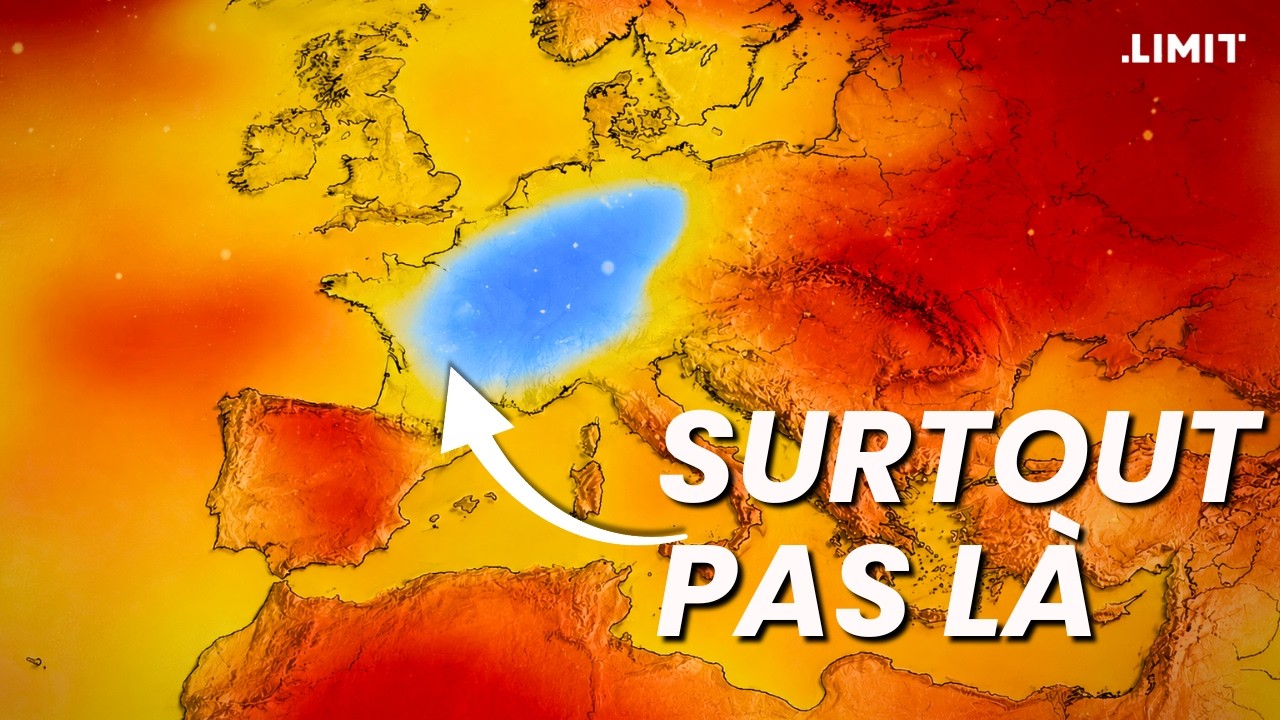
Où vivre en 2050 pour survivre au changement climatique ? (canicule, inondations...)
Keywords
Summary
136 words
Critical Evaluation
The video provides a valuable synthesis of climate risks in France, making complex scientific data accessible to a broad audience. It effectively uses visual maps and expert interviews to illustrate the multifaceted nature of climate change impacts. The argumentation is generally solid, with a clear distinction between average climate changes and extreme events, a point well articulated by the expert. However, the video simplifies some projections and does not always provide precise sources for its claims, which could be a concern for viewers seeking rigorous scientific backing. The inclusion of multiple risk factors (heat, fire, RGA, water, submersion, flooding) is comprehensive, but the analysis could be deepened by discussing the interplay between these risks and potential cascading effects. The video also touches on the importance of adaptation and resilience, but it could have explored concrete adaptation strategies in more detail. The adéquation between title and content is good, as the video directly addresses the question posed. The public comments reflect a generally positive reception, with viewers appreciating the informative content and the call to action, though some express skepticism about the feasibility of relocation. Overall, the video is a useful educational resource, but it should be complemented with more detailed scientific sources for a fully rigorous analysis.
207 words
Title / Content Match
The title accurately reflects the content, which explores where to live in France in 2050 considering various climate risks.
Quality & Reliability
7/10
The video synthesizes multiple climate risk maps and expert interviews, providing a comprehensive overview. However, it lacks detailed citations for some claims and relies on simplified projections.
Chapters
Cited Sources
- Sources and final map — The video mentions this document as a source for the maps and data used.
- Post-urbain study — Referenced for additional criteria like pesticides, food, and housing prices.
- Amnesty International petition — Mentioned in the description to protect environmental defenders.
- Coopérative Oasis — Lists over 1600 eco-places, mentioned as a resource for alternative living.
- Etika Mondo — One of the eco-places visited by the channel.
- LIMIT media — The channel's website.
- LIMIT on Bluesky — Social media profile for the channel.
- Tybalum — Mentioned in the description, possibly a related project.
Concurring Sources
- GIEC — The IPCC reports are the primary scientific source for climate projections, aligning with the video's data.
- Météo-France — Météo-France provides national climate projections and risk maps, consistent with the video's content.
Dissenting Sources
- Climate change denial sources — Some public comments may question the severity of climate change, but no specific discordant source is cited in the video.
Contribution & Novelties
The video’s original contribution lies in its synthesis of multiple climate risk maps into a single, easy-to-understand visual, making complex scientific data accessible to the public. It also emphasizes the distinction between average climate changes and extreme events, a crucial nuance often overlooked. The call for adaptation and resilience, rather than mere relocation, adds a practical dimension.
Pour aller plus loin :
- GIEC reports — The IPCC reports provide the scientific basis for climate projections.
- Retrait-gonflement des argiles (RGA) — Wikipedia article on clay shrinkage and swelling, a key risk discussed.
- Submersion marine — Wikipedia article on coastal flooding, relevant to the sea-level rise risk.
- Adaptation au changement climatique — Wikipedia article on climate adaptation, central to the video’s message.
120 words
Radar Profile
The radar profile shows high scores in information quantity and quality, with moderate technical level and reliability. This indicates a well-researched but accessible video, suitable for a general audience.
💬 Positif : Sur les 30 commentaires analysés, la majorité exprime une appréciation positive, saluant la qualité de la vidéo et son approche constructive, bien que certains soulèvent des critiques sur la faisabilité des solutions proposées.