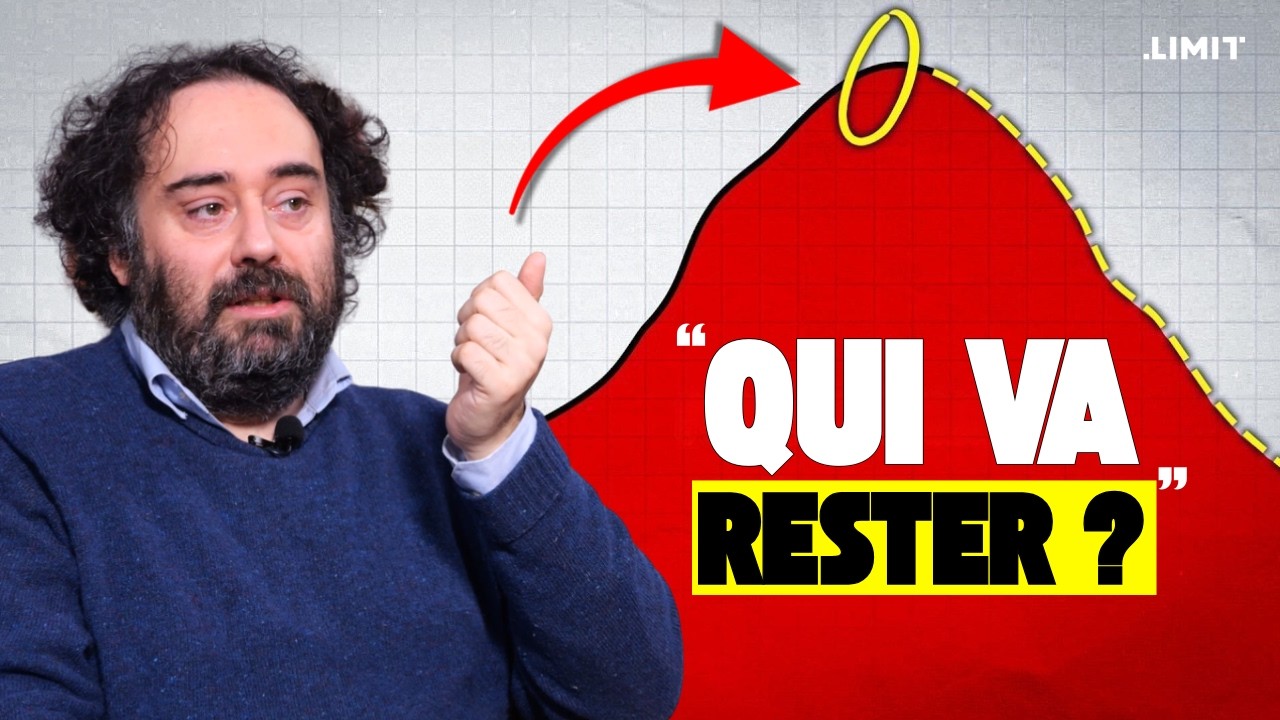
FAUT-IL FAIRE MOINS D'ENFANTS ? - Emmanuel Pont
Keywords
Summary
203 words
Critical Evaluation
The video provides a thoughtful and nuanced exploration of the complex relationship between population and environmental impact. Emmanuel Pont, with his background as an author and PhD researcher, brings a credible perspective, effectively dismantling the simplistic notion that overpopulation is the primary driver of ecological crises. He correctly emphasizes the demographic transition and the significant disparities in per capita emissions between developed and developing nations. The argument that the problem lies more in consumption patterns than in population numbers is well-supported by data on carbon footprints. However, the discussion remains at a relatively high level, lacking detailed citations to specific studies or reports, which would strengthen the scientific rigor. The host’s questions are pertinent and guide the conversation well, but the format of a talk show limits the depth of analysis. The video does not shy away from controversial topics, such as natalist policies and immigration, but treats them with balance. The title is somewhat provocative but accurately reflects the core question addressed. Overall, the content is informative and valuable for a general audience, though it would benefit from more explicit references to scientific literature. The public comments show a mix of agreement and skepticism, with some viewers appreciating the nuance and others feeling the guest avoids taking a clear stance. The video successfully challenges common assumptions and encourages critical thinking, making it a worthwhile watch for those interested in demography and sustainability.
233 words
Title / Content Match
The title is a provocative question that accurately reflects the central debate of the video, which explores whether having fewer children is necessary for environmental sustainability.
Quality & Reliability
8/10
The video features an expert (Emmanuel Pont) with a book and ongoing PhD on the topic. The discussion is nuanced, citing demographic data and projections, but lacks formal citations to specific studies during the talk. The channel has a clear editorial line, but the content is presented as an interview and opinion, not a peer-reviewed analysis.
Chapters
- Introduction
- Présentation Emmanuel Pont
- Stabilisation mondiale
- Dynamique fécondité
- Effets urbanisation
- Effet de structure
- Projections 2050 et 2100
- Facteurs culturels & rôle des femmes
- Politiques natalistes
- Inégalité d’empreinte
- Bébé et CO2
- Qui est en trop ?
- Réarmement démographique
- Droit des femmes
- Immigration instrumentalisée
- Tragédie des horizons
- Conclusion et remerciements
Cited Sources
- LIMIT Media Website — Official website of the channel, providing additional content and context.
- LIMIT on BlueSky — Social media profile of the channel, where updates and discussions are shared.
Concurring Sources
- United Nations World Population Prospects — UN data on population trends and projections, supporting the discussion on demographic changes.
Dissenting Sources
Contribution & Novelties
The video brings a fresh perspective to the overpopulation debate by emphasizing the demographic transition and the role of consumption inequality. It challenges the common assumption that population size is the main driver of environmental degradation, instead highlighting the disproportionate impact of high-consuming individuals. The discussion also addresses the political misuse of demographic arguments, such as natalist policies and immigration, offering a critical view.
Pour aller plus loin :
- Demographic transition — Provides background on the demographic transition model.
- Carbon footprint — Explains the concept of carbon footprint and its measurement.
- IPAT equation — A framework linking population, affluence, and technology to environmental impact.
104 words
Radar Profile
The radar profile shows high scores in information quantity, quality, and reliability, with a slightly lower technical level, indicating a well-informed but accessible discussion. The balance between these dimensions suggests a video that is both informative and engaging for a general audience.
💬 The comments are generally positive and engaged, with many viewers appreciating the nuanced perspective. Some express skepticism about the guest's stance, but overall the tone is constructive. Sur les 30 commentaires analysés, la majorité soutient l'idée que la surpopulation n'est pas le seul problème et souligne l'importance de la consommation et des inégalités.