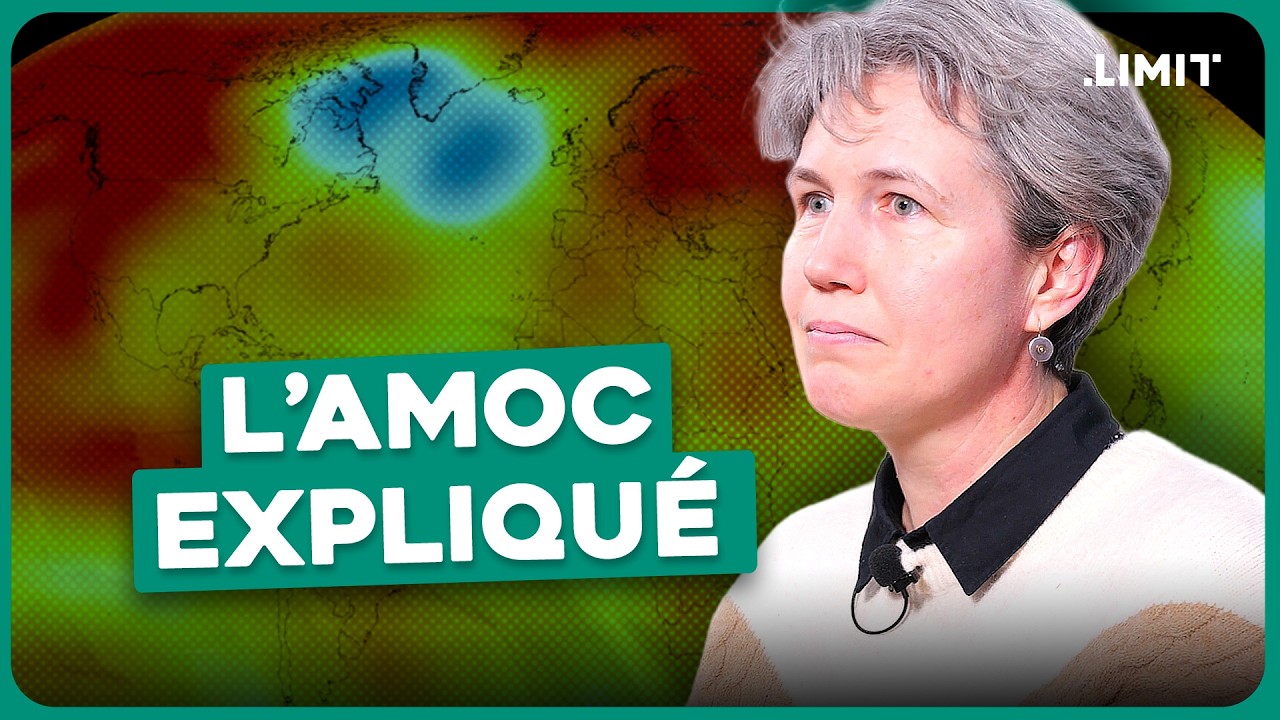
L'EUROPE VA PLONGER DANS LE FROID ?! (VRAIMENT ?) - Julie Deshayes
Keywords
Summary
135 words
Critical Evaluation
The video provides a valuable and nuanced explanation of the AMOC, a topic often oversimplified in media. Julie Deshayes, as a leading expert, brings credibility and depth to the discussion. She effectively communicates the scientific uncertainties and the dangers of both alarmism and denialism. The interview is well-structured, gradually building from basic concepts to more complex issues. The use of analogies (e.g., the crepe cake for ocean stratification) helps make the content accessible without sacrificing accuracy. However, the technical level may be challenging for some viewers, and the video could benefit from more visual aids to illustrate the ocean currents and processes described. The discussion on the instrumentalization of science by climate deniers is particularly insightful, highlighting the social and political dimensions of climate science. The video does not shy away from the limitations of current knowledge, which is a strength. Overall, it is a high-quality, informative piece that contributes to public understanding of a complex scientific topic.
158 words
Title / Content Match
The title is somewhat sensationalist but the content directly addresses the question of whether Europe will face cold due to AMOC collapse, clarifying misconceptions.
Quality & Reliability
8/10
The video features a CNRS research director in physical oceanography, providing expert insights on the AMOC. The discussion is nuanced, acknowledges uncertainties, and warns against oversimplification and misuse of science. The channel has a clear editorial line but the guest's expertise lends credibility.
Chapters
- Introduction
- Présentation Julie Deshayes
- Instrumentalisation du débat
- Parcours et expertise
- Difficulté à mesurer l’AMOC
- Modèles, équations et limites
- Réalité du Gulf Stream
- AMOC et variabilité naturelle
- Le rôle du Labrador et de l’Arctique
- Controverse scientifique et précaution
- Climatologie vs météorologie
- Temporalités climatiques
- AMOC et événements extrêmes
- Interprétations grand public
- Anomalies froides et canicules
- Climat et incertitudes
- Océan, CO₂ et régulation
- Big picture vs complexité réelle
- Jet stream, Arctique et instabilité
- Ce qu’on ne sait pas
- Comment se construisent les modèles
- Gyres, vortex et vent
- Pourquoi la controverse l’anime
- Inégalité des impacts
- Transition et 10% les plus émetteurs
- L’océan c’est nous
- Mot de la fin
Cited Sources
- LIMIT Media website — Official website of the channel, providing additional content and information.
- LIMIT Media on Bluesky — Social media profile for updates and community engagement.
- Projet secret — A special project by LIMIT, possibly related to climate action or community support.
- Version Vinz et Analyse — A companion video providing analysis and further discussion on the AMOC.
Concurring Sources
- IPCC AR6 WG1 Chapter 9 — The IPCC report assesses the state of knowledge on ocean circulation, including the AMOC, and its projected changes.
Dissenting Sources
- Some media reports on AMOC collapse — The video criticizes sensationalist media coverage that predicts imminent AMOC collapse, which may not align with the scientific consensus on the timing and likelihood.
Contribution & Novelties
The video offers a clear and expert clarification on the AMOC, debunking common myths and highlighting the misuse of scientific studies by climate deniers. It emphasizes the importance of understanding uncertainty and the complexity of ocean dynamics.
Pour aller plus loin :
- Atlantic Meridional Overturning Circulation (Wikipedia) — Provides a comprehensive overview of the AMOC, its mechanisms, and its role in climate.
- Navier-Stokes equations (Wikipedia) — The fundamental equations governing fluid motion, mentioned in the video as the basis for ocean models.
- Climate models (Wikipedia) — Explains how climate models are constructed and their limitations, relevant to the discussion on model uncertainties.
102 words
Radar Profile
The radar profile shows high scores in information quality and reliability, reflecting the expert guest and nuanced discussion. The technical level is moderate, indicating a balance between depth and accessibility. The quantity of information is substantial, but the video could be more concise in some parts.
💬 Positive: The 30 comments analyzed are overwhelmingly positive, with viewers expressing appreciation for the expert guest, the clarity of explanations, and the depth of the discussion. Many note the complexity but find it rewarding, and some highlight the importance of addressing climate misinformation.