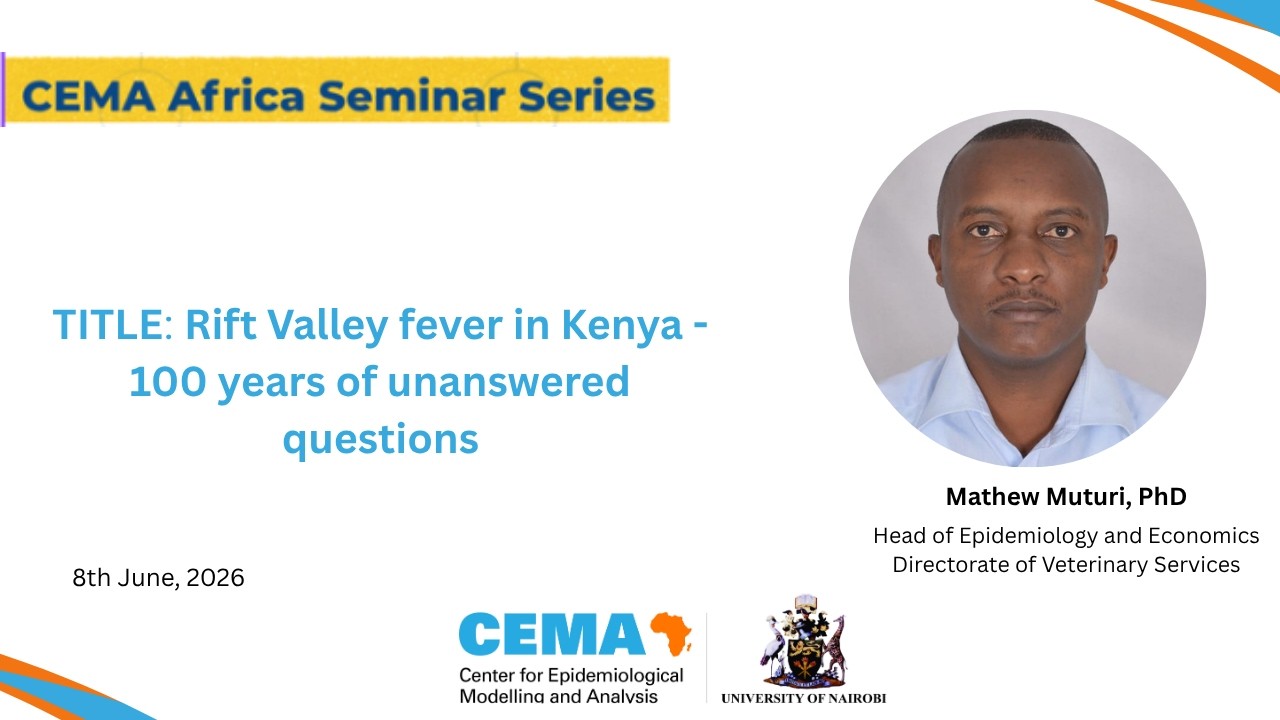
Rift Valley fever in Kenya - 100 years of unanswered questions
Keywords
Summary
206 words
Critical Evaluation
Value of the Information & Strength of the Argument
The presentation provides valuable insights from original research, particularly the incidence study which is described as the first of its kind in Kenya. The speaker effectively argues that RVF transmission occurs even during inter-epidemic periods, challenging the traditional focus on outbreak-driven surveillance. The argumentation is logical and supported by data from his studies, though some points could benefit from more detailed statistical explanation. The discussion of species-specific incidence and the role of livestock movement adds practical value for intervention planning.
89 words
Title / Content Match
The title accurately reflects the content, which covers the history, current research, and unanswered questions about RVF in Kenya.
Quality & Reliability
8/10
The speaker is a veterinarian and head of epidemiology at the Kenya Directorate of Veterinary Services, with a recent PhD on RVF. The presentation is based on his own research and references to scientific literature. However, it is a webinar talk, not a peer-reviewed publication, and some claims lack detailed citations.
Key Moments
Markers derived by PSI from the transcript: the creator did not define chapters.
- Introduction to RVF as a priority zoonotic disease
- History of RVF in Kenya: first description in 1912 and virus isolation in 1931
- Discussion of outbreak patterns and the shift from explosive to smaller outbreaks
- Challenging the transovarial transmission theory
- Presentation of prevalence study results in Isiolo
- Design and methods of the incidence study
- Incidence study results: seroconversion in humans and livestock during drought
- Species-specific incidence and implications for interventions
- Importance of vector control and One Health surveillance
- Conclusions and future research priorities
Cited Sources
- Bett B, Anjanga A. (paper on RVF maintenance) — Referenced in the talk as a key paper explaining how and where the virus is maintained during inter-epidemic periods.
- WHO manual for sample size calculation — Used for calculating sample size for the incidence study.
Concurring Sources
- Bett B, et al. (2019) - 'Rift Valley fever: a review of the current status and future perspectives' — Referenced in the talk as supporting the shift in epidemiology.
Contribution & Novelties
The talk provides original data from a longitudinal study in Kenya, offering evidence of cryptic RVF transmission during inter-epidemic periods. This challenges the traditional focus on outbreak-driven surveillance and suggests the need for continuous monitoring and vaccination in hotspots.
Pour aller plus loin :
- Rift Valley fever - WHO — Official fact sheet with general information.
- Rift Valley fever virus - Wikipedia — Overview of the disease and its epidemiology.
- Transovarial transmission in mosquitoes - PubMed — Search for studies on this mechanism.
83 words
Radar Profile
The radar profile shows high scores in information quantity and quality, reflecting the detailed presentation of original research. The technical level is moderate, suitable for a professional audience. Reliability is high due to the speaker's expertise and use of scientific methods.