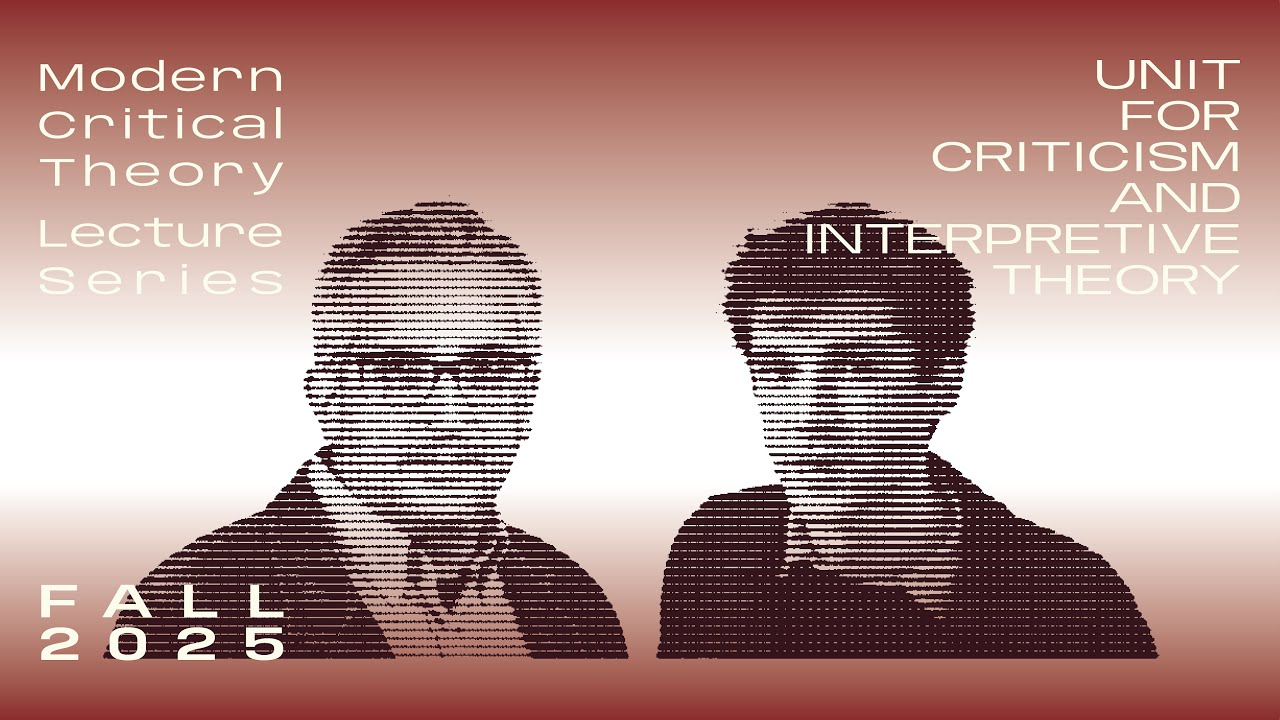
Richard Gilman-Opalsky & Matt Soener, "Marxism" dialogue | Fall '25 MCT
Keywords
Summary
141 words
Critical Evaluation
Value of the Information & Strength of the Argument
The value of the information is high, as both speakers provide nuanced interpretations of Marx that challenge common caricatures. Gilman-Opalsky’s ontological reading is particularly insightful, highlighting the often-overlooked humanist dimension of Marx’s work. Soener’s historical materialist approach is equally valuable, offering a clear framework for understanding Marx’s method and its contemporary relevance. The argumentation is solid, with both speakers grounding their claims in specific texts and examples. However, the dialogue format means that some points are not fully developed, and the discussion could benefit from more direct engagement between the two perspectives.
Scientific Rigor, Source Quality, Title Accuracy
The speakers demonstrate rigorous engagement with primary sources, citing specific works by Marx and other theorists. The suggested readings provided in the description are relevant and authoritative. The title accurately reflects the content, and the dialogue format is appropriate for the topic. The discussion is well-structured, with each speaker providing a clear introduction and then engaging in a broader dialogue. The sources cited are credible and directly related to the arguments presented.
179 words
Title / Content Match
The title accurately reflects the content: a dialogue between two scholars on Marxism.
Quality & Reliability
8/10
The dialogue is presented by two academics with relevant expertise, and the discussion is grounded in primary texts and scholarly references. The arguments are well-structured and demonstrate deep familiarity with Marxist theory, though the format is a lecture/dialogue rather than a peer-reviewed presentation.
Key Moments
Markers derived by PSI from the transcript: the creator did not define chapters.
- Introduction by Dee Rugles, land acknowledgement, and speaker introductions.
- Gilman-Opalsky begins his talk on ontological approaches to Marx.
- Discussion of Gattungswesen and the ontological dimension of Marx's thought.
- Gilman-Opalsky connects ontology to contemporary issues like transgender liberation and ecology.
- Soener begins his talk on Marxism as a theory of history.
- Discussion of the 'eternal present' and the need for historicizing social relations.
- Soener discusses Marx's dialectical and materialist method.
- Dialogue between the two speakers and audience Q&A begins.
Cited Sources
- Marx, Karl. Capital. Chapters 26 and 32 — Suggested reading on primitive accumulation and the historical tendency of capitalist accumulation.
- Marx, Karl. Economic and Philosophic Manuscripts of 1844. Section 4: 'Estranged Labor.' — Suggested reading on alienation and estranged labor.
- Marx, Karl. Grundrisse: Foundations of the Critique of Political Economy. Notebook 1, October 1857, 'The Chapter on Money.' — Suggested reading on money and exchange value.
- Marx, Karl. The Eighteenth Brumaire of Louis Bonaparte. Chapters 1 and 7. — Suggested reading on historical analysis of authoritarianism.
- Marx, Karl. The Civil War in France. 'The Paris Commune' and 'The Fall of Paris.' — Suggested reading on the Paris Commune.
- Dunayevskaya, Raya. Marx's Philosophy of Revolution in Permanence for Our Day. — Referenced in the discussion on Marxist humanism.
- Gilman-Opalsky, Richard, and Bruno Gulli. Communist Ontologies. — Referenced as the basis for the ontological approach.
- Karatani, Kojin. History and Repetition. — Referenced in relation to the Eighteenth Brumaire.
Concurring Sources
- Marx, Karl. Capital. Chapters 26 and 32 — Provides the basis for discussions on primitive accumulation and historical tendency.
- Marx, Karl. Economic and Philosophic Manuscripts of 1844 — Supports the ontological reading of Marx's early work.
- Marx, Karl. Grundrisse — Supports the discussion on exchange value and social relations.
Contribution & Novelties
The dialogue offers a fresh perspective on Marxism by juxtaposing ontological and historical approaches, highlighting the relevance of Marx’s thought to contemporary issues such as transgender liberation and the critique of the ’eternal present.’ The speakers challenge common caricatures of Marx as deterministic and economistic, emphasizing his humanist and dialectical dimensions.
Pour aller plus loin :
- Marx’s Economic and Philosophic Manuscripts of 1844 — Primary text for understanding alienation and species-being.
- The Eighteenth Brumaire of Louis Bonaparte — Marx’s analysis of historical events and political dynamics.
- Grundrisse — Key text for understanding Marx’s critique of political economy and his method.
- Raya Dunayevskaya — Marxist humanist philosopher whose work is referenced in the dialogue.
- Kojin Karatani — Contemporary philosopher who engages with Marx’s thought.
123 words
Radar Profile
The radar profile shows high scores in quantity and quality of information, reflecting the depth and relevance of the content. The technical level is moderate, indicating that the discussion is accessible to a general audience with some background in theory. Overall, the video is a reliable and informative resource on Marxist thought.
💬 No comments were provided for analysis.