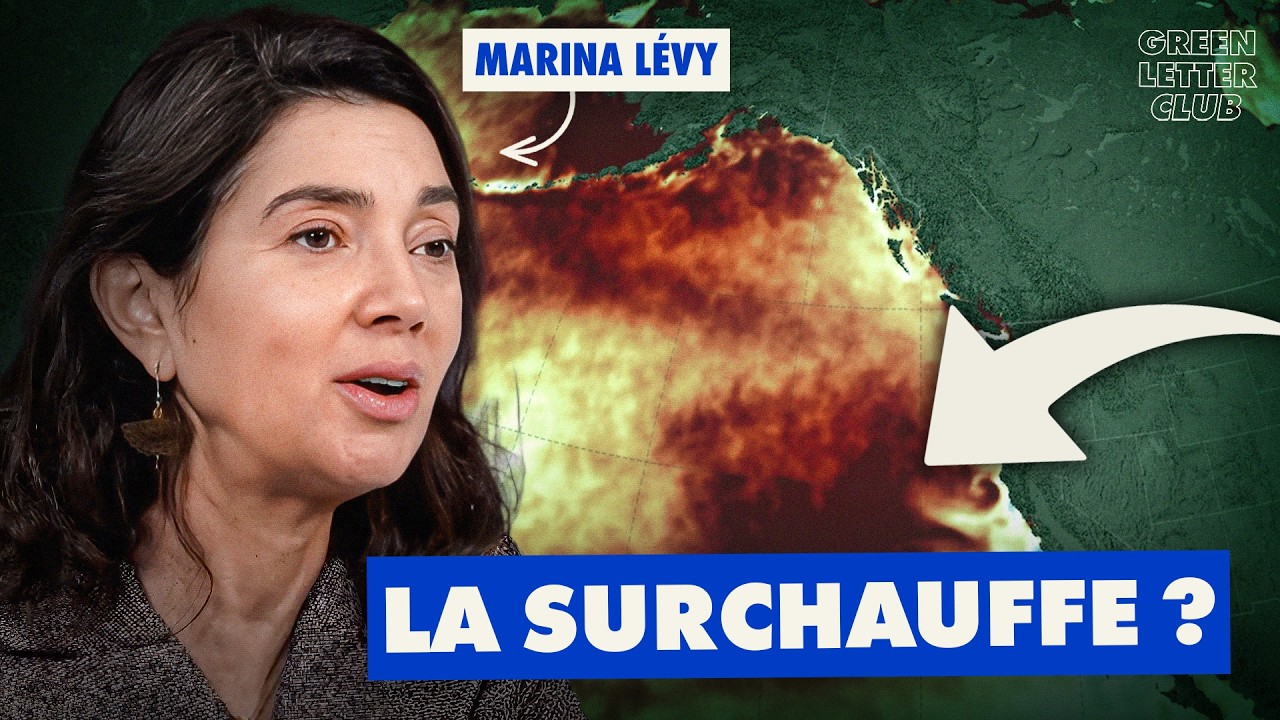
Marina Levy révèle l'effondrement silencieux des océans
Keywords
Summary
142 words
Critical Evaluation
The interview provides a comprehensive overview of the major threats to the ocean from climate change, grounded in the expertise of Marina Levy, a prominent oceanographer. The information is scientifically accurate and reflects current consensus, such as the ocean absorbing 90% of excess heat and the increasing frequency of marine heatwaves. Levy effectively explains complex concepts like thermal niches and deoxygenation in accessible terms. However, the conversational format lacks specific citations or references to studies, which limits the ability to verify claims directly. The discussion on coral bleaching and potential 95-99% loss by century’s end aligns with IPCC projections, but the lack of explicit sources may reduce its perceived rigor. The video also touches on the role of marine protected areas and political influences on science, adding depth. Overall, the content is reliable and informative, though it could benefit from more explicit references to scientific literature. The title accurately reflects the content, focusing on the ‘silent collapse’ of ocean ecosystems. The interview is well-structured, covering key topics from warming to deoxygenation and plankton, and concludes with a discussion on solutions and political challenges. The presence of a sponsor segment (not detailed) does not detract from the scientific value. The video is suitable for a general audience interested in ocean science and climate change, providing a solid foundation for further exploration.
220 words
Title / Content Match
The title accurately reflects the content, which focuses on the silent collapse of ocean ecosystems due to climate change.
Quality & Reliability
8/10
The video features a recognized oceanographer (Marina Levy, CNRS research director) discussing well-documented phenomena (marine heatwaves, deoxygenation, coral bleaching) with references to scientific studies. The information is generally accurate and up-to-date, though presented in a conversational interview format without detailed citations.
Chapters
- introduction
- réchauffement de l'océan
- les canicules marines
- Les hécatombes marines
- Le Blog : une canicule marine gigantesque
- L'Océan perd son oxygène
- L'effondrement des zones de pêche
- Des espèces + menacées que d'autres ?
- Les zones mortes
- Le plancton est-il menacé ?
- Impact du plancton sur le climat ?
- Aires marines protégées : quel intérêt ?
- Quelles mesures pour réduire les pressions sur l'océan ?
- Trump : quel impact sur la science ?
Cited Sources
- Greenletter Club website — Support link for the independent channel, mentioned in the description.
Concurring Sources
- IPCC Special Report on the Ocean and Cryosphere — Confirms ocean warming, marine heatwaves, and deoxygenation trends.
Contribution & Novelties
The video offers a synthesis of current scientific knowledge on ocean warming and its consequences, presented by a leading expert. It highlights the acceleration of ocean warming, the increasing frequency of marine heatwaves, and the interconnected issues of deoxygenation and biodiversity loss. The discussion on plankton’s role in climate feedback is particularly valuable.
Pour aller plus loin :
- IPCC Special Report on the Ocean and Cryosphere — Provides comprehensive assessment of ocean changes.
- NOAA Marine Heatwave Tracker — Real-time data and research on marine heatwaves.
- Ocean deoxygenation research — Overview of causes and impacts of oxygen loss in the ocean.
100 words
Radar Profile
The radar profile shows high scores in quantity and quality of information, with moderate technical level, indicating a well-balanced and accessible scientific discussion.
💬 No comments were provided for analysis.