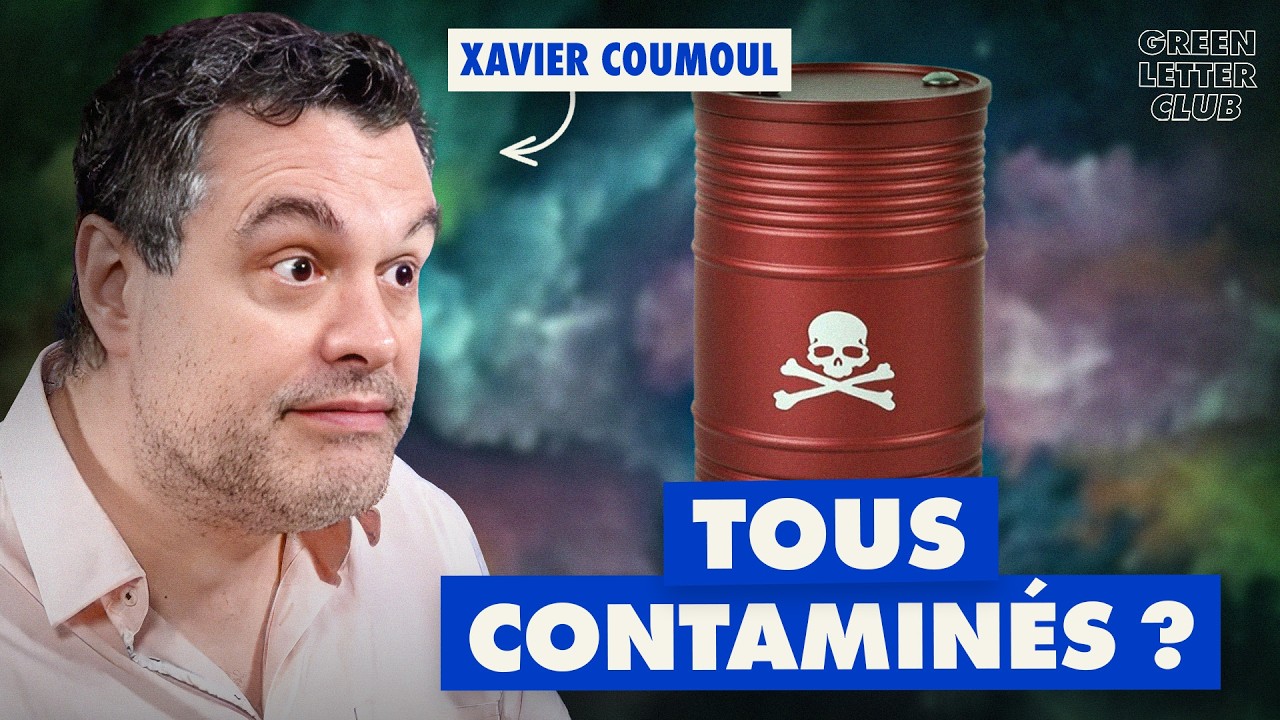
POURQUOI LES CANCERS EXPLOSENT-ILS ?
Keywords
Summary
162 words
Critical Evaluation
The video provides a comprehensive and scientifically grounded overview of the relationship between chemical pollutants and health, with a focus on pesticides. Xavier Coumoul’s expertise is evident, and he effectively communicates complex concepts such as the exposome, the distinction between danger and risk, and the limitations of current regulatory frameworks. The discussion is well-structured, covering key topics from exposure to health impacts, and includes relevant examples like the chlorothalonil metabolite found in water. The argumentation is solid, relying on established scientific knowledge and the 2021 Inserm collective expertise. However, the format of an interview means that some claims are made without specific citations, and the depth of evidence for certain statements is not always provided. The video also touches on controversial topics, such as the role of industry in testing, but does so in a measured way. The title’s question is addressed, but the video does not provide a definitive answer, which is appropriate given the complexity of the issue. Overall, the content is valuable for raising awareness and informing the public, but it is not a systematic review or meta-analysis. The presence of a sponsorship segment is noted but does not affect the scientific content. The adequacy between title and content is good, as the video indeed explores the rise in cancers and its potential links to pollutants. The main strength is the expert’s ability to explain nuanced scientific issues in an accessible manner, while the main weakness is the lack of detailed references for some claims, which is typical for an interview format.
255 words
Title / Content Match
The title is a provocative question that matches the content, which explores the rise in cancers and other diseases in relation to chemical pollutants, particularly pesticides.
Quality & Reliability
8/10
The video features a recognized expert (Xavier Coumoul, professor of toxicology and biochemistry, Inserm unit director) and references the 2021 Inserm collective expertise on pesticides and health, which analyzed over 5,300 scientific documents. The discussion is nuanced, distinguishes between danger and risk, and acknowledges uncertainties. However, the format is an interview, not a peer-reviewed study, and some claims lack specific citations.
Chapters
- Introduction
- L'Exposome chimique
- Pesticides et science réglementaire
- Agences sanitaires vs science académique
- À quel point l'environnement est-il contaminé ?
- Incidence sur la santé
- Troubles neurologiques chez les enfants
- Impact économique de ces maladies
- Plastiques et santé
- L'impact de notre consommation sur notre santé
- Rémanence des substances chimiques
- Expologie et périodes de vie à risque
- Zones agricoles et exposition aux pesticides
- Cocktails chimiques
- Conclusion
Cited Sources
- Inserm collective expertise 'Pesticides and Health' (2021) — Referenced as the basis for the discussion on pesticide health effects.
- EFSA (European Food Safety Authority) — Mentioned as the regulatory agency for pesticide approval in Europe.
- ANSES (French Agency for Food, Environmental and Occupational Health & Safety) — Mentioned as the French agency involved in evaluating pesticide risks.
Concurring Sources
- Inserm collective expertise 'Pesticides and Health' (2021) — Supports the claims about pesticide health risks.
Dissenting Sources
- Industry-funded studies on pesticide safety — The video mentions that industry-funded studies may have conflicts of interest, but no specific discordant source is cited.
Contribution & Novelties
The video provides an accessible synthesis of current scientific knowledge on the health impacts of pesticides, emphasizing the concept of the exposome and the limitations of regulatory testing. It highlights the gap between regulatory science and academic research, and the importance of considering cumulative exposures and mixtures.
Pour aller plus loin :
- Exposome — Overview of the exposome concept.
- Pesticide toxicity — General information on pesticide health effects.
- Endocrine disruptors — Relevant to the discussion on metabolic effects.
78 words
Radar Profile
The radar profile shows high scores in information quantity, quality, and reliability, with a slightly lower technical level, indicating a balanced and credible presentation suitable for a general audience.
💬 The comments are predominantly positive and engaged, with many expressing appreciation for the informative content and concern about the issues raised. Some comments are critical, particularly regarding COVID-19 vaccines and perceived omissions, but the overall tone is supportive of the video's message.