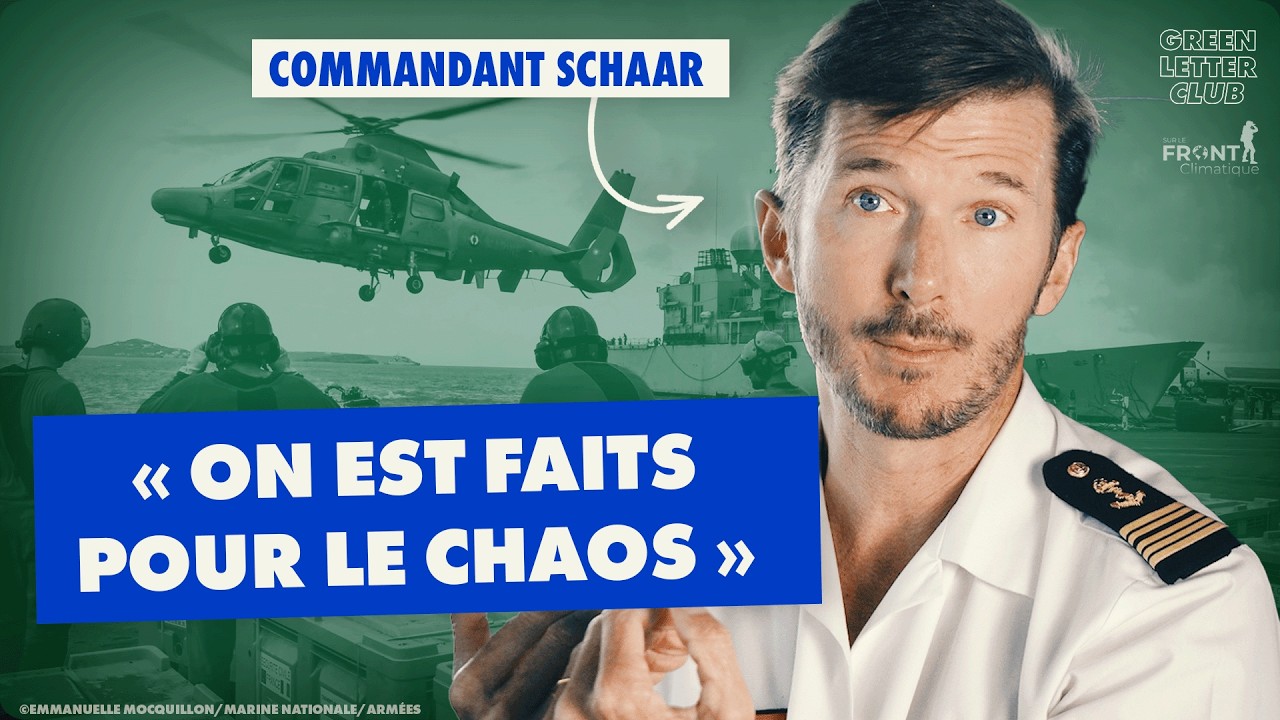
Comment la Marine intervient-elle lors de catastrophes climatiques ?
Keywords
Summary
147 words
Critical Evaluation
The video provides a valuable and insightful perspective on the role of the French Navy in disaster relief operations, particularly in the context of climate change. Captain Schaar’s firsthand experience commanding the frigate Ventôse during Cyclone Irma and his current role as commander of the Tonnerre lend credibility to the discussion. The interview is well-structured, covering a range of topics from the definition of HADR to the practical challenges of delivering aid in the aftermath of a catastrophic event.
The information presented is generally reliable and consistent with known facts about Cyclone Irma and the French Navy’s operations. The captain’s explanations are clear and accessible, making the content suitable for a broad audience. The video also highlights the importance of inter-army cooperation and the dual-use nature of amphibious assault ships, which can be used for both military and humanitarian purposes.
One potential limitation is that the interview is based on the captain’s personal experiences and opinions, which may not represent the full scope of the Navy’s capabilities or the broader strategic picture. Additionally, the video is produced in partnership with the Observatoire Défense et Climat, which may introduce a particular perspective on the topic. However, this does not detract significantly from the overall quality of the content.
The title accurately reflects the content, and the video successfully answers the question posed. The production quality is high, with good use of visuals and chapter markers. Overall, this is a well-informed and engaging discussion that offers valuable insights into the intersection of climate change and military operations.
255 words
Title / Content Match
The title accurately reflects the content, which focuses on the French Navy's role in disaster relief operations, particularly in the context of climate change.
Quality & Reliability
8/10
The video features an expert interview with a French Navy captain, providing firsthand operational insights. The content is well-structured, with clear explanations of HADR operations and concrete examples. The information is consistent with known facts about cyclone Irma and the French Navy's role. The presence of a partner (Observatoire Défense et Climat) adds credibility. However, the video is primarily an interview and lacks independent verification of some claims.
Chapters
- Extraits
- Introduction
- Plus de catastrophes ?
- Que sont les opérations de secours dites HADR ?
- Le rôle du Porte-hélicoptère
- Le cyclone Irma
- Quelles priorités après IRMA ?
- Débarquer des engins de chantier
- La coopération avec la sécurité civile
- Enseignements d'IRMA pour le secours aux populations ?
- Les menaces les plus importantes ?
- La culture du risque
- Coopération avec les autres armées
- Comment faire quand tout est détruit ?
- Un risque de concomitance des crises ?
- Des puissances HADR ?
- Une nouvelle forme de Soft power ?
- Les épisodes les plus marquants ?
- Comment s'organiser ?
- Le positionnement des armées ?
- Est-on capable de répondre à un évènement type Katrina ?
Cited Sources
- Sur le Front Climatique (podcast) — Mentioned in the description as the partner podcast of the Observatoire Défense et Climat.
Concurring Sources
- Observatoire Défense et Climat — The partner organization that co-produced the video and provides expertise on defense and climate issues.
Contribution & Novelties
The video provides a unique insider perspective on the French Navy’s disaster relief operations, specifically through the lens of a commanding officer. It offers detailed accounts of the decision-making process and operational challenges during Cyclone Irma, which are not commonly available in public discourse. The discussion also highlights the increasing relevance of HADR operations in the context of climate change, a topic that is gaining attention in military and policy circles.
Pour aller plus loin :
- Humanitarian Assistance and Disaster Relief (HADR) — Overview of HADR operations and their significance.
- Cyclone Irma — Detailed information about the hurricane and its impact.
- French Navy — Background on the French Navy’s capabilities and missions.
112 words
Radar Profile
The radar profile shows high scores in information quantity and quality, with a slightly lower technical level, indicating that the content is rich and reliable but not overly technical. The overall reliability is strong, reflecting the credibility of the interviewee and the production.