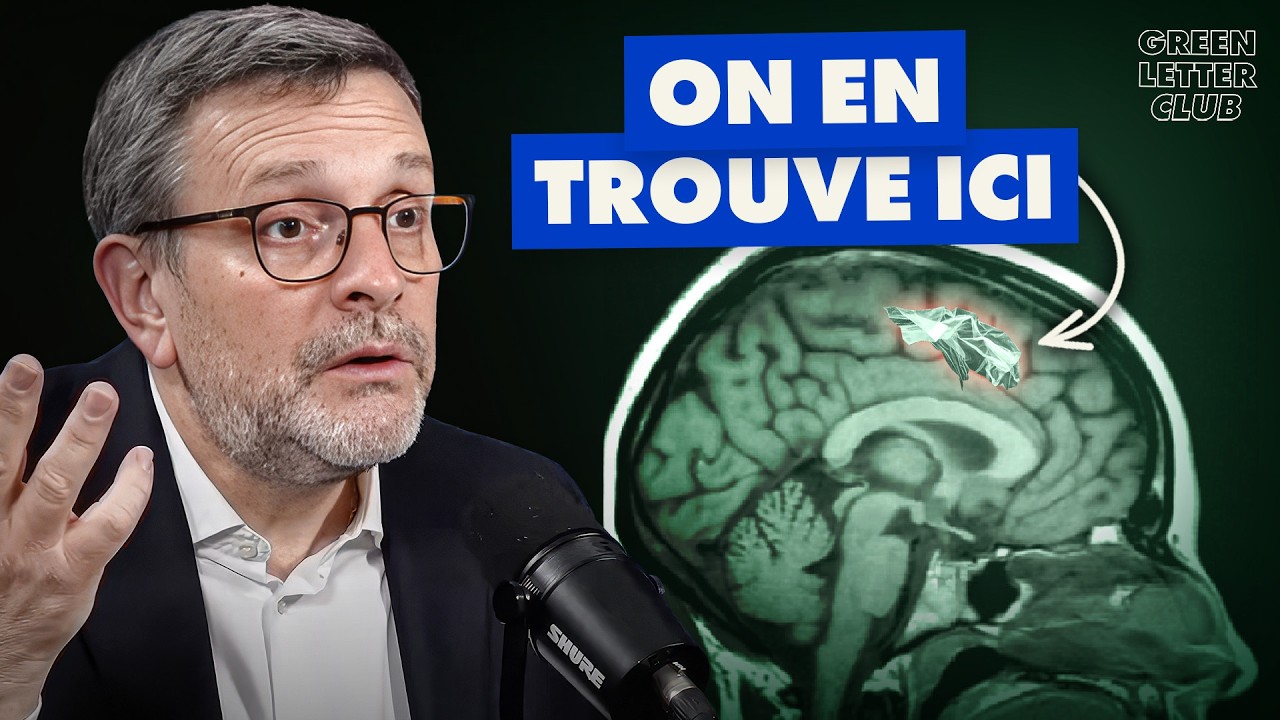
#165 - Plastique : une bombe à retardement ?
Keywords
Summary
170 words
Critical Evaluation
The video provides a comprehensive and well-structured overview of plastic pollution, drawing on the expertise of Philippe Bolo, who has deep knowledge of the subject through his parliamentary work. The discussion is grounded in scientific data, such as the 9% recycling rate and the projected tripling of production by 2060, which lends credibility to the claims. Bolo’s explanations of the dispersion process and the sources of microplastics are clear and accessible, making complex topics understandable without oversimplifying. The argumentation is solid, with a logical flow from the scale of the problem to its health and environmental impacts, and finally to policy responses. The sources cited, including Richard Thompson’s research and the concept of a ‘GIEC du plastique’, are relevant and reputable. However, the video is primarily an interview, so it relies on the guest’s expertise rather than presenting original research. The discussion of health impacts is somewhat speculative, acknowledging the lack of definitive studies, which is honest but leaves some uncertainty. The title’s question ‘a time bomb?’ is addressed, but the answer is nuanced, emphasizing the long-term and diffuse nature of the risk. Overall, the video is informative and scientifically sound, though it could benefit from more explicit citations of specific studies. The public comments, if any, were not provided, so no analysis of audience reception is included.
218 words
Title / Content Match
The title accurately reflects the content, which discusses the long-term risks of plastic pollution and its potential as a 'time bomb'.
Quality & Reliability
8/10
The video features a well-informed guest (Philippe Bolo, deputy and agronomist) who has authored parliamentary reports and interviewed hundreds of scientists. The discussion is grounded in scientific data and references, though it is primarily an interview/opinion format rather than a peer-reviewed study.
Key Moments
Markers derived by PSI from the transcript: the creator did not define chapters.
- Introduction to the growing presence of plastic in our lives.
- Discussion on the exponential growth of plastic production.
- Plastic as the future for oil companies.
- Explanation of the dispersion process of plastic.
- The scale of plastic pollution.
- Is plastic a time bomb? Discussion on long-term risks.
- The peak of plastic pollution in 2400?
- Health impacts of plastic.
- Proposal for a 'GIEC du plastique' (IPCC for plastic).
- Recycling as a smoke screen?
- Bioplastics and their potential.
- Single-use plastic as the main culprit.
- International treaty on plastic pollution.
- Which countries support the treaty?
- Chances of the treaty being realized.
- National actions to address plastic pollution.
- What would you do if you were President of the Republic?
Cited Sources
- Greenletter Club website — Support the independent channel
Concurring Sources
- OECD Global Plastics Outlook — Provides data on plastic production and waste, consistent with the video's claims.
Contribution & Novelties
The video offers a comprehensive overview of plastic pollution, synthesizing scientific data and policy perspectives. It highlights the exponential growth of plastic production, the role of the petrochemical industry, and the challenges of recycling. The discussion of a potential ‘GIEC du plastique’ (IPCC for plastic) is a novel proposal for international scientific coordination. The interview provides insights into the ongoing treaty negotiations, which are often not covered in mainstream media.
Pour aller plus loin :
- Plastic pollution on Wikipedia — Overview of the issue.
- Microplastics on Wikipedia — Detailed information on microplastics.
- OECD report on plastic pollution — Policy analysis and projections.
- IPCC (Intergovernmental Panel on Climate Change) — Model for a potential ‘GIEC du plastique’.
- Richard Thompson’s research on microplastics — Key scientist mentioned in the video.
128 words
Radar Profile
The radar profile shows high scores in quantity and quality of information, with a moderate technical level. The reliability is strong, reflecting the expert guest and scientific grounding. The overall assessment is positive, with a slight limitation in technical depth for a general audience.