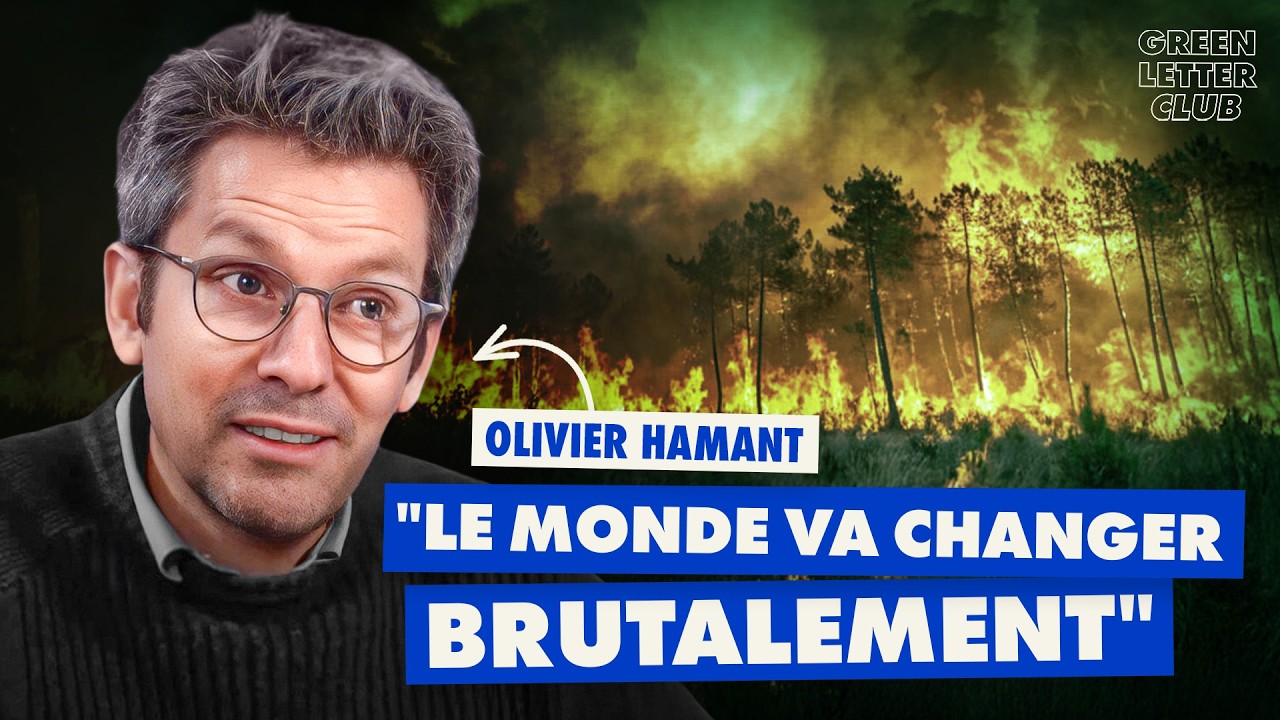
VERS UN MONDE CHAOTIQUE ?
Keywords
Summary
150 words
Critical Evaluation
The video presents a compelling and well-articulated argument by Olivier Hamant, a respected scientist, on the need to shift from a performance-oriented society to one focused on robustness. The discussion is grounded in scientific concepts and examples, such as the Great Acceleration and biodiversity loss, lending credibility to the claims. Hamant’s interdisciplinary background allows him to draw connections between biology, ecology, and societal issues, making the argument accessible yet nuanced. However, the video is primarily an opinion piece rather than a systematic review, and some claims, such as the speed of biodiversity loss compared to dinosaur extinction, could benefit from more precise citations. The interviewer does a good job of guiding the conversation and asking pertinent questions, though at times the discussion remains at a high level without delving into specific policy implications. The title accurately reflects the content, and the video’s structure with chapters helps navigation. Overall, the video offers valuable insights and encourages critical thinking about our current trajectory, but viewers should be aware that it represents one expert’s perspective rather than a consensus view.
177 words
Title / Content Match
The title accurately reflects the central theme of the video, which explores the prospect of a chaotic world and the need for robustness.
Quality & Reliability
8/10
The interview features Olivier Hamant, a senior researcher at INRAE, who presents a well-argued thesis on the transition from a performance-oriented society to a robustness-oriented one in the face of climate instability. He references scientific studies (e.g., WWF Living Planet Report, Will Steffen's Great Acceleration) and provides concrete examples. The discussion is nuanced and interdisciplinary, though it remains an opinion-based interview rather than a systematic review.
Chapters
- Extraits
- Introduction
- La thèse : instabilité, performance et robustesse
- Un monde chaotique ?
- La grande accélération
- L'extermination du vivant
- Vers l'effondrement ?
- Les effondrements dans la Nature
- La performance = fragilité ?
- La banane va-t-elle disparaitre ?
- Le "risque lent"
- Une question de taille ?
- La performance = austérité ?
- La désensibilisation au vivant
- L'ambivalence technologique
- La robustesse dans le vivant
- La redondance
- Une France robuste ?
- La robustesse = la convivialité ?
- La critique de l'efficience
- La pénurie entraine de la coopération ?
- Le monde dans 30 ans ?
Cited Sources
- WWF Living Planet Report 2024 — Cited as the source for the 73% decline in vertebrate populations since 1950.
- Will Steffen et al., 'The trajectory of the Anthropocene: The Great Acceleration' — Referenced in the discussion of the Great Acceleration and its implications.
Concurring Sources
- IPCC Sixth Assessment Report — Supports the claim of increasing climate instability and extreme events.
- IPBES Global Assessment Report on Biodiversity and Ecosystem Services — Corroborates the alarming rate of biodiversity loss mentioned in the video.
Dissenting Sources
- Bjørn Lomborg, 'False Alarm'
Contribution & Novelties
The video provides a fresh perspective on ecological collapse by framing it through the lens of ‘performance vs. robustness,’ drawing from biological principles. It challenges the prevailing paradigm of efficiency and optimization, offering a hopeful alternative based on redundancy and conviviality.
Pour aller plus loin :
- The Great Acceleration — A key concept discussed, with visualizations of socio-economic and Earth system trends.
- Planetary Boundaries — Related framework for understanding environmental limits.
- Doughnut Economics — An economic model aligning with the idea of balancing human needs within planetary boundaries.
88 words
Radar Profile
The radar profile shows high scores in information quantity, quality, and reliability, with a slightly lower technical level, indicating a well-balanced and credible presentation that is accessible to a broad audience.
💬 Très positif : Sur les 30 commentaires analysés, l'écrasante majorité exprime une admiration pour Olivier Hamant et la profondeur de l'analyse, avec des remerciements et des réflexions personnelles, bien que quelques commentaires politiques émergent.