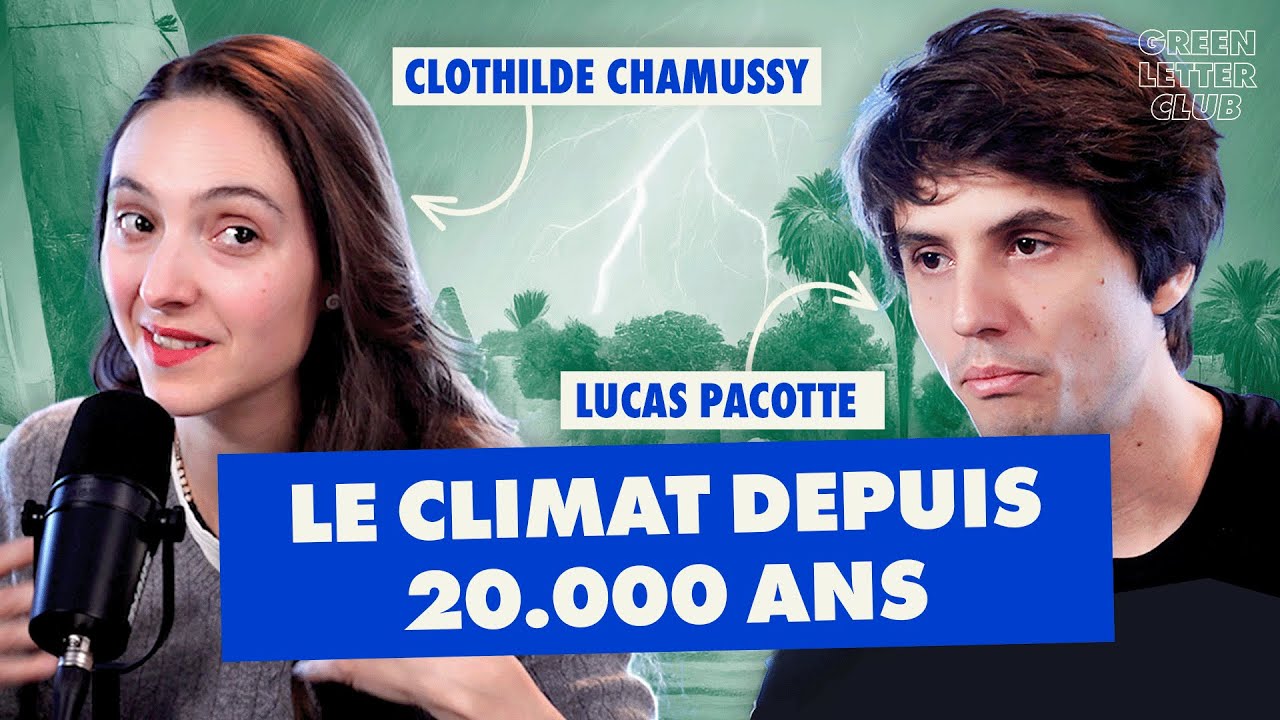
20 000 ans de chaos climatique : comment nos ancêtres ont survécu ?
Keywords
Summary
136 words
Critical Evaluation
The video provides a rich and engaging overview of climate history, leveraging the expertise of two qualified archaeologists. The discussion is well-structured, following a chronological narrative from the Last Glacial Maximum to the present. The speakers demonstrate a strong command of the subject, integrating archaeological evidence with paleoclimatic data. They effectively communicate complex concepts, such as orbital forcing and isostatic rebound, in an accessible manner without oversimplifying. The argumentation is generally solid, with appropriate caveats about uncertainties in dating and interpretation. The sources cited are primarily their own book and general scientific consensus, but specific studies are not referenced in detail, which limits the verifiability of some claims. The interview format allows for dynamic exchange, but occasionally the conversation meanders, and some topics are treated superficially. The title accurately reflects the content, and the video successfully conveys the scale of past climate changes and human adaptation. However, the focus on human history means that some purely climatic mechanisms are not deeply explored. The presence of a brief sponsorship segment is noted but does not detract from the content. Overall, the video is a valuable resource for understanding long-term climate variability and its impact on human societies, though it would benefit from more explicit citations for a fully rigorous scientific assessment.
210 words
Title / Content Match
The title accurately reflects the content, which covers 20,000 years of climate history and human adaptation.
Quality & Reliability
8/10
The video features two archaeologists/historians with academic training, discussing well-documented climatic events. They reference their book 'La Grande histoire du climat' and mention scientific studies. The information is presented with nuance and acknowledges uncertainties. However, as an interview, it lacks formal citations and peer review, and some claims are simplified for a general audience.
Chapters
Cited Sources
- La Grande histoire du climat (book) — The authors' book, which synthesizes climate history and archaeological evidence.
Concurring Sources
- IPCC Sixth Assessment Report — Provides scientific consensus on past and current climate change, supporting the video's context.
Dissenting Sources
- Climatic determinism in archaeology — Some archaeological interpretations may overemphasize climate as a driver of societal collapse, while the video argues for more nuanced human adaptation.
Contribution & Novelties
The video offers a unique interdisciplinary perspective, combining archaeology and climate science to illustrate how human societies have coped with dramatic environmental changes. It challenges deterministic narratives of collapse, emphasizing human resilience and innovation. The discussion of specific events like the 8.2 ka event and the Green Sahara provides concrete examples of rapid climate shifts and their consequences.
Pour aller plus loin :
- 8.2 ka event — A rapid cooling event linked to the drainage of glacial lakes, relevant to the discussion.
- Green Sahara — Periods of increased monsoon rainfall that transformed the Sahara into a savanna, as discussed.
- Last Glacial Maximum — The most recent glacial maximum, when ice sheets covered large parts of North America and Eurasia.
119 words
Radar Profile
The radar profile shows high scores in quantity and quality of information, with moderate technical level. This indicates a content-rich video that is accessible but not overly technical, suitable for a general audience interested in climate history.
💬 Très positif. Sur les 30 commentaires analysés, la grande majorité exprime une forte appréciation, louant la qualité pédagogique et la richesse des informations, avec quelques suggestions de lectures complémentaires.