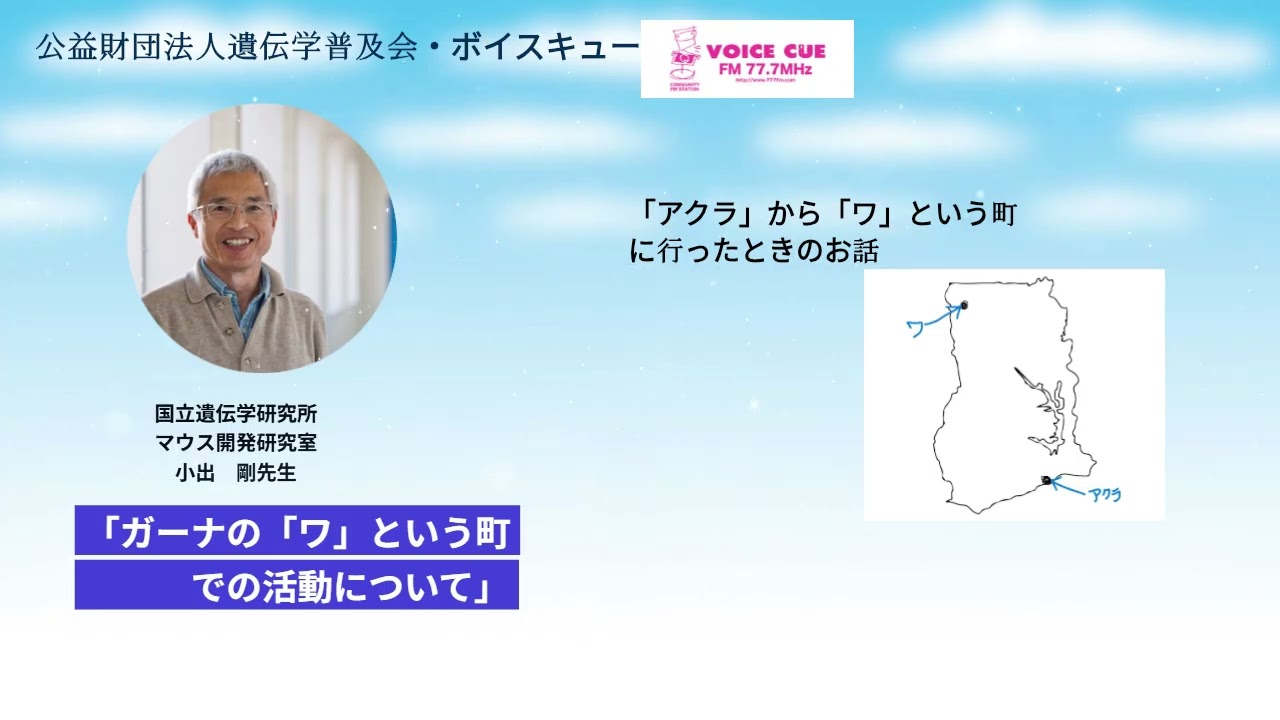
きゅんです!サイエンス ‐ 小出剛先生(2025.12.14)
Keywords
Summary
216 words
Critical Evaluation
Value of the Information & Strength of the Argument
The video provides valuable insights into the practical aspects of a scientific fieldwork project in Ghana, including logistics, local conditions, and challenges. The argumentation is based on personal experience and observations, which adds authenticity but lacks rigorous scientific data. The discussion about grasscutter farming and its socio-economic impact is informative, but the scientific depth is limited. The speaker’s expertise lends credibility, but the content is more anecdotal than analytical.
Scientific Rigor, Source Quality, Title Accuracy
The scientific rigor is moderate; the speaker is a qualified researcher, but the information is presented informally without citations. No specific sources are mentioned in the video or description. The title is appropriate for the content, which is a science communication interview. The description provides context about the series and the guest, but no additional references.
140 words
Title / Content Match
The title 'きゅんです!サイエンス' is a playful series name, and the subtitle indicates the guest and date. The content matches the title as it is a science communication interview.
Quality & Reliability
7/10
The video is an informal interview with a researcher from the National Institute of Genetics, discussing his fieldwork in Ghana. The information is based on personal experience and observations, not peer-reviewed data. However, the speaker is a qualified expert, and the content is plausible and consistent with known facts about grasscutter farming and rural Ghana.
Key Moments
Markers derived by PSI from the transcript: the creator did not define chapters.
- Introduction and recap of previous episode on Ghana
- Discussion about traveling from Accra to Wa, road conditions, and time
- Mention of new airport and flight to Wa
- Description of Wa town, not a tourist destination, but known for shea butter and moringa oil
- Observations on traffic and driving chaos in Wa
- Discussion about food and stomach issues, water safety
- Explanation of grasscutter farming project and its purpose
- Challenges of grasscutter breeding in dry season, feed scarcity
- Workshop with farmers, discussion on feed pellets and canned products
- Future research plans on genetics of tameness in grasscutters
Contribution & Novelties
The video offers a unique perspective on the practical implementation of a conservation and development project involving grasscutter farming in Ghana. It highlights the challenges of animal husbandry in a dry savanna environment and the socio-economic benefits for women. The discussion on the genetic basis of tameness in grasscutters is a novel angle.
Pour aller plus loin :
- Grasscutter farming in West Africa — Overview of grasscutter as a food source and farming practices.
- Shea butter production — Context on a key local product mentioned in the video.
- Genetics of animal domestication — Background on the genetic mechanisms underlying tameness, relevant to Dr. Koide’s research.
105 words
Radar Profile
The radar profile shows moderate scores across all dimensions, with slightly higher reliability and information quality compared to technical depth. This reflects a science communication piece that is credible but not highly technical.