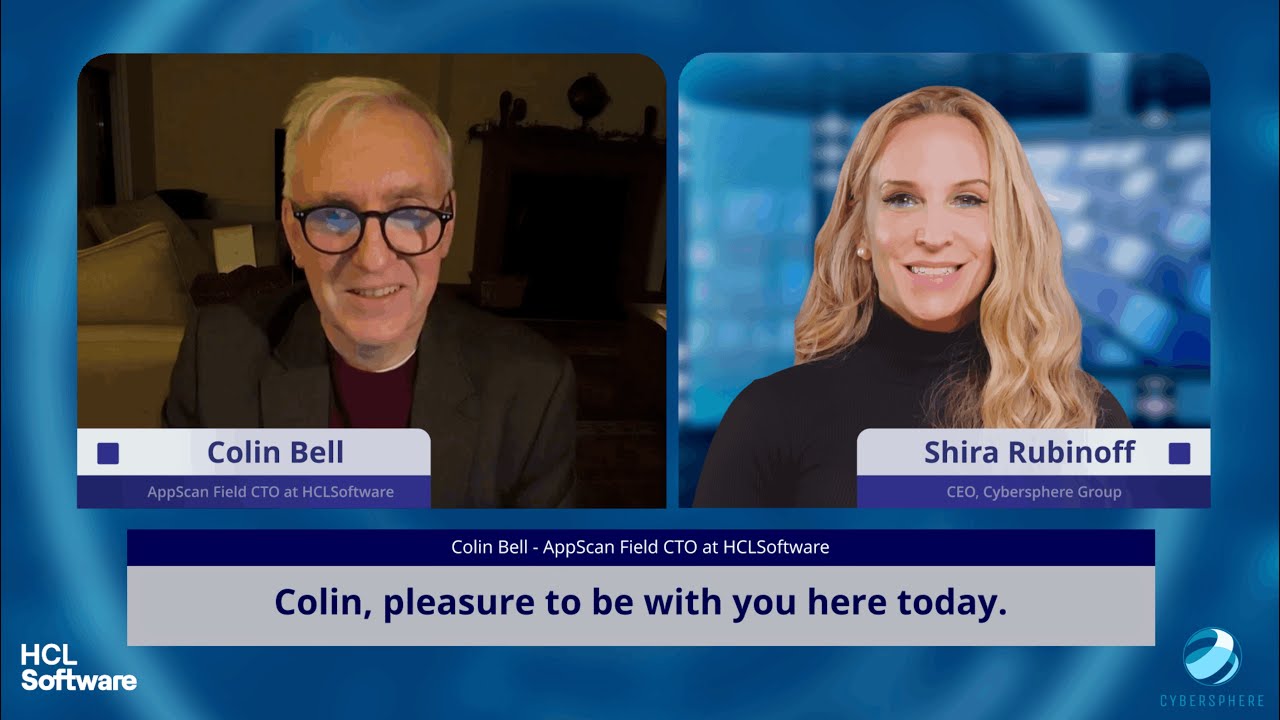
Interview with Colin Bell, AppScan Field CTO at HCLSoftware
Keywords
Summary
153 words
Critical Evaluation
Value of the Information & Strength of the Argument
The value of the information lies in its practical insights from an industry expert on the evolving role of AI in application security. Bell provides a clear argument that AI’s integration into development requires a shift in security practices from periodic checks to continuous, integrated processes. He supports his points with analogies (e.g., industrial revolution) and logical reasoning, though the argumentation is largely anecdotal and lacks empirical evidence. The discussion is coherent and addresses key concerns for CISOs, but it does not offer detailed technical solutions or data-backed claims.
Scientific Rigor, Source Quality, Title Accuracy
The scientific rigor is moderate; the content is based on expert opinion rather than peer-reviewed research. The only source provided is a link to HCLSoftware’s AppScan product page, which serves as a reference for the discussed tool but does not substantiate the claims. The title accurately reflects the content, which is an interview, and the discussion stays on topic. No comments were provided for analysis.
169 words
Title / Content Match
The title accurately reflects the content, which is an interview with Colin Bell on AI's impact on application security.
Quality & Reliability
7/10
The discussion is based on the expert opinion of a field CTO, providing practical insights but lacking empirical data or citations. The claims are plausible and align with industry trends, but the absence of specific references or data reduces the verifiability.
Key Moments
Markers derived by PSI from the transcript: the creator did not define chapters.
- Introduction and topic overview: AI's impact on application security in 2026.
- Discussion on shift from handoff to real-time security creation.
- Explanation of vibe coding and AI-generated code.
- Concerns about developers not understanding AI-generated code.
- Human expertise remains valuable but applied differently.
- Advice for CISOs: treat AI as a new developer, continuous security.
- Cybersecurity tip: security belongs to everyone.
Cited Sources
- HCL AppScan — Referenced as the product associated with the interviewee's role.
Concurring Sources
- HCL AppScan — The product discussed aligns with the need for continuous application security testing.
Contribution & Novelties
The interview provides a forward-looking perspective on how AI will reshape application security, emphasizing the need for continuous security integration and the evolving role of developers. It introduces the concept of ‘vibe coding’ and its security implications, which is a relatively new topic. The discussion offers practical advice for CISOs, such as treating AI as a developer and maintaining independent audits.
Pour aller plus loin :
- Vibe coding — Provides background on the term and its implications.
- DevSecOps — Explains the integration of security into DevOps practices.
- OWASP Top 10 — Relevant for understanding common application security risks.
98 words
Radar Profile
The radar profile shows a balanced performance across all metrics, with slightly higher scores in quality and reliability, indicating a solid but not exceptional content. The low quantity of information suggests a concise discussion, while the technical level is moderate, suitable for a professional audience.