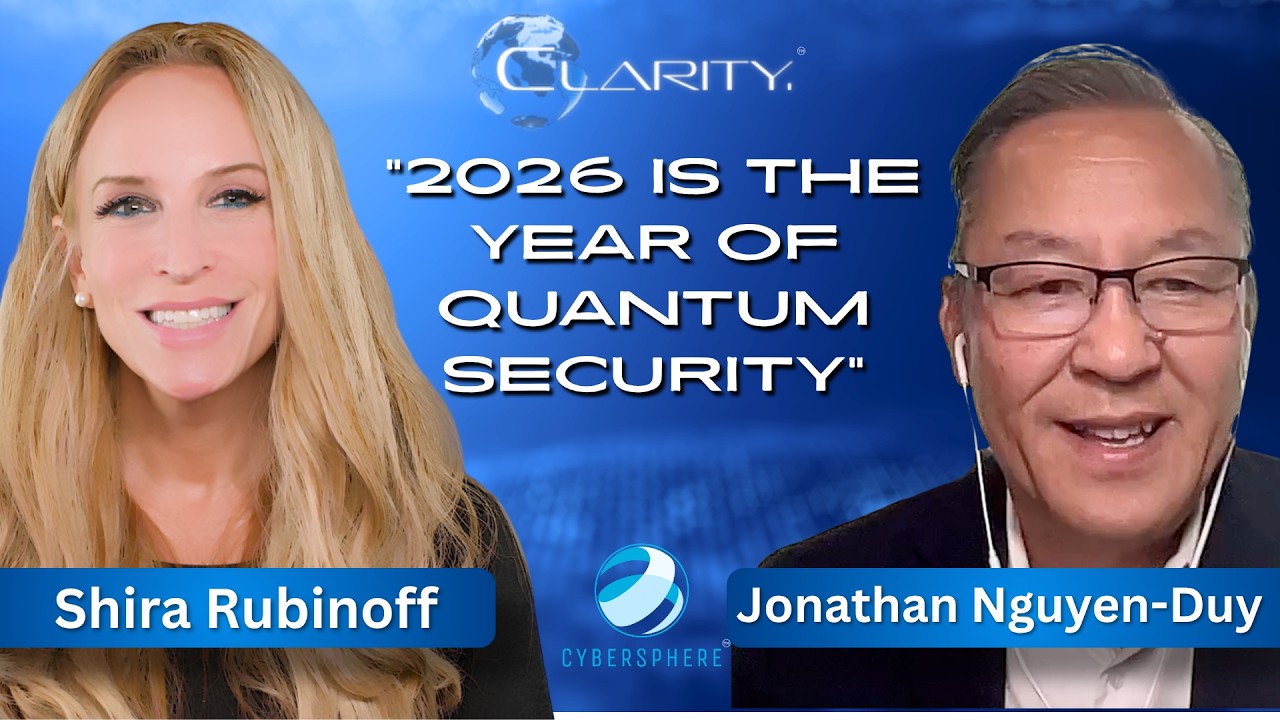
Disecting 'harvest now, decrypt later' strategies and what this means for you and your organization.
Keywords
Summary
157 words
Critical Evaluation
Value of the Information & Strength of the Argument
The video provides valuable insights into the practical challenges of post-quantum migration, emphasizing the need for cryptographic discovery and risk-based prioritization. Nguyen’s argumentation is solid, drawing on his extensive experience and referencing real-world examples like the Verizon Data Breach Report. He effectively communicates the urgency and complexity of the issue, making a compelling case for proactive measures. However, the discussion is largely opinion-based, lacking specific data or case studies to support some claims, such as the 1% network degradation figure.
Scientific Rigor, Source Quality, Title Accuracy
The video references NIST standards (FIPS 203, 204, 205) and the White House executive order 14409, which are credible sources. However, it does not provide direct links or detailed citations, relying on verbal mentions. The title accurately reflects the content, focusing on the ‘harvest now, decrypt later’ threat. The discussion is well-structured and aligns with the title, though it could benefit from more concrete references to studies or reports.
164 words
Title / Content Match
The title accurately reflects the content, which focuses on the 'harvest now, decrypt later' threat and its implications for organizations.
Quality & Reliability
7/10
The discussion is led by an experienced CTO with 28 years in cybersecurity, providing practical insights and referencing NIST standards and executive orders. However, it lacks formal citations and specific data sources, relying on anecdotal evidence and general industry knowledge.
Key Moments
Markers derived by PSI from the transcript: the creator did not define chapters.
- Introduction to the topic and the concept of 'harvest now, decrypt later'.
- Discussion on quantum advantage and quantum supremacy, and the shift from theoretical to practical quantum computing.
- Explanation of the need for cryptographic discovery and building a cryptographic bill of materials.
- Discussion on the regulatory landscape, including NIST standards and executive orders.
- Advice on hybrid approaches, using classical encryption, post-quantum algorithms, and symmetric keys.
- Conclusion with a metaphor about changing locks before the skeleton key is forged.
Cited Sources
- NIST FIPS 203, 204, 205 — Mentioned as finalized standards for post-quantum cryptography.
- White House Executive Order 14409 — Mentioned as setting 2030 deadlines for federal systems.
Concurring Sources
- NIST Post-Quantum Cryptography Standards — NIST's official page on post-quantum cryptography standards, which aligns with the video's discussion.
Contribution & Novelties
The video offers a practical perspective on post-quantum migration, emphasizing the need for cryptographic discovery and hybrid approaches. It highlights the often-overlooked aspect of digital signatures and the trust model, which are equally vulnerable. The discussion on using symmetric keys for critical infrastructure is a valuable addition.
Pour aller plus loin :
- Post-Quantum Cryptography — Overview of post-quantum cryptography and its importance.
- NIST Post-Quantum Cryptography Project — Official NIST page with standards and updates.
- Harvest Now, Decrypt Later — Explanation of the attack strategy.
84 words
Radar Profile
The radar profile shows high scores in information quantity and technical level, indicating a content-rich discussion. The quality and reliability scores are moderate, reflecting the lack of formal citations. The overall balance suggests a valuable but not fully rigorous source.