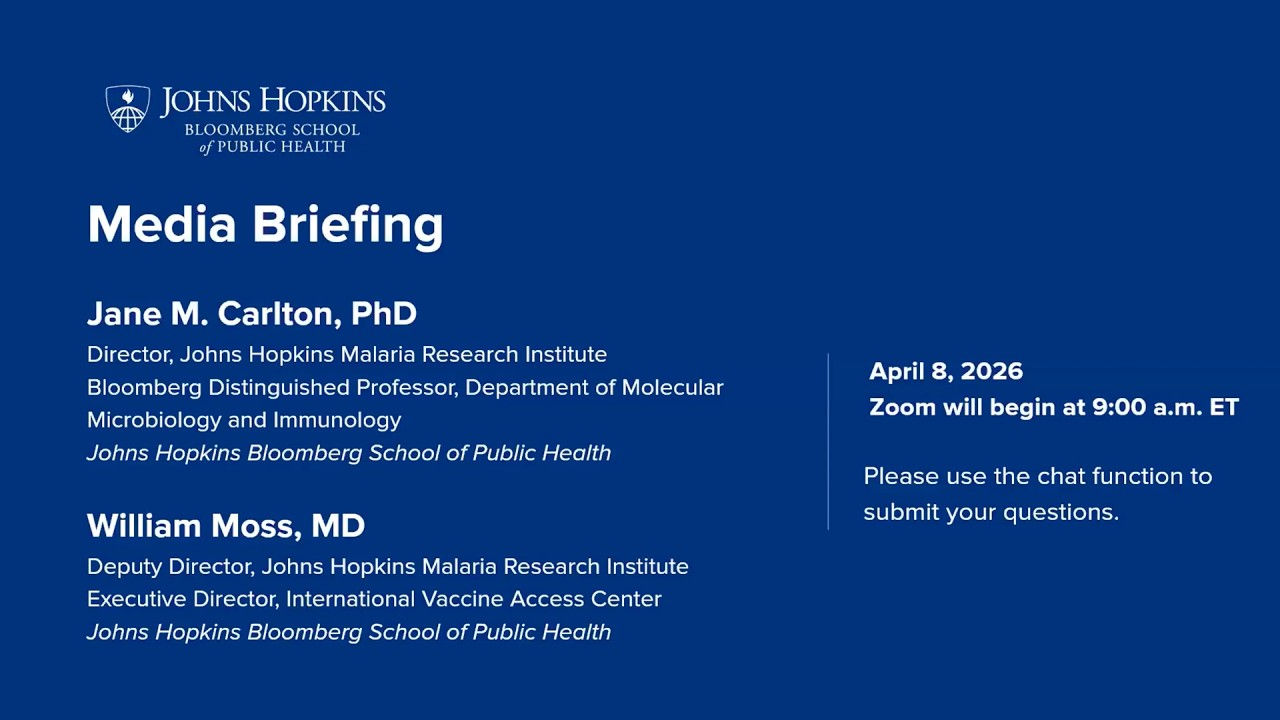
Media Briefing: Malaria Vaccines, Trends, and What’s Ahead
Keywords
Summary
193 words
Critical Evaluation
Value of the Information & Strength of the Argument
The briefing provides valuable, up-to-date information on malaria trends and vaccine rollout, supported by expert testimony and specific data. The argumentation is solid, with clear explanations of vaccine development and the challenges of funding. However, it lacks detailed evidence for some claims, such as the impact of funding cuts, which are presented as early indications rather than proven outcomes.
Scientific Rigor, Source Quality, Title Accuracy
The scientific rigor is high, given the credentials of the speakers and the institutional backing. Sources are primarily institutional and include references to ongoing research and trackers. The title accurately reflects the content, and the briefing is well-structured. No public comments were provided, so no analysis of audience reception is included.
125 words
Title / Content Match
The title accurately reflects the content, which covers malaria vaccines, current trends, and future challenges.
Quality & Reliability
8/10
The briefing features two senior experts from a prestigious institution, providing current data and references to ongoing research. However, it is a media briefing with limited depth and no peer-reviewed citations.
Chapters
- Introduction
- Global status of malaria
- Status of malaria vaccines
- Malaria in countries without new vaccines
- Vaccines and funding
- New tools to tackle malaria in Africa
- Effectiveness of multilateral organizations
- Parasites evading vaccines
- Vaccines for travelers and military personnel
- Pesticide-resistant mosquitos in Zimbabwe
- Key drivers of malaria trends
- Genomic surveillance
- Malaria trackers
- Risks to malaria-control programs
- Closing remarks
Cited Sources
- Jane M. Carlton faculty page — Speaker biography
- William Moss faculty page — Speaker biography
- Johns Hopkins Malaria Research Institute — Research institute mentioned
- International Vaccine Access Center — Center mentioned for vaccine tracking
- World Malaria Day Symposium 2026 — Upcoming event mentioned
- Current Vaccine Introduction Status — Vaccine tracker mentioned
- FACTSHEET | Malaria Research Institute — Factsheet resource
- Discovery of Mosquito Molecular Mechanism Opens Door to New Antimalaria Strategies — Research mentioned
- Natural ‘Biopesticide’ Against Malaria Mosquitoes Successful in Early Field Tests — Research mentioned
- What Genomics Can Reveal about Malaria’s Recent U.S. Appearance (with Jane Carlton) — Podcast mentioned
- Using Genomics to Track Malaria in the U.S. — Article mentioned
- Editing Out Malaria, One Mosquito at a Time — Research mentioned
- A New Malaria Treatment May Offer Long-Awaited Alternative to Artemisinin — Article mentioned
- Southern Africa ICEMR: Harnessing Innovation to Transform Malaria Surveillance into Key Interventions Across Transmission Settings in Zambia — Research program mentioned
Concurring Sources
- WHO Malaria Fact Sheet — Provides global malaria statistics consistent with the briefing.
- Gavi's malaria vaccine page — Supports information on vaccine rollout and funding.
Contribution & Novelties
The briefing provides an expert update on malaria vaccine rollout and funding challenges, with specific data on recent case increases. It highlights the importance of genomic surveillance and new tools like dual active ingredient bed nets. The discussion on funding cuts and their potential impact is timely and relevant.
Pour aller plus loin :
- WHO Malaria Fact Sheet — Official statistics and global burden.
- RTS,S vaccine information — WHO details on vaccine efficacy and implementation.
- Gavi’s malaria vaccine program — Information on Gavi’s funding and support.
- Anopheles stephensi — Invasive mosquito species discussed.
- Artemisinin resistance — WHO fact sheet on drug resistance.
102 words
Radar Profile
The radar profile shows high scores in information quantity, quality, and reliability, with a moderate technical level. This indicates a well-informed briefing that is accessible to a broad audience while maintaining scientific credibility.