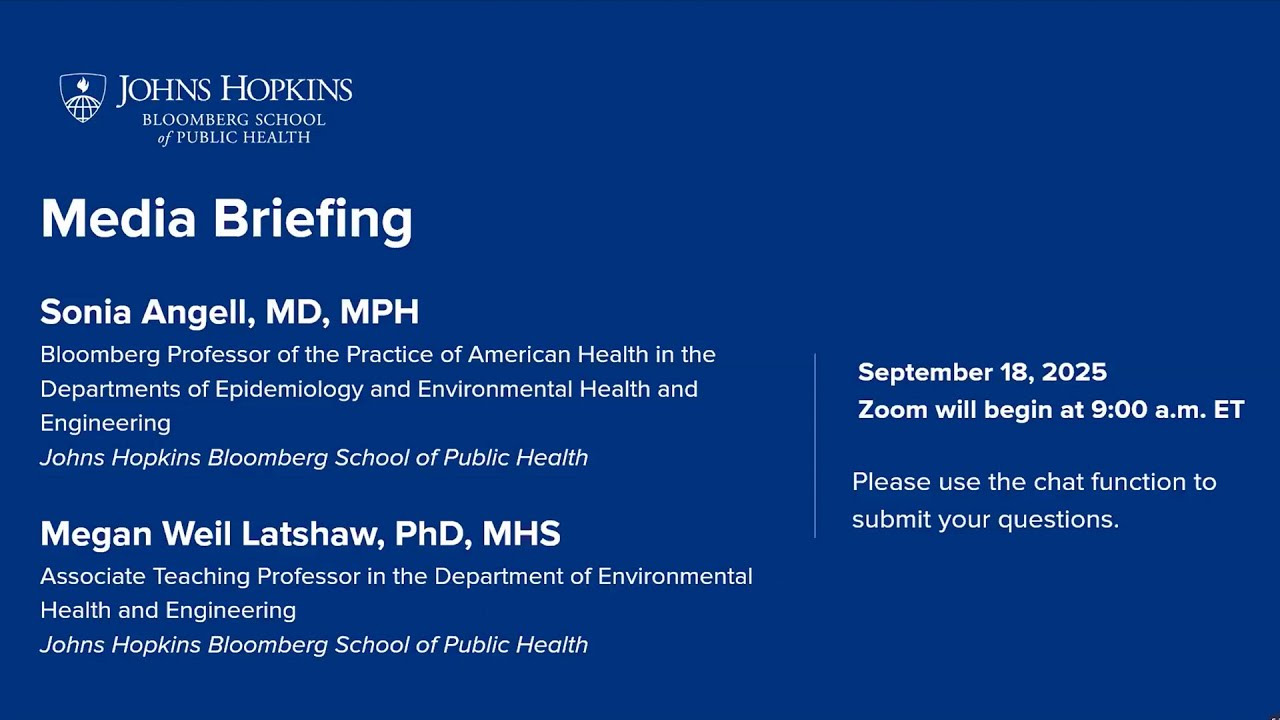
Media Briefing on Extreme Weather and Public Health Impacts | September 18, 2025
Keywords
Summary
190 words
Critical Evaluation
Value of the Information & Strength of the Argument
The briefing provides valuable information on the health impacts of extreme weather, supported by expert opinions and references to specific studies and data. The argumentation is solid, with clear explanations of mechanisms (e.g., heat exacerbating chronic conditions) and evidence-based interventions (e.g., cooling centers, air quality monitoring). The experts effectively communicate the urgency of addressing climate-related health risks and the need for proactive measures. However, the format is a media briefing, so the depth is limited, and some claims lack detailed citations within the discussion.
Scientific Rigor, Source Quality, Title Accuracy
The scientific rigor is high, given the affiliation with Johns Hopkins and the inclusion of references to NOAA data and peer-reviewed articles. The sources cited in the description are credible and relevant, including CDC frameworks and JAMA articles. The title accurately reflects the content, which is a media briefing on extreme weather and public health. The briefing is well-structured, with clear time stamps and a focus on evidence-based information. The experts are qualified and provide balanced perspectives, acknowledging uncertainties and the need for further research.
184 words
Title / Content Match
The title accurately reflects the content, which is a media briefing on extreme weather and public health impacts.
Quality & Reliability
8/10
The briefing features experts from a reputable institution, provides specific data and references, and discusses evidence-based interventions. However, it is a media briefing with limited depth and no peer-reviewed analysis.
Chapters
- Introduction
- How extreme weather events impact health
- State preparation for health impacts
- How people can protect themselves
- Impacts of extreme weather in southern U.S. states
- What people and families can do to protect themselves
- How health care providers measure impacts of extreme weather
- How Dhaka in Bangladesh can minimize its heat vulnerability
- Specific health problems extreme weather can cause
- Link between extreme weather and climate change and public health
- Role social inequality in impacts of climate change
Cited Sources
- Sonia Angell - Faculty Profile — Profile of the speaker, providing credentials and background.
- Megan Weil Latshaw - Faculty Profile — Profile of the speaker, providing credentials and background.
- Bloomberg American Health Initiative — Initiative that the speakers are core faculty members of.
- Health and Extreme Weather Events: Reframing Around Resilience — Article by Sonia Angell on resilience and extreme weather.
- Climate and Health Report — Report from the Bloomberg American Health Initiative on climate and health.
- Assessing the U.S. Climate in 2024 — NOAA report on U.S. climate in 2024, referenced for statistics on billion-dollar disasters.
- Study Finds Large Cities Lagging in Extreme-Weather Early Warning Systems — Study on early warning systems and public health engagement.
- Feeling the Extreme Heat — Article on extreme heat and health impacts.
- The Visible and Unseen Dangers Lurking in Floodwater — Article on health risks associated with floodwater.
- CDC: Building Resilience Against Climate Effects Framework — CDC framework for building resilience against climate effects.
- CDC: National Environmental Public Health Tracking Network — CDC network for tracking environmental health data.
Concurring Sources
- CDC: Building Resilience Against Climate Effects Framework — Supports the need for resilience planning and public health preparedness.
- Climate and Health Report — Provides evidence on climate-related health impacts and interventions.
Contribution & Novelties
The briefing provides a comprehensive overview of the health impacts of extreme weather and climate change, emphasizing the often-overlooked non-emergency health effects. It highlights the need for improved surveillance and resilience-focused planning, and offers practical advice for individuals and communities. The discussion on state preparedness and the finding that the most vulnerable states are least prepared is a notable contribution.
Pour aller plus loin :
- Urban Heat Island Effect — Relevant to the discussion on Dhaka and heat vulnerability.
- Excess Deaths — Concept used to measure health impacts of extreme events.
- CDC’s Climate and Health Program — Provides resources on climate and health.
- NOAA National Centers for Environmental Information — Source for climate data and reports.
116 words
Radar Profile
The radar profile shows high scores in quality of information and reliability, with moderate scores in quantity and technical level. This indicates a well-sourced and credible briefing, but with limited depth and technical detail, appropriate for a media audience.