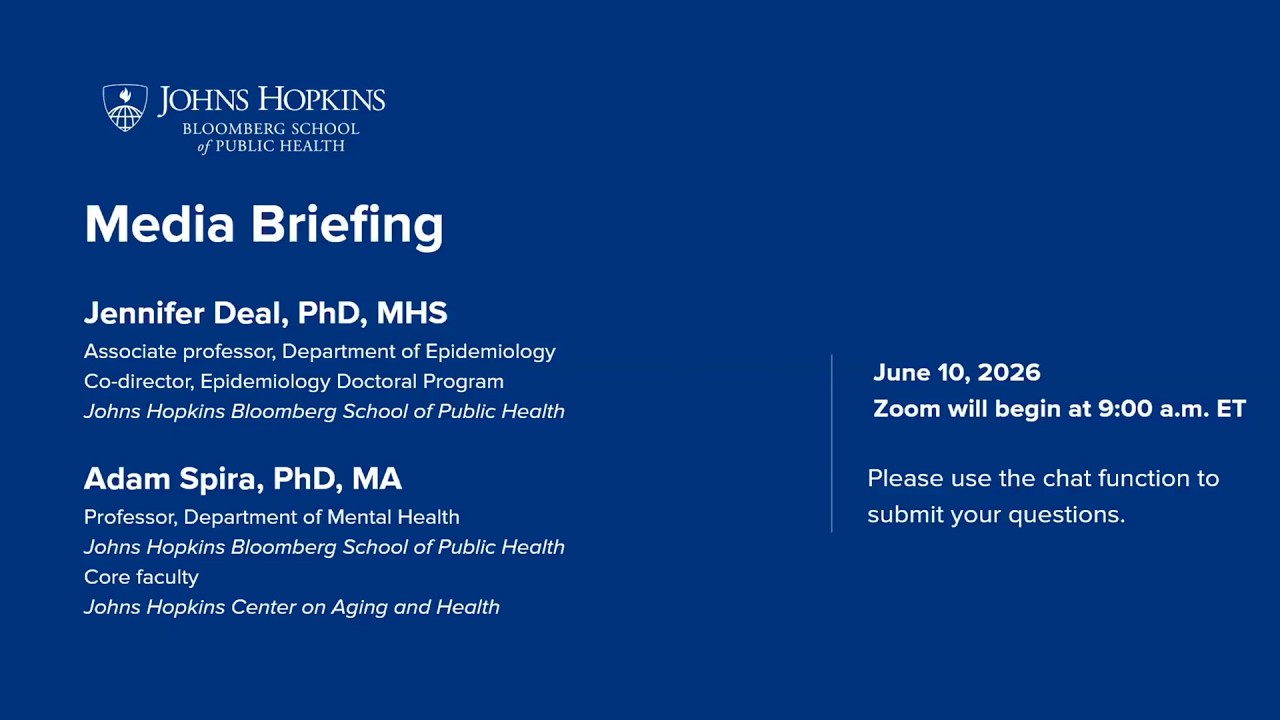
Media Briefing: Dementia and Brain Health
Keywords
Summary
193 words
Critical Evaluation
Value of the Information & Strength of the Argument
The value of the information is high, as it provides evidence-based insights from experts in the field. The speakers cite specific studies, such as the Health ABC study on hearing impairment and dementia, and the Lancet Commission on dementia prevention. They also discuss ongoing research, like the use of wearable devices and the potential of vaccines. The argumentation is solid, with careful caveats about causality and the need for further research. The speakers avoid overstating findings, acknowledging that many associations are not yet proven causal. They also provide practical advice for the public, such as managing cardiovascular risk factors and staying socially engaged. The discussion is balanced, considering both individual and policy-level interventions.
122 words
Title / Content Match
The title accurately reflects the content: a media briefing on dementia and brain health, covering topics such as hearing loss, sleep, prevention, and interventions.
Quality & Reliability
8/10
The briefing features two associate professors from Johns Hopkins Bloomberg School of Public Health, with expertise in epidemiology and mental health. They present evidence-based information, referencing studies and guidelines, and appropriately acknowledge uncertainties. The content is consistent with current scientific consensus, though it is an expert opinion format rather than a systematic review.
Chapters
- Introduction
- Hearing loss and dementia
- Sleep and dementia
- Primary care physicians
- Prevention measures
- Sleep and wearable devices
- Alzheimer’s vs dementia
- Vaccines’ effect
- Protecting brain health
- Lupus, MS, and dementia
- Regular memory loss vs dementia
- Maryland’s rate of dementia
- Sleep and good health
- Family history
- Vision and brain health
- Sleep interventions
Cited Sources
- Hearing Impairment and Incident Dementia and Cognitive Decline in Older Adults: The Health ABC Study — Referenced in the discussion on hearing loss and dementia risk.
- In Older Adults, Fragmented Circadian Rest-Activity Rhythms Linked to Faster Brain Shrinkage Over Time — Mentioned in relation to sleep and brain health research.
- Wrist Device That Monitors Activity Could Help Provide Early Warning of Alzheimer’s — Referenced in the discussion on wearable devices and dementia risk.
- Jennifer Deal Faculty Page — Speaker profile.
- Adam Spira Faculty Page — Speaker profile.
- Johns Hopkins Bloomberg School of Public Health — General resource for the institution.
Concurring Sources
- Lancet Commission on dementia prevention — The briefing references the Lancet Commission's findings on modifiable risk factors, which align with the discussion.
- Alzheimer's Association Facts and Figures — The statistics on dementia prevalence mentioned in the briefing are consistent with this source.
Contribution & Novelties
The briefing provides an expert overview of current research on dementia and brain health, highlighting the multifactorial nature of dementia risk and the importance of addressing modifiable factors like hearing loss and sleep. It offers practical advice for the public and emphasizes the need for further research on causal links. The discussion on the potential of wearable devices and vaccines adds a forward-looking perspective.
Pour aller plus loin :
- Lancet Commission on dementia prevention — The 2020 report on modifiable risk factors for dementia.
- Alzheimer’s Association Facts and Figures — Statistics on Alzheimer’s prevalence and impact.
- American Heart Association Life’s Essential 8 — Includes sleep as a key factor for cardiovascular health, relevant to brain health.
116 words
Radar Profile
The radar profile shows high scores in information quantity, quality, and reliability, with a moderate technical level. This indicates a content that is rich in evidence-based information, suitable for a general audience but with some technical depth.