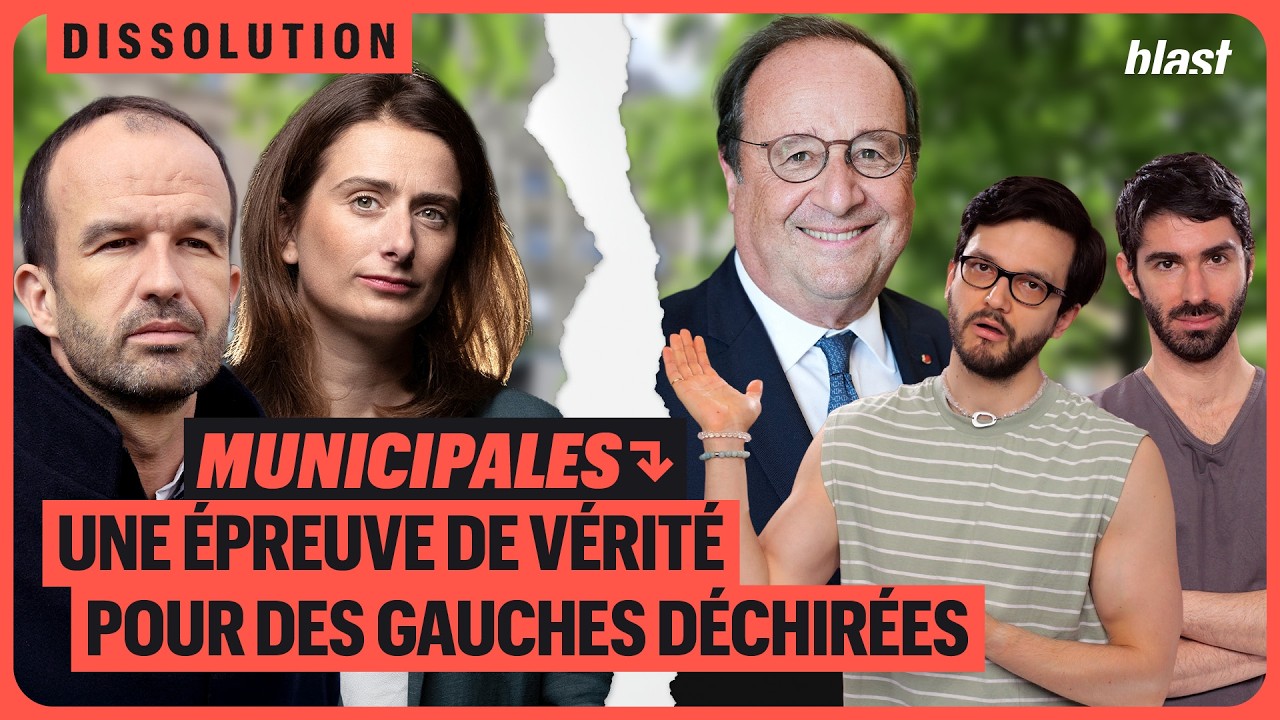
MUNICIPALES : UNE ÉPREUVE DE VÉRITÉ POUR DES GAUCHES DÉCHIRÉES
Keywords
Summary
145 words
Critical Evaluation
The video provides a detailed and structured analysis of the first round of the French municipal elections, with a clear focus on the political dynamics between left-wing parties and the far-right. The argumentation is coherent and well-supported by specific examples, such as the results in Nice, Marseille, and Paris, and the media treatment of LFI. However, the analysis is heavily opinionated and lacks neutrality, which may affect its credibility for viewers seeking an objective overview. The video does not cite any academic sources or provide data beyond what is publicly available, relying instead on the authors’ interpretations. The discussion of the ‘democratic crisis’ is insightful, framing it as a rhetorical device used by elites to deflect criticism, but it remains at the level of political commentary rather than rigorous scientific analysis. The quality of information is moderate: while the electoral data is factual, the interpretation is biased towards a left-wing perspective, particularly in defending LFI against accusations of communitarianism. The sources cited are limited to the Blast website and social media, with no external references to academic work or official reports. The video’s strength lies in its clear narrative and timely relevance, but its lack of diverse sources and overt partisanship reduce its overall reliability. The title accurately reflects the content, and the video delivers on its promise to analyze the municipal elections and the democratic crisis. The presence of a sponsorship segment (Blast’s self-promotion) is noted but does not significantly detract from the content. Overall, the video is a valuable piece of political commentary for those interested in French electoral politics, but it should be consumed with awareness of its partisan lens.
273 words
Title / Content Match
The title accurately reflects the content, focusing on the municipal elections as a test for divided left-wing parties.
Quality & Reliability
The video is an opinion-based analysis by a doctoral student in public law and a journalist, with clear political positioning. It references specific electoral results and media events, but lacks citations of academic sources or data. The analysis is coherent and well-structured, but the lack of verifiable sources and the explicit partisan stance reduce its reliability.
Key Moments
- Introduction to municipal elections analysis
- Discussion of far-right threat (péril brun)
- Analysis of fascization of minds
- Second round as a truth test for the left
- Segment on democratic crisis
- French mayor: alone and exhausted
- Discourse of democratic crisis
- Conclusion: crisis of democracy or crimes of politicians
Cited Sources
- Blast - Soutenir ✓ verified — Support page for the media outlet producing the video
- Blast - Site officiel ✓ verified — Main website of Blast, the media outlet
- Blast - Mastodon ✓ verified — Social media presence of Blast
- Blast - Peertube ✓ verified — Video platform hosting Blast content
- Blast - Twitch ✓ verified — Twitch channel of Blast
- Blast - Bluesky ✓ verified — Bluesky account of Blast
Concurring Sources
- Le Monde - Résultats municipales 2026 — Mainstream media coverage of the election results, generally confirming the trends described.
Dissenting Sources
- Le Figaro - Analyse des municipales
Contribution & Novelties
The video offers a timely analysis of the 2026 French municipal elections, focusing on the strategic dilemmas of left-wing parties and the media’s role in shaping political narratives. It provides a critical perspective on the ‘democratic crisis’ discourse, arguing that it serves to obscure elite failures. The analysis of the far-right’s local weaknesses and the left’s internal divisions is insightful, though not entirely novel.
Pour aller plus loin :
- French municipal elections: a primer — Wikipedia page explaining the electoral system and stakes.
- The concept of ‘fascization’ in political science — Wikipedia entry on fascism, useful for understanding the term used in the video.
- Media framing and political discourse — Wikipedia article on framing theory, relevant to the video’s critique of media treatment of LFI.
125 words
Radar Profile
The radar profile shows high quantity of information (8) and moderate quality (6), reflecting a detailed but opinionated analysis. Technical level is average (5), suitable for a general audience. Reliability (6) is limited by lack of diverse sources and partisan bias.
💬 Orientation: negative towards PS and Hollande, supportive of LFI. The comments express strong criticism of François Hollande and the Socialist Party, accusing them of betrayal and ingratitude towards LFI. Many commenters defend LFI and criticize media bias, while a few accuse Blast of being pro-LFI propaganda.