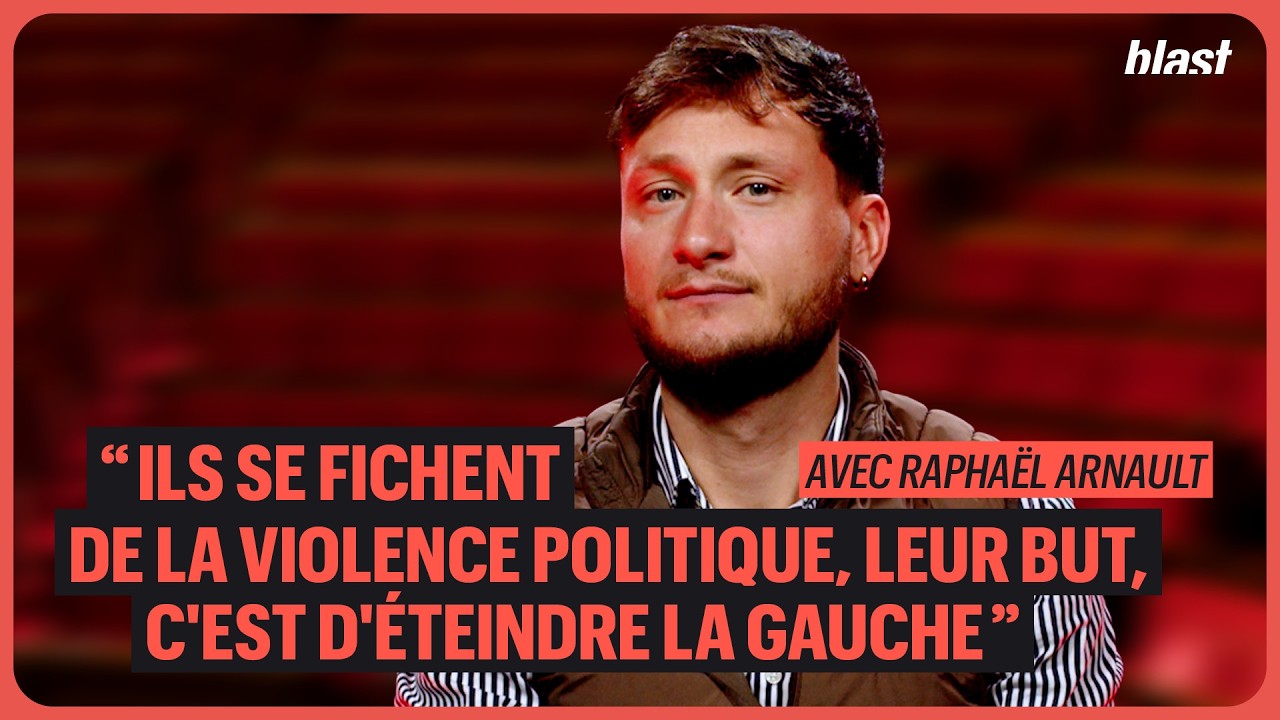
RAPHAËL ARNAULT : "ILS SE FICHENT DE LA VIOLENCE POLITIQUE, LEUR BUT, C’EST D’ÉTEINDRE LA GAUCHE"
Keywords
Summary
166 words
Critical Evaluation
The interview provides a detailed and emotionally charged account from a key figure in the controversy. Arnault’s perspective is valuable for understanding the political dynamics from the inside, but it is inherently partisan and should be treated as a primary source rather than an objective analysis. The argument that the death of Quentin Deranque was instrumentalized by the government and far-right to attack the left is plausible and consistent with historical patterns of political exploitation of tragedies. However, Arnault offers no concrete evidence for his claims beyond his own experience and assertions. The interview lacks references to specific media reports, judicial documents, or independent investigations that could substantiate his narrative. The journalist, Soumaya Benaïssa, adopts a sympathetic stance, asking open-ended questions that allow Arnault to develop his points without critical challenge. This format is typical of a partisan media outlet and limits the interview’s value as a balanced source of information. The discussion of the brawl itself remains vague, with Arnault emphasizing that he was not present and that the far-right version is false, but without providing an alternative factual account. The interview’s strength lies in its exposition of the political climate and the pressures faced by antifascist activists, but its weakness is the lack of verifiable data or external corroboration. The title accurately captures the core message, but the content does not offer new factual revelations; it is primarily a defense of Arnault’s position and a critique of his opponents. For a viewer seeking to understand the political instrumentalization of the event, the interview is informative, but for factual details about the death or the judicial process, it is insufficient. The presence of a sponsorship segment (Blast’s self-promotion) does not affect the evaluation. Overall, the interview is a useful primary source for political analysis but has limited reliability for factual claims.
302 words
Title / Content Match
The title accurately reflects the central thesis of the interview: that political violence is being instrumentalized to target the left.
Quality & Reliability
The interview presents a personal and political perspective from a directly involved actor. While the guest provides context and critique of media and political instrumentalization, the account is partisan and lacks independent verification of key factual claims. The source (Blast) is an independent left-wing media, but no external sources or data are cited to support assertions. The emotional tone and lack of distance reduce reliability for factual claims.
Key Moments
- Introduction and context of the interview
- Arnault explains reasons for breaking silence
- Discussion of the brawl and initial media narrative
- Critique of political instrumentalization by government and far-right
- Arnault's experience of death threats and security concerns
- Analysis of the National Assembly's minute of silence and calls for resignation
- Broader context of rising far-right violence in Lyon
- Arnault's vision for antifascist struggle and collective action
- Conclusion and return to parliamentary work
Cited Sources
- Blast - Soutenir ✓ verified — Mentioned as a call for support to maintain independence
- Blast - Site officiel ✓ verified — General reference to the media outlet
Concurring Sources
- Mediapart investigation on Quentin Deranque — Referenced in the interview as revealing Deranque's ties to neo-Nazi groups; no URL provided.
Contribution & Novelties
The interview provides a first-hand account from a central figure in the controversy, offering insight into the political and media dynamics surrounding the death of Quentin Deranque. It articulates a clear critique of how the event was used to target the left and antifascist movements, and highlights the personal threats and pressures faced by Arnault. While not providing new factual evidence, it contributes a perspective that is often marginalized in mainstream media.
Pour aller plus loin :
- Concept of political instrumentalization of tragedies — Relevant for understanding how events are used for political gain.
- Antifascist movements in Europe — Provides historical and comparative context for the French antifascist struggle.
- Media bias and framing theory — Useful for analyzing how media narratives shape public perception of political violence.
127 words
Radar Profile
The radar profile shows moderate scores in quantity of information and reliability, reflecting the interview's detailed but partisan nature. The low technical level indicates accessibility to a general audience, while the quality of information is limited by lack of external verification.
💬 Mixed: The comments show a polarized audience, with supporters expressing gratitude and solidarity, while critics accuse the channel of bias and question the guest's credibility. The tone is often confrontational, reflecting deep political divisions. Sur les 30 commentaires analysés, les avis sont partagés entre soutien inconditionnel et critiques acerbes, avec une tendance à la polarisation idéologique.