RELATIONS INTERNATIONALES : POURQUOI PERSONNE N’EST D’ACCORD ?
Keywords
Summary
166 words
Critical Evaluation
The video offers a concise and accessible introduction to the field of International Relations, successfully demystifying a complex academic discipline for a general audience. Its primary strength lies in its clear presentation of the three main theoretical paradigms—realism, liberalism, and constructivism—using relatable analogies and pop culture references (e.g., Sonic the Hedgehog characters) to make abstract concepts tangible. The historical grounding, particularly the discussion of Alfred Zimmern and the post-WWI context, provides valuable context for understanding the discipline’s normative origins. The hosts also acknowledge the interdisciplinary nature of IR, which is accurate and helps viewers appreciate the field’s breadth.
However, the video has several limitations. The simplification, while necessary for a short format, inevitably glosses over nuances and debates within each paradigm. For instance, the distinction between classical realism and neorealism, or between liberal institutionalism and neoliberal approaches, is not addressed. The constructivist section is particularly brief and could benefit from mentioning key scholars like Alexander Wendt or the concept of ‘anarchy is what states make of it.’ The video also omits critical and postcolonial perspectives, which are increasingly important in contemporary IR scholarship. The sources cited are limited to one book by Laurence Badel and a textbook by David and Schmitt; while these are credible, the video does not provide direct links to these works in the description, making it harder for viewers to verify claims. The absence of any mention of peer-reviewed articles or primary documents weakens the scientific rigor.
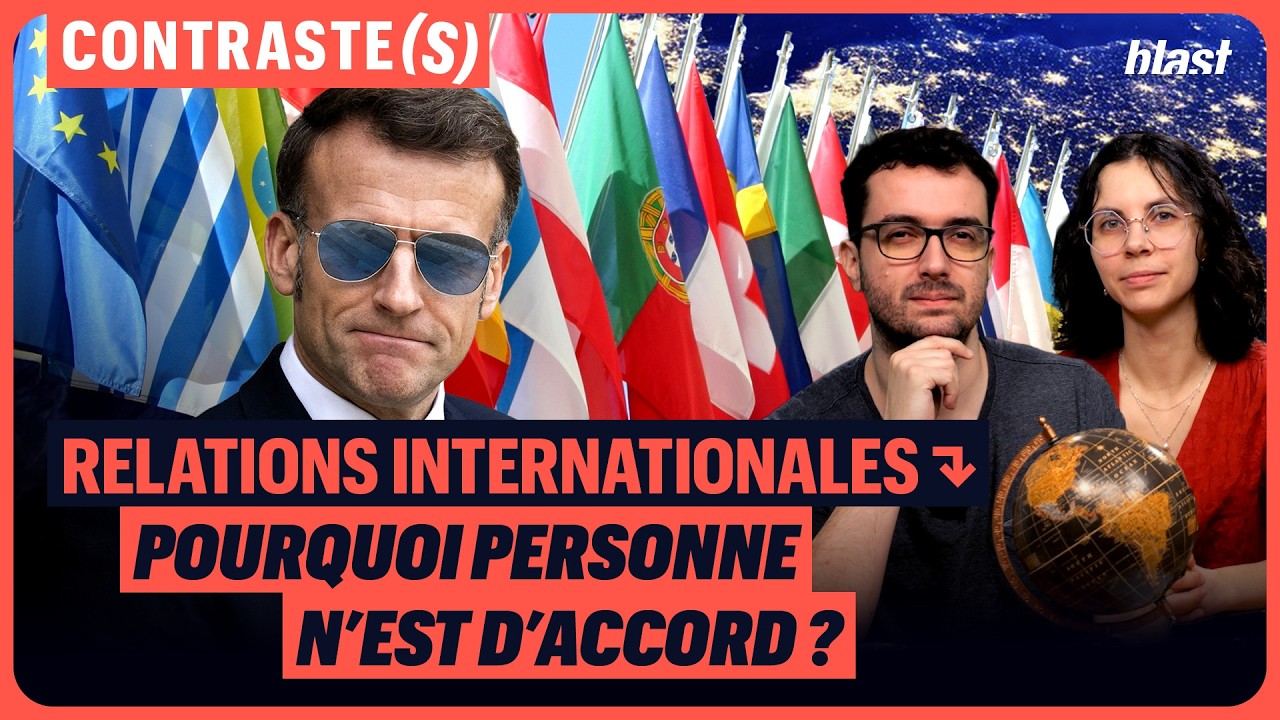
The argumentation is logically structured, moving from history to theory, and the hosts maintain a balanced tone, not favoring any particular paradigm. The use of humor and banter keeps the content engaging, but occasionally distracts from the core message. The video’s title accurately reflects its content, and the thumbnail (featuring Macron) is a clickbait tactic that does not mislead, as the video does touch on symbolic politics briefly.
Overall, the video is a good starting point for anyone new to IR, but it should be supplemented with more detailed academic sources for a deeper understanding. The quality of information is high for a popular science format, but the lack of direct source links and the omission of critical perspectives prevent it from being excellent.
365 words
Title / Content Match
The title accurately reflects the video's content, which explores why scholars disagree on IR theories.
Quality & Reliability
The video provides a solid overview of the main theoretical currents in International Relations (realism, liberalism, constructivism) and their historical origins, citing a recent book by historian Laurence Badel and a textbook by Charles-Philippe David and Olivier Schmitt. The information is accurate and well-structured, though simplified for a general audience. The lack of direct links to primary sources in the description slightly reduces verifiability.
Key Moments
- Introduction with humor about Macron's sunglasses and the definition of IR.
- Explanation of the interdisciplinary nature of IR and different university programs.
- Historical origins of IR: post-WWI, Aberystwyth, Alfred Zimmern, and the League of Nations.
- Discussion of normativity in early IR and the critique of prescribing rules.
- Introduction of the three main currents: realism, liberalism, constructivism.
- Detailed explanation of realism: states as wolves, security dilemma.
- Liberalism: cooperation, democratic peace theory, free trade.
- Constructivism: identities, norms, and the social construction of international politics.
- Discussion on whether IR is a distinct discipline and comparison with robotics.
- Conclusion and call to action (like, comment, share).
Cited Sources
- Écrire l'histoire des relations internationales — Book by Laurence Badel (2024) cited as a reference for the history of IR.
- La guerre et la paix : Approches et enjeux de la sécurité et de la stratégie — Textbook by Charles-Philippe David and Olivier Schmitt (4th edition) used to outline the three main currents.
- Introduction aux relations internationales — Manual by Diane Étier cited for the definition of constructivism.
Concurring Sources
- Écrire l'histoire des relations internationales — Provides historical context on the emergence of IR as a discipline.
- La guerre et la paix : Approches et enjeux de la sécurité et de la stratégie — Supports the classification of IR into realism, liberalism, and constructivism.
Contribution & Novelties
The video provides a clear, engaging, and historically grounded introduction to the main theoretical paradigms in International Relations, making the discipline accessible to a broad audience. Its original contribution lies in its humorous and relatable presentation style, using pop culture references to explain complex theories.
Pour aller plus loin :
- Alexander Wendt, ‘Anarchy is what states make of it’ — Key constructivist text explaining how state identities shape international politics.
- Democratic Peace Theory — Central liberal idea that democracies rarely fight each other.
- Kenneth Waltz, ‘Theory of International Politics’ — Foundational neorealist work on the structure of the international system.
100 words
Radar Profile
The radar profile shows balanced scores across all dimensions, with a slight dip in 'niveau technique' due to the introductory nature. The video excels in clarity and engagement but could improve in depth and source verification.
💬 Positif — The comments are overwhelmingly positive, with viewers praising the humor and educational value of the video. Many express appreciation for the duo's chemistry and the accessible explanation of IR theories. A few comments engage in lighthearted banter about the hosts' references.