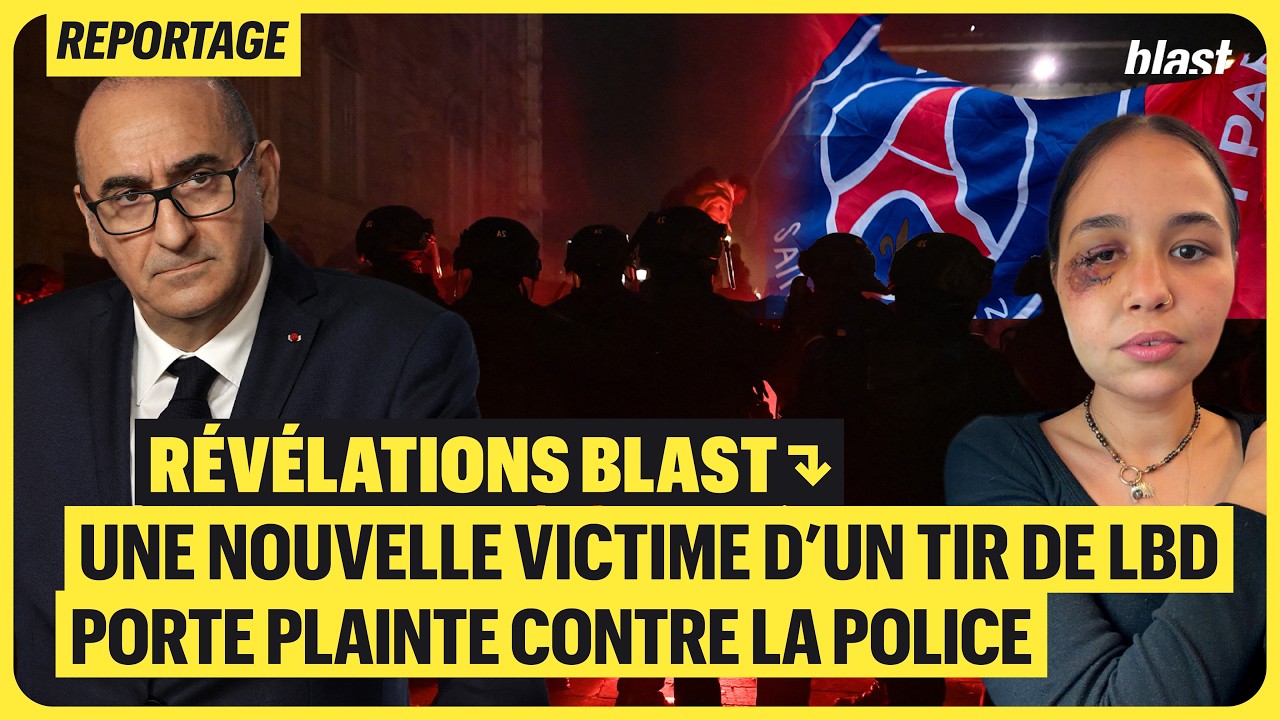
RÉVÉLATIONS BLAST : UNE NOUVELLE VICTIME D’UN TIR DE LBD DÉPOSE PLAINTE CONTRE LA POLICE
Keywords
Summary
139 words
Critical Evaluation
The video is a journalistic report that presents a single victim’s testimony and calls for the ban of LBDs. While the emotional impact is strong, the scientific and factual rigor is low. The report does not provide any independent verification of the events, nor does it include perspectives from police or official sources. The only sources cited are the Blast media platform itself, which raises concerns about bias and lack of objectivity. The video’s argumentation relies on anecdotal evidence and emotional appeal rather than systematic data or analysis. The claim that ’there cannot be a good use of LBD’ is a sweeping statement not supported by evidence. The video fails to address the context of the police operation or the legal framework governing LBD use. The inclusion of a politician’s statement adds a political dimension but does not enhance scientific credibility. The video’s strength lies in giving a voice to a victim, but as a scientific or factual analysis, it is insufficient. The lack of diverse sources, absence of counterarguments, and reliance on a single narrative significantly undermine its reliability. The video is more of a advocacy piece than an objective investigation. For a rigorous evaluation, one would need to consult official reports, medical records, and multiple eyewitness accounts. The video does not provide any such data. Therefore, while the victim’s story is compelling, the video’s value as a source of reliable information is limited.
235 words
Title / Content Match
The title accurately reflects the content: a new victim of a LBD shooting files a complaint against the police.
Quality & Reliability
The video is a journalistic report based on a single victim's testimony and statements from a lawyer and a politician. No independent verification of facts is provided, and the sources cited are limited to the Blast media platform itself. The video lacks scientific or official data, relying on emotional appeal and anecdotal evidence.
Key Moments
- Introduction: Sarah's testimony begins.
- Sarah describes the incident: being shot while crossing a pedestrian crossing.
- Sarah details her injuries: macular damage, 90% vision loss, stitches.
- Sarah's lawyer explains the legal complaint: intentional violence with a weapon causing permanent disability.
- Carlos Bilongo, deputy, criticizes police violence and calls for accountability.
- Sarah reflects on the psychological impact and her determination to fight.
- Report mentions other victims: Raphaël, Jordan, Daoua.
- Conclusion: call for ban of LBD and end of police violence.
Cited Sources
- Blast - Soutenir ✓ verified — Support page for Blast media.
- Blast Info ✓ verified — Main website of Blast media.
- Blast on Mastodon ✓ verified — Social media presence.
- Blast on Peertube ✓ verified — Video platform.
- Blast on Twitch ✓ verified — Streaming channel.
- Blast on Bluesky ✓ verified — Social media presence.
Concurring Sources
- Mediapart article on Jordan — Mentioned in video as another victim.
Contribution & Novelties
The video provides a first-hand testimony of a victim of LBD violence, adding a personal narrative to the ongoing debate about police use of force in France. It highlights the case of Sarah and mentions other victims, contributing to public awareness. However, it does not offer new scientific or factual insights beyond the victim’s account.
Pour aller plus loin :
- LBD (Flash-Ball) - Wikipedia — Overview of the weapon and its controversies.
- IGPN - Wikipedia — French police oversight body.
- Police violence in France - Wikipedia — Context on police violence and legal framework.
94 words
Radar Profile
The radar shows low scores across all dimensions, reflecting the video's reliance on a single testimony, lack of independent verification, and absence of technical or scientific depth. The video is more emotional than factual.
💬 Very negative. The 30 comments analyzed overwhelmingly express anger and frustration towards police violence and the use of LBDs, with many calling for accountability and justice for the victim.