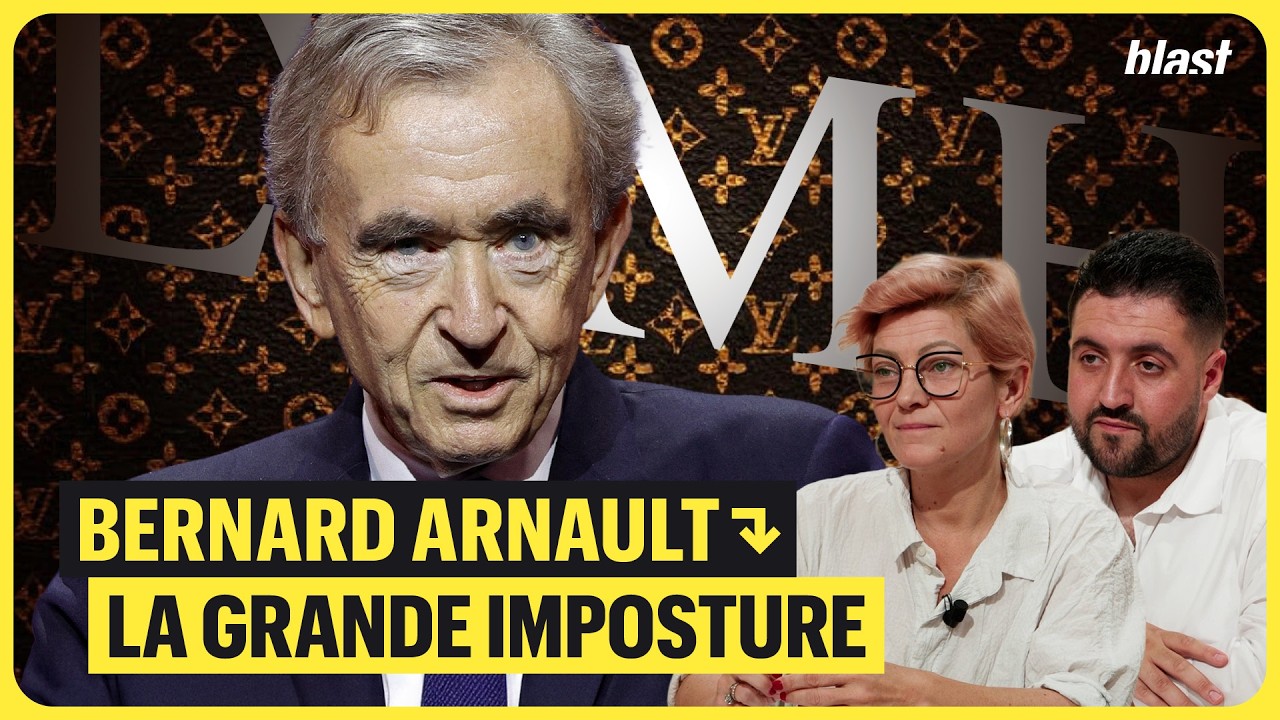
BERNARD ARNAULT, L'UNIVERS IMPITOYABLE D'UN IMPOSTEUR DEVENU INTOUCHABLE
Keywords
Summary
159 words
Critical Evaluation
The video provides a rigorous and well-structured critique of Bernard Arnault’s public persona and business practices. Audrey Millet, a historian specializing in economic history and the fashion industry, brings substantial expertise to the discussion. Her arguments are grounded in documented research, including archival sources and public records, which she references throughout the interview. The analysis systematically deconstructs the myth of Arnault as a self-made entrepreneur, highlighting instead his privileged background, inherited wealth, and strategic use of financial engineering. Millet’s focus on the transformation from industrial to financial capitalism is particularly insightful, placing Arnault’s career within broader economic shifts. The interview also addresses the political and media networks that have supported Arnault’s rise, including his relationships with French presidents and his ownership of media outlets. The discussion of tax optimization, labor practices, and environmental impacts adds depth to the critique. However, the video is not without limitations. As an interview format, it relies heavily on Millet’s interpretations, and while she cites sources, the viewer cannot independently verify all claims without consulting her book. The tone is consistently critical, which may be seen as lacking balance by some viewers, though the evidence presented is substantial. The video does not include counterarguments from Arnault’s defenders, which would have strengthened its objectivity. The production quality is high, with clear editing and effective use of archival footage. The host, Hamza Chennaf, asks pertinent questions that guide the discussion without being overly deferential. Overall, the video offers a valuable contribution to public understanding of wealth concentration and corporate power, though its critical stance means it is best viewed as a starting point for further research rather than a definitive account.
274 words
Title / Content Match
The title accurately reflects the critical and investigative nature of the content, focusing on Bernard Arnault's rise and methods.
Quality & Reliability
The video is based on a well-documented book by a historian specializing in economic history. The arguments are supported by references to specific events and sources, though the lack of direct citations in the video limits verifiability. The host and guest maintain a critical but evidence-based tone.
Key Moments
- Introduction: Bernard Arnault's public image vs. reality.
- Millet explains her motivation for writing the book.
- Arnault's family background and upbringing in Roubaix.
- Arnault's education at Polytechnique and his low ranking.
- The shift from industrial to financial capitalism in the 1970s.
- Arnault's first major acquisition: Boussac and Dior.
- The hostile takeover of LVMH and the 'war of the luxury groups'.
- Arnault's political connections and influence on tax policy.
- Media ownership and control of public discourse.
- Social and environmental costs of the luxury industry.
Cited Sources
- Blast - Soutenir — Support page for Blast, the media outlet hosting the video.
- Blast - Site officiel — Official website of Blast.
Concurring Sources
- Les Échos - Enquête sur Bernard Arnault — French business newspaper covering Arnault's business moves.
- Le Monde - Articles on LVMH — Major French newspaper reporting on LVMH and Arnault.
Dissenting Sources
- Forbes - Bernard Arnault profile — Forbes presents a more favorable view of Arnault as a self-made billionaire.
Contribution & Novelties
The video offers a critical, historically grounded perspective on Bernard Arnault’s rise, challenging the dominant narrative of entrepreneurial success. It provides detailed insights into his use of financial engineering, political influence, and media control, which are often overlooked in mainstream coverage.
Pour aller plus loin :
- Thomas Piketty’s ‘Capital in the Twenty-First Century’ — Provides a broader framework on wealth concentration and inheritance.
- The concept of ‘financialization’ — Explains the shift from industrial to finance-driven capitalism that Millet describes.
- David Graeber’s ‘Debt: The First 5000 Years’ — Offers anthropological perspective on debt and power relations relevant to Arnault’s strategies.
99 words
Radar Profile
The radar shows high scores in quantity and quality of information, reflecting the detailed historical analysis. The technical level is moderate, accessible to a general audience. Reliability is solid due to the expert guest and documented sources.
💬 Négatif : Les commentaires sont majoritairement critiques envers Bernard Arnault et le système capitaliste, avec des références à Balzac et des accusations de privilèges et de crimes. Sur les 30 commentaires analysés, la plupart soutiennent la thèse de la vidéo, bien que quelques-uns défendent Arnault ou critiquent le média.