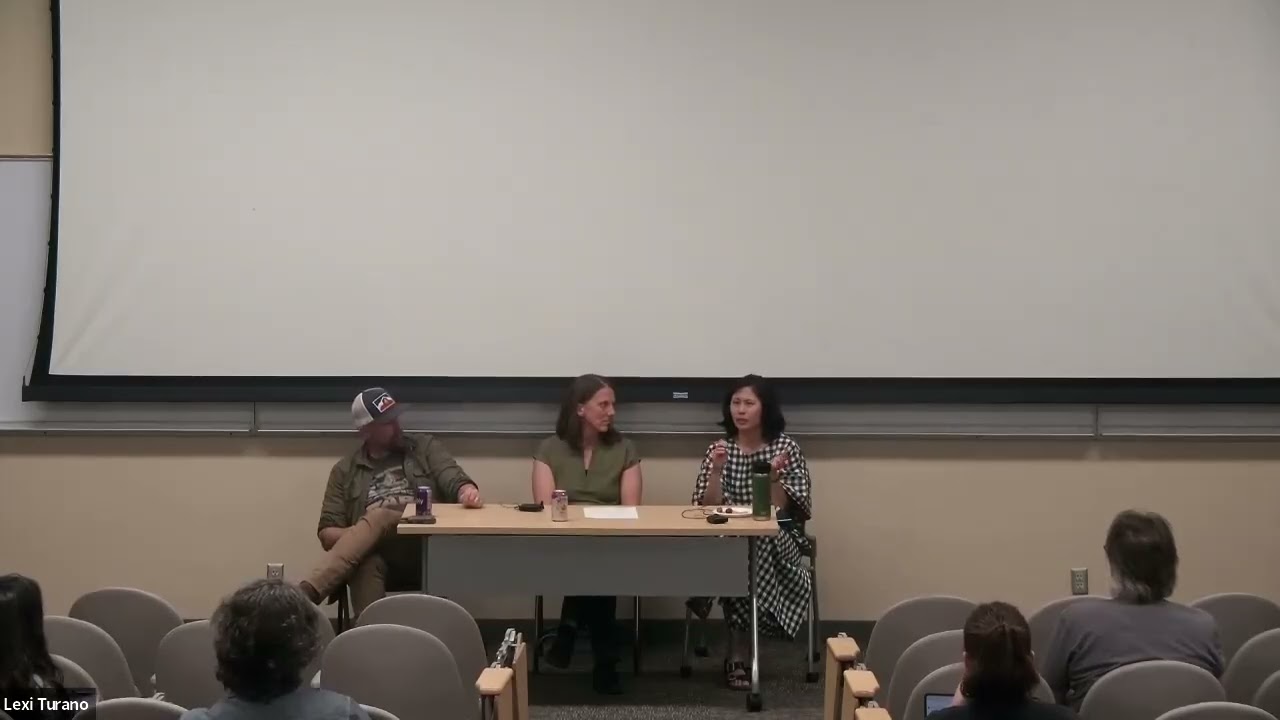
Science Communication in the Age of TikTok
Keywords
Summary
218 words
Critical Evaluation
Value of the Information & Strength of the Argument
The panel provides valuable insights into science communication, drawing on extensive practical experience. The argumentation is solid, with each panelist contributing unique perspectives: Lael Gilbert emphasizes empathetic, audience-centered communication; Matthew LaPlante highlights the existing trust in science and the potential of various media; Sara Yeo brings an academic perspective on misinformation and AI. They effectively argue that the medium is not the primary obstacle, but rather the approach to communication. The discussion is well-structured, with concrete examples and anecdotes that illustrate their points. However, the arguments are largely based on personal experience and observations rather than rigorous empirical evidence, which slightly weakens the scientific rigor. Nonetheless, the panel’s expertise lends credibility to their claims.
Scientific Rigor, Source Quality, Title Accuracy
The panelists are credible experts in science communication, with backgrounds in journalism, public communication, and science communication research. They reference specific examples, such as Emily Zhang’s YouTube series ‘Rabbit Hole’ and the documentary ‘Behind the Curve,’ but do not provide formal citations or links to sources. The discussion is grounded in current issues, such as AI’s impact on communication and misinformation research, but lacks explicit references to academic studies. The title accurately reflects the content, as the panel directly addresses the challenges and opportunities of science communication in the age of TikTok and new media. Overall, the scientific rigor is moderate, with practical insights outweighing formal academic citations.
237 words
Title / Content Match
The title accurately reflects the topic, as the panel discusses the challenges and opportunities of science communication in the digital age, including social media platforms like TikTok.
Quality & Reliability
8/10
The panel consists of experienced science communicators and a researcher in science communication, providing credible insights. The discussion is grounded in practical experience and references to academic research, though it lacks formal citations.
Key Moments
Markers derived by PSI from the transcript: the creator did not define chapters.
- Introduction of panelists: Lael Gilbert, Matthew LaPlante, and Sara Yeo.
- Discussion on the meaning of science communication in the age of TikTok and new media.
- Lael Gilbert emphasizes starting with 'to what end?' and building trust and empathy.
- Matthew LaPlante discusses the high public trust in scientists and the potential of various media, citing Emily Zhang's YouTube series.
- Sara Yeo talks about AI's role in curating scientific information and its implications for writing abstracts.
- Discussion on AI's influence on writing style, including the overuse of the word 'quietly' by ChatGPT.
- Lael Gilbert shares her approach of writing for a specific person, like her mother-in-law, to make science accessible.
- Audience question about bad actors and engagement, leading to discussion on misinformation and disinformation.
- Sara Yeo discusses the social aspects of misinformation, referencing the documentary 'Behind the Curve'.
Cited Sources
- Rabbit Hole (YouTube series) — Mentioned by Matthew LaPlante as an example of successful long-form science communication on YouTube.
- Behind the Curve (documentary) — Referenced by Sara Yeo to illustrate the social dynamics of flat Earth believers.
Concurring Sources
- Trust in Science (Pew Research Center) — Supports the panel's discussion on public trust in scientists.
Contribution & Novelties
The panel offers a nuanced perspective on science communication in the digital age, emphasizing that core principles of trust and empathy remain paramount. It provides practical advice for scientists to adapt to new media without compromising credibility. The discussion on AI’s impact on communication is timely and thought-provoking.
Pour aller plus loin :
- Science Communication on Wikipedia — Overview of the field and its evolution.
- The Elaboration Likelihood Model — A framework for understanding how people process persuasive messages, relevant to audience engagement.
- Inoculation Theory — A strategy for prebunking misinformation, discussed in the context of combating false information.
99 words
Radar Profile
The radar profile shows high scores in information quantity, quality, and reliability, with a moderate technical level. This indicates a well-rounded discussion that is accessible to a general audience while providing substantive insights. The low technical score reflects the non-technical nature of the topic, focusing on communication strategies rather than scientific methods.
💬 No comments were provided for analysis.