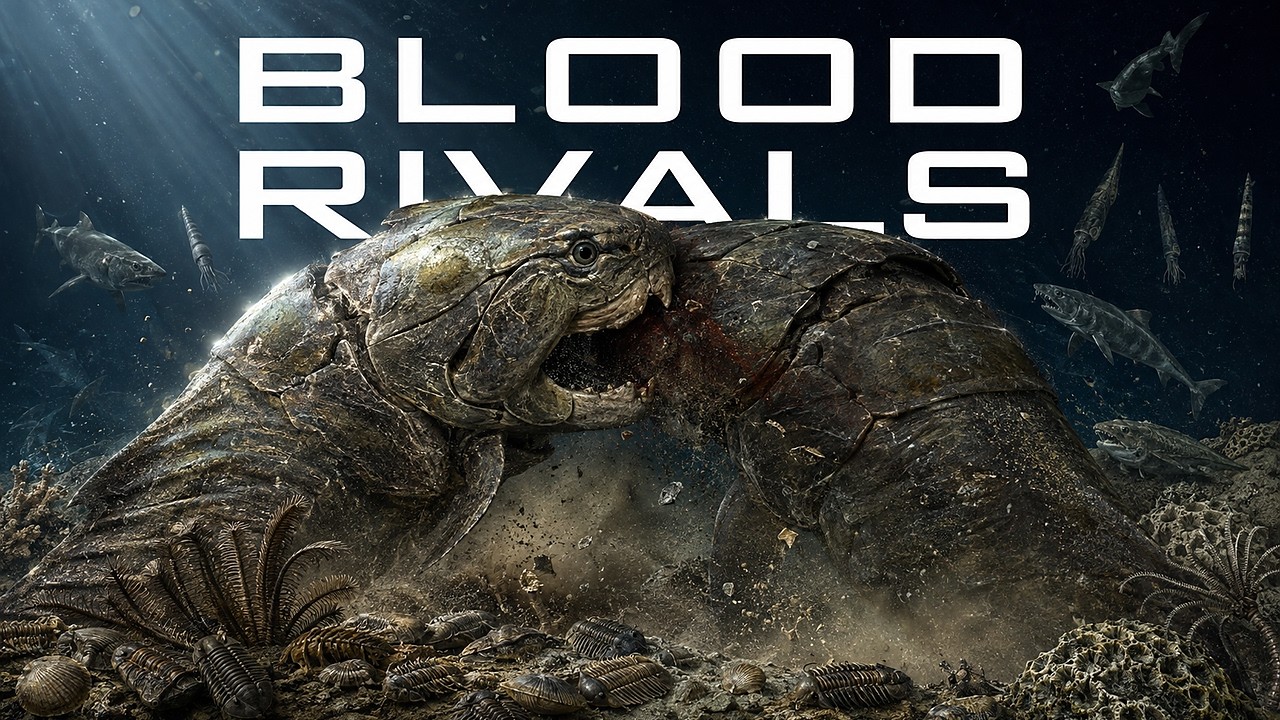
Earth's Deadliest Predator Nobody Remembers | Full Documentary
Keywords
Summary
179 words
Critical Evaluation
Value of the Information & Strength of the Argument
The documentary provides a broad overview of the ecological and evolutionary factors that contribute to an apex predator’s success. It effectively argues that deadliness is not just about size or strength but about a combination of adaptations, including ambush tactics, sensory abilities, and energy efficiency. The argumentation is coherent and builds a case for the predator’s dominance through anatomical and behavioral evidence, though it remains at a general level without delving into specific data or case studies. The value lies in its accessible synthesis of concepts like trophic cascades and evolutionary arms races, making it a good introduction for a general audience.
Scientific Rigor, Source Quality, Title Accuracy
The documentary does not cite specific scientific studies, researchers, or fossil sites, which weakens its scientific rigor. It relies on general paleontological knowledge and plausible reconstructions, but the lack of verifiable sources makes it difficult to assess the accuracy of specific claims. The title is appropriate and matches the content, though it is somewhat sensational. The description mentions CT scanners and biomechanical models, but these are not elaborated upon in the transcript. Overall, the scientific quality is moderate, suitable for general education but not for advanced study.
204 words
Title / Content Match
The title accurately reflects the content: the documentary focuses on a forgotten apex predator, emphasizing its deadliness and obscurity.
Quality & Reliability
6/10
The documentary presents a compelling narrative about a prehistoric apex predator, but it lacks specific scientific citations, named researchers, or direct references to studies. The information is plausible and aligns with general paleontological knowledge, but the absence of verifiable sources and the use of vague language ('some fossil sites suggest') reduce its reliability.
Key Moments
Markers derived by PSI from the transcript: the creator did not define chapters.
- Introduction to the forgotten predator and its significance.
- Setting the scene: the ancient world of supercontinents and early life.
- Discussion of the predator's hunting strategies and efficiency.
- Exploration of the environment and its role in shaping the predator.
- Anatomical analysis: skull, teeth, and sensory adaptations.
- Ecological impact: trophic cascades and prey adaptations.
- Reasons for the predator's obscurity in popular culture.
- The predator's reign and eventual decline.
Contribution & Novelties
The documentary offers a fresh perspective on prehistoric predation by focusing on a lesser-known apex predator, challenging the typical dinosaur-centric narrative. It synthesizes concepts like evolutionary arms races and trophic cascades in an accessible way, making it valuable for general audiences. However, it does not present new scientific findings or unique insights beyond what is commonly known in paleontology.
Pour aller plus loin :
- Apex predator — Provides background on the ecological role of top predators.
- Trophic cascade — Explains the indirect effects of predators on ecosystems.
- Evolutionary arms race — Discusses the co-evolution of predators and prey.
98 words
Radar Profile
The radar profile shows moderate scores across all dimensions, with a slight peak in information quantity. This suggests a documentary that provides a decent amount of content but lacks depth in technical detail and source reliability. The balance indicates a general-audience piece rather than a rigorous scientific presentation.