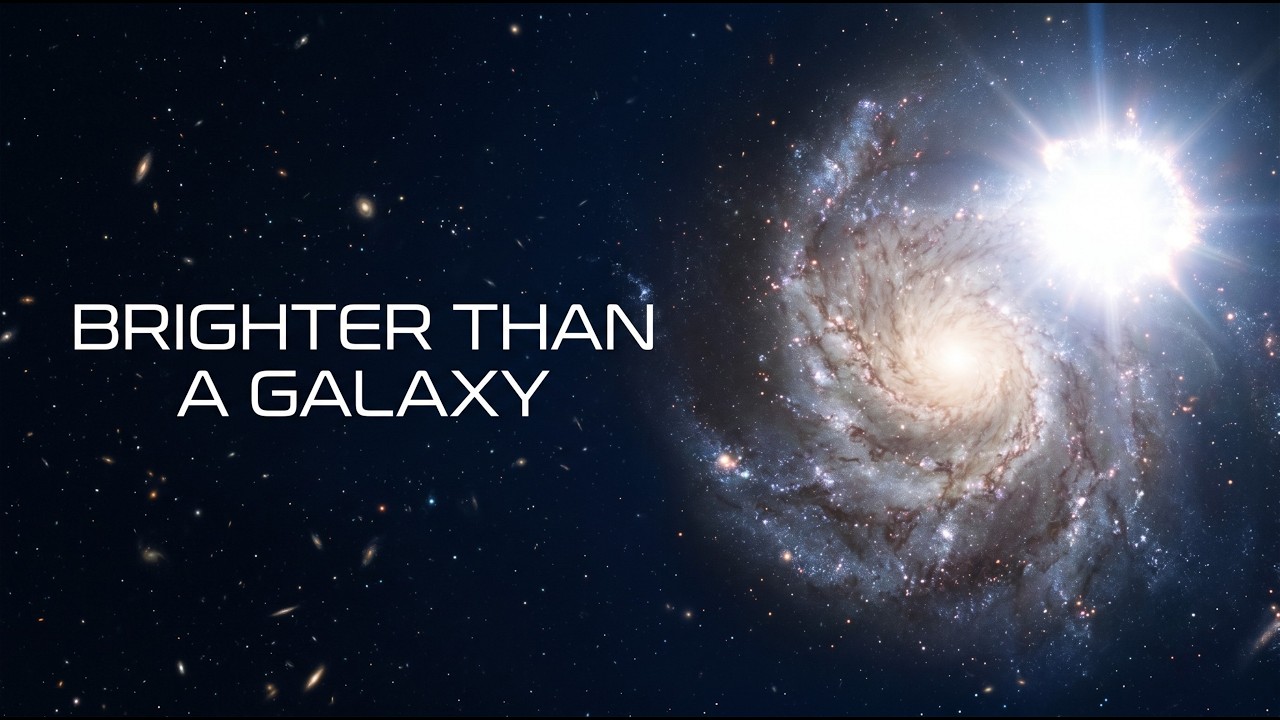
Supernovas: The Cosmic Explosions That Created Life | Full Documentary Movie
Keywords
Summary
148 words
Critical Evaluation
The documentary provides a comprehensive and scientifically accurate overview of supernovae, from stellar nucleosynthesis to the formation of neutron stars and black holes. The explanations of core collapse and the role of neutrinos are particularly well done, capturing the essential physics without oversimplifying. The visualizations are stunning and aid in understanding complex concepts. However, the documentary lacks explicit citations to scientific sources, which would enhance its credibility for a more critical audience. It also glosses over some of the nuances, such as the different mechanisms for Type Ia vs. Type II supernovae, and the exact conditions for black hole formation. The pacing is steady, but the narration can be repetitive, restating the same concepts multiple times. The title is appropriate, and the content aligns well with it. Overall, it is a valuable educational resource for those new to astronomy, though it may not satisfy experts seeking in-depth analysis. The absence of any discussion of recent discoveries or ongoing debates is a minor weakness. The documentary’s strength lies in its clear narrative and visual appeal, making it an effective introduction to the topic.
182 words
Title / Content Match
The title accurately reflects the content, which focuses on supernovae and their role in creating elements necessary for life.
Quality & Reliability
7/10
The documentary provides a scientifically accurate overview of stellar evolution and supernovae, with clear explanations of nuclear fusion, core collapse, and nucleosynthesis. It avoids major errors, though it simplifies some complex processes and lacks citations to primary sources.
Key Moments
Markers derived by PSI from the transcript: the creator did not define chapters.
- Introduction to the balance between gravity and nuclear fusion in stars.
- Explanation of stellar nucleosynthesis and the formation of heavier elements.
- Description of the iron core collapse and the onset of a supernova.
- Formation of neutron stars and black holes from supernova remnants.
- Role of supernovae in enriching the interstellar medium and triggering new star formation.
- Discussion of supernova remnants and their long-term influence on galaxies.
- The cosmic cycle of matter and the importance of supernovae for life.
- Recap of the stellar life cycle and the balance of forces.
- Detailed look at the core collapse process and neutrino emission.
- Conclusion emphasizing the transformative power of supernovae.
Contribution & Novelties
The documentary offers a clear and engaging synthesis of stellar evolution and supernovae, making complex astrophysical concepts accessible to a broad audience. Its visual approach and narrative structure provide an effective educational tool. While it does not present new scientific findings, it excels in explaining the fundamental processes that govern the life and death of stars.
Pour aller plus loin :
- Supernova - Wikipedia — Comprehensive overview of supernova types, mechanisms, and historical observations.
- Stellar nucleosynthesis - Wikipedia — Detailed explanation of how stars forge elements through nuclear fusion.
- Neutron star - Wikipedia — Information on the dense remnants of supernova explosions.
- NASA’s Chandra X-ray Observatory — Real observations of supernova remnants and high-energy phenomena.
115 words
Radar Profile
The radar profile shows high scores in quantity and quality of information, with moderate technical depth and reliability. This indicates a well-balanced documentary that is informative and accurate, though not highly technical or heavily sourced.