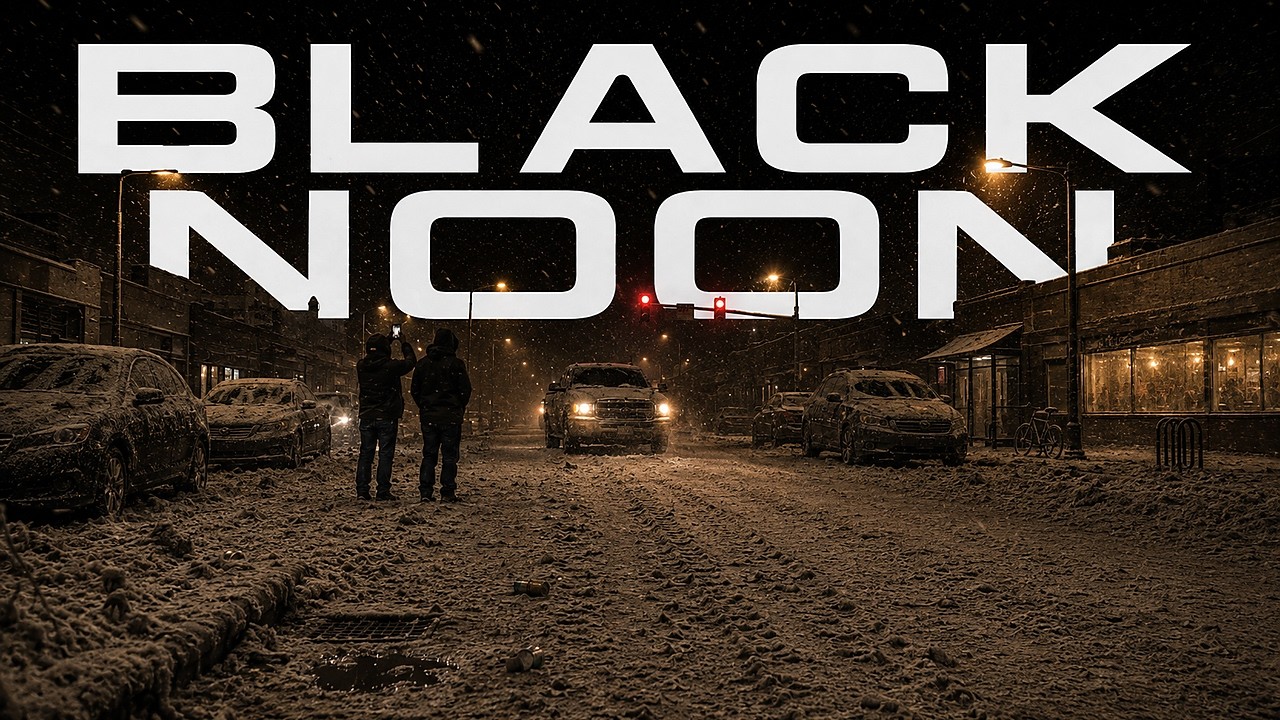
The Day Noon Looked Like Midnight | Full Documentary Movie
Keywords
Summary
81 words
Critical Evaluation
Value of the Information & Strength of the Argument
The documentary provides a compelling narrative that illustrates the potential impacts of extreme wildfires on weather and daily life. It effectively communicates the concept of pyrocumulonimbus clouds and how they can inject smoke into the stratosphere, leading to widespread dimming. The argumentation is coherent, though it relies on a dramatized scenario rather than presenting new scientific findings. The value lies in its ability to raise awareness about the consequences of climate change and wildfire risks.
Scientific Rigor, Source Quality, Title Accuracy
The documentary does not cite specific scientific sources, but it references general concepts such as pyrocumulonimbus and smoke plumes. The title accurately reflects the content, focusing on the phenomenon of darkness at noon. The scientific explanations are plausible and align with known atmospheric processes, but the lack of explicit references reduces the rigor. The documentary appears to be a work of creative non-fiction, blending factual information with a fictional narrative.
160 words
Title / Content Match
The title accurately reflects the content, which focuses on the phenomenon of daylight turning to darkness due to wildfire smoke.
Quality & Reliability
7/10
The documentary provides a detailed narrative of a wildfire event and its atmospheric effects, with plausible scientific explanations (pyrocumulonimbus, smoke blocking sunlight). However, it lacks explicit citations to scientific sources, and the story appears dramatized for effect, reducing its reliability as a factual account.
Key Moments
Markers derived by PSI from the transcript: the creator did not define chapters.
- Introduction to the ordinary morning and the first subtle changes in light.
- The sky begins to darken noticeably, and residents start to notice.
- The sun disappears completely, and street lights turn on.
- Emergency alerts and the first reports of a massive wildfire.
- The fire's smoke plume is explained, and the concept of pyrocumulonimbus is introduced.
- The town prepares for prolonged darkness, with schools closed and businesses shut.
- The next morning brings no daylight, and the community faces the ongoing crisis.
- The fire continues to burn, and the smoke spreads across the region.
- The eventual return of sunlight and the aftermath of the event.
Cited Sources
- Pyrocumulonimbus - Wikipedia — The documentary discusses pyrocumulonimbus clouds as the cause of the darkness.
Concurring Sources
- Pyrocumulonimbus - Wikipedia — The documentary's explanation of pyrocumulonimbus aligns with scientific descriptions.
Contribution & Novelties
The documentary offers a dramatized yet educational portrayal of the effects of extreme wildfire smoke on daylight and community life. It highlights the concept of fire-generated weather and the potential for widespread disruption. While not presenting new scientific research, it serves as an engaging public awareness tool.
Pour aller plus loin :
- Pyrocumulonimbus — Overview of fire-induced thunderstorm clouds.
- Wildfire smoke and health — EPA resources on health impacts.
- Climate change and wildfires — IPCC report on climate impacts.
79 words
Radar Profile
The radar profile shows moderate scores across all dimensions, indicating a balanced but not deeply technical documentary. The highest score is in information quantity, reflecting the detailed narrative, while technical level is lower, suggesting accessibility to general audiences.
💬 No comments were provided for analysis.