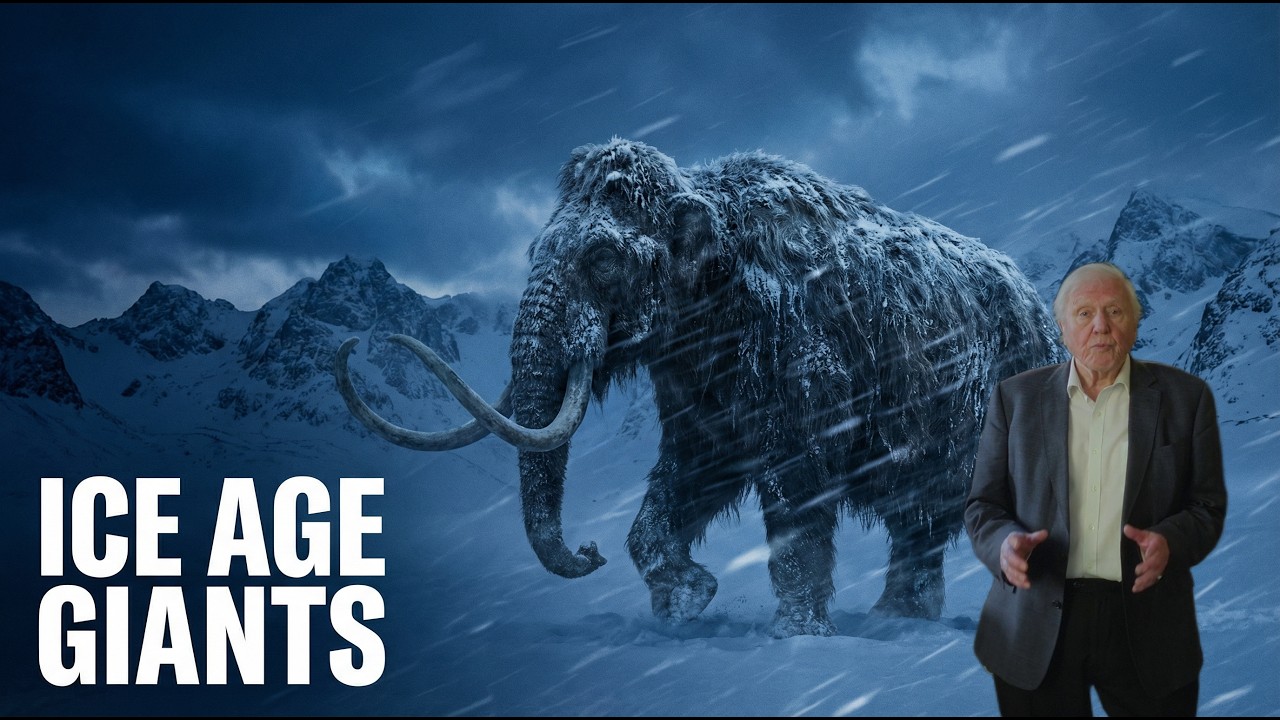
What Life Was Really Like During the Ice Age | Full Documentary
Keywords
Summary
163 words
Critical Evaluation
The documentary offers a visually engaging and broadly accurate introduction to the Ice Age, covering key concepts such as Milankovitch cycles, albedo feedback, and the role of ocean currents. The information is presented in a clear, accessible manner, making it suitable for a general audience. However, the scientific rigor is limited by the absence of specific citations or references to primary research. The narrative relies on established paleoclimatological knowledge but simplifies complex processes, which could lead to misconceptions. For instance, the role of carbon dioxide is mentioned but not deeply explored, and the extinction of megafauna is presented as a combination of climate and human factors without delving into the ongoing scientific debate. The AI narration is disclosed, which is transparent, but the lack of a human voice may reduce engagement for some viewers. The documentary’s strength lies in its synthesis of multiple aspects of the Ice Age, from geological processes to biological adaptations, providing a holistic view. However, it does not offer new insights or original research, and the absence of expert interviews or specific data weakens its authority. The title accurately reflects the content, and the documentary fulfills its promise of exploring life during the Ice Age. Overall, it serves as a decent educational resource but falls short of a rigorous scientific analysis.
215 words
Title / Content Match
The title accurately reflects the content, which explores life during the Ice Age, including environmental conditions and species adaptations.
Quality & Reliability
6/10
The documentary provides a broad overview of the Ice Age, covering orbital cycles, feedback mechanisms, and megafauna, but lacks specific citations and contains some simplifications. The AI narration is clearly disclosed. Overall, it is informative but not deeply rigorous.
Key Moments
Markers derived by PSI from the transcript: the creator did not define chapters.
- Introduction to the warm Pliocene period and the gradual onset of glaciation.
- Explanation of Milankovitch cycles and their role in triggering ice ages.
- Discussion of feedback loops such as albedo and carbon dioxide in amplifying cooling.
- Description of how glaciers reshaped continents, creating features like the Great Lakes.
- Adaptations of megafauna like woolly mammoths and saber-toothed cats to cold environments.
- The role of early humans and their adaptation to the Ice Age environment.
- Examination of megafauna extinction, considering climate change and human hunting.
- Reflection on the relevance of Ice Age climate dynamics to modern climate change.
Contribution & Novelties
The documentary provides a cinematic and accessible synthesis of Ice Age science, making complex paleoclimatic concepts understandable to a broad audience. Its main contribution is the integration of geological, biological, and climatic perspectives into a single narrative, which can serve as an engaging introduction for learners. However, it does not present new research or unique insights.
Pour aller plus loin :
- Milankovitch cycles — Essential for understanding orbital forcing of ice ages.
- Pleistocene megafauna — Overview of the large animals that lived during the Ice Age.
- Quaternary glaciation — Detailed information on the glacial-interglacial cycles.
95 words
Radar Profile
The radar profile shows moderate scores across all dimensions, indicating a balanced but not exceptional documentary. It provides a decent amount of information with acceptable quality, but lacks technical depth and strong source reliability.