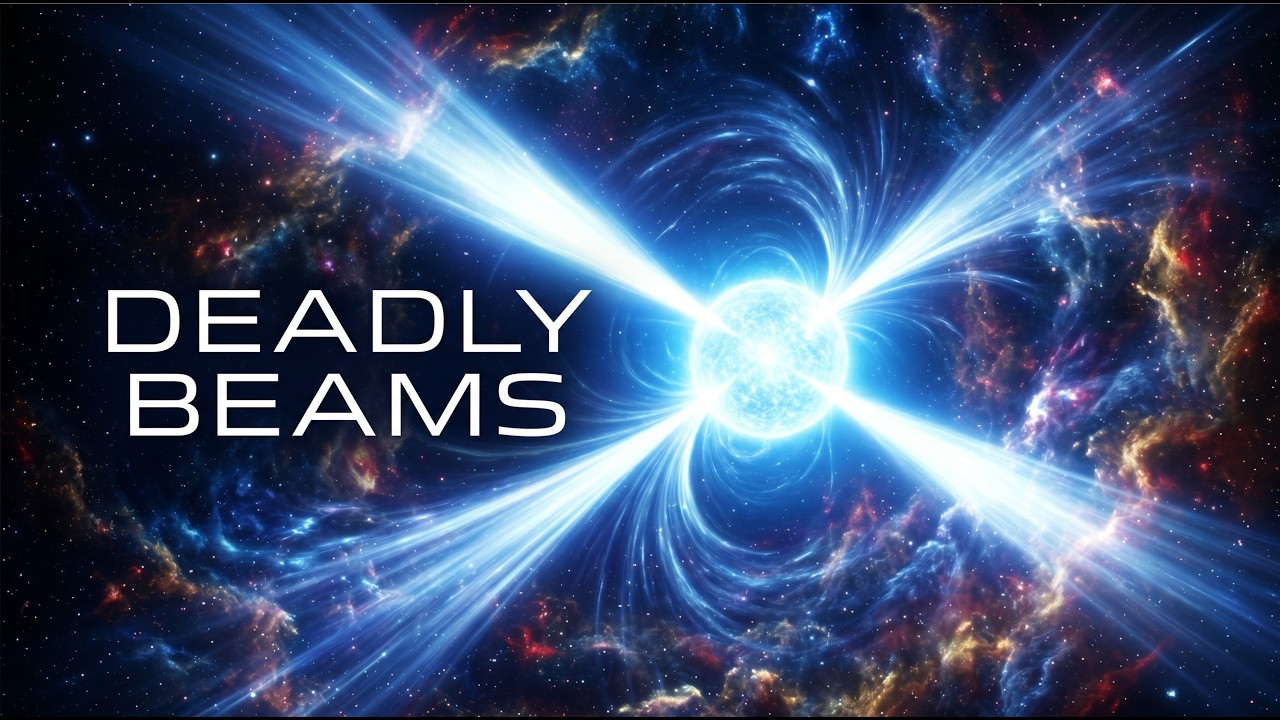
Sir David Attenborough: Inside the Most Extreme Objects Ever Discovered | Full Documentary Movie
Keywords
Summary
159 words
Critical Evaluation
The documentary serves as a visually stunning introduction to neutron stars and pulsars, effectively communicating the awe-inspiring nature of these objects. The scientific content is generally accurate, covering key concepts such as electron capture, neutron degeneracy pressure, and the lighthouse model of pulsars. However, the presentation is largely descriptive and lacks critical analysis or engagement with current research debates. For instance, the exact equation of state of neutron star matter remains uncertain, and the documentary does not mention the ongoing efforts to constrain it through observations of neutron star mergers or NICER data. The absence of expert interviews or citations to specific studies weakens its credibility for a scientifically literate audience. The title’s reference to Sir David Attenborough is misleading, as he is not the narrator, which may mislead viewers expecting his authoritative voice. The pacing is slow, with repetitive explanations, but the use of analogies (e.g., teaspoon of neutron star material weighing billions of tons) helps make complex ideas accessible. The documentary also touches on the role of neutron star mergers in r-process nucleosynthesis, which is a significant discovery, but it does not provide details on the evidence or the scientific process. Overall, it is a decent overview for general audiences but lacks the depth and rigor expected from a scientific documentary. The adéquation between title and content is partially off due to the Attenborough misattribution, but the core subject is well-covered. The documentary would benefit from including more recent findings and expert perspectives to enhance its scientific value.
250 words
Title / Content Match
The title mentions Sir David Attenborough, but he is not the narrator; the actual narrator is not identified. This is misleading. The content does focus on extreme objects (neutron stars, pulsars), so the subtitle is accurate.
Quality & Reliability
7/10
The documentary provides a broad overview of neutron stars and pulsars, covering their formation, structure, and significance. It is scientifically accurate in its general descriptions, but lacks depth and specific citations. The narration is engaging but does not delve into the latest research or controversies. The absence of expert interviews and detailed references reduces its reliability for advanced audiences.
Key Moments
Markers derived by PSI from the transcript: the creator did not define chapters.
- Introduction to neutron stars and their extreme properties.
- Explanation of supernova explosions and the birth of neutron stars.
- Detailed structure of a neutron star: crust, inner crust, outer core, inner core.
- Pulsars and their lighthouse effect; precision timing.
- Magnetars and their extreme magnetic fields.
- Neutron star mergers and gravitational waves; creation of heavy elements.
Contribution & Novelties
The documentary provides a comprehensive overview of neutron stars and pulsars, synthesizing known facts into an accessible narrative. It does not present new research but serves as an educational resource. Its originality lies in its cinematic presentation and broad coverage of related phenomena, including magnetars and gravitational waves.
Pour aller plus loin :
- Neutron star — Comprehensive overview of neutron star properties and research.
- Pulsar — Detailed explanation of pulsar mechanisms and their uses.
- Gravitational wave — Introduction to gravitational waves and their detection.
- LIGO — Information on the Laser Interferometer Gravitational-Wave Observatory.
- NICER — NASA mission studying neutron star interiors.
101 words
Radar Profile
The radar profile shows moderate to high scores in information quantity and quality, with a lower technical level, indicating a documentary that is informative but not highly technical. The reliability score is moderate, reflecting the lack of citations and expert input.