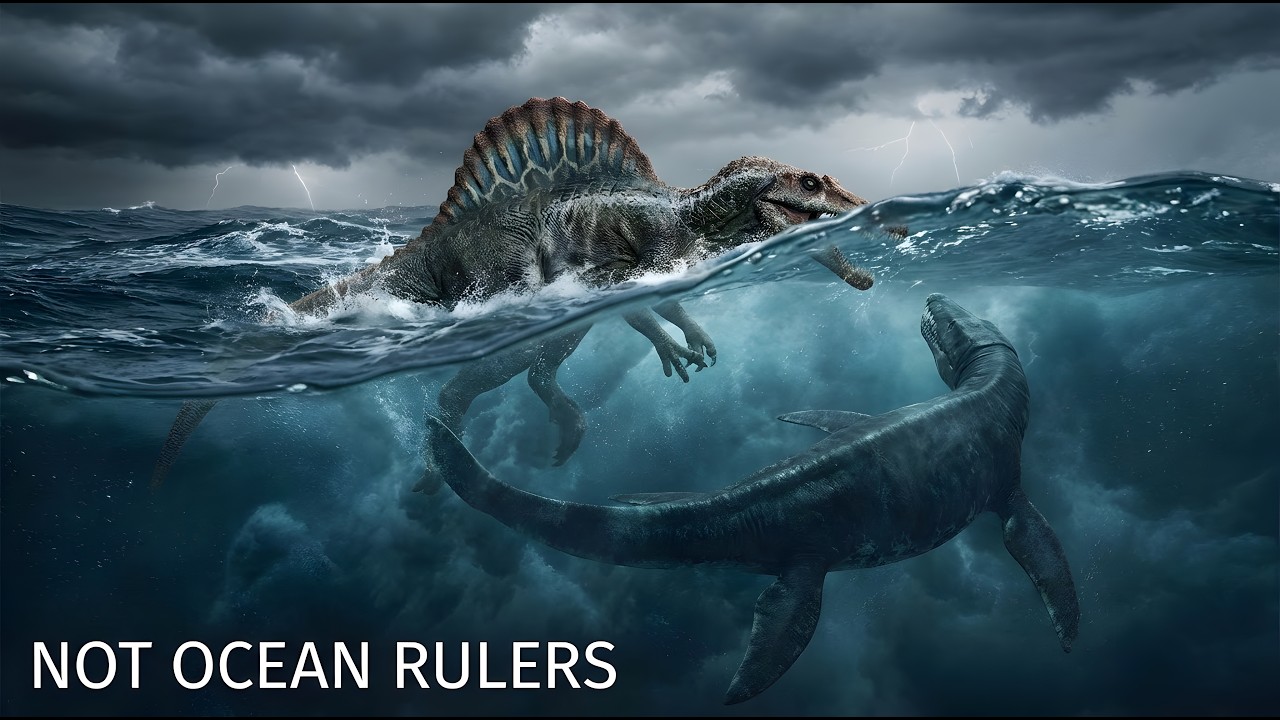
Why Dinosaurs Never Truly Ruled the Water | Full Documentary
Keywords
Summary
153 words
Critical Evaluation
The documentary provides a scientifically sound and engaging explanation of why dinosaurs did not rule the oceans. It correctly distinguishes between dinosaurs and marine reptiles, a common point of confusion for the public. The arguments are well-structured, starting with the definition of dinosaurs and then systematically addressing the physical and biological barriers to aquatic life. The use of analogies, such as comparing evolution to engineering, makes complex concepts accessible. The content aligns with current paleontological understanding, and the documentary avoids common myths, such as calling plesiosaurs or mosasaurs dinosaurs. However, the lack of specific citations to scientific studies or expert interviews reduces its academic rigor. The AI narration, while clear, may feel less authoritative to some viewers. The documentary could have benefited from mentioning specific fossil evidence or named researchers to strengthen its credibility. Overall, it is a valuable educational resource that effectively communicates scientific concepts to a general audience, but it falls short of being a fully rigorous scientific presentation due to the absence of direct references.
168 words
Title / Content Match
The title accurately reflects the content, which focuses on why dinosaurs did not dominate marine environments.
Quality & Reliability
7/10
The documentary presents scientifically accurate information about dinosaur and marine reptile evolution, correctly distinguishing between the two groups. It uses clear explanations of evolutionary biology and paleontological evidence. However, the lack of citations to specific studies or experts, and the use of AI narration, slightly reduce its reliability. The content is generally well-researched and aligns with current scientific consensus.
Key Moments
Markers derived by PSI from the transcript: the creator did not define chapters.
- Introduction to the misconception that dinosaurs ruled the oceans.
- Explanation of what defines a dinosaur and why marine reptiles are not dinosaurs.
- Discussion of the physical challenges of aquatic life for land animals.
- Overview of marine reptile groups: ichthyosaurs, plesiosaurs, and mosasaurs.
- Analysis of why dinosaurs never evolved fully aquatic forms.
- Comparison of evolutionary paths: whales vs. marine reptiles.
- Explanation of the four barriers to permanent ocean life.
- Conclusion: dinosaurs ruled land, marine reptiles ruled sea.
Concurring Sources
- Marine reptile — Confirms that marine reptiles are not dinosaurs and describes their adaptations.
- Dinosaur — Defines dinosaurs as terrestrial reptiles, supporting the documentary's distinction.
Contribution & Novelties
The documentary offers a clear and accessible synthesis of why dinosaurs did not dominate marine environments, emphasizing the evolutionary and physical constraints. It effectively separates dinosaurs from marine reptiles, a distinction often blurred in popular culture.
Pour aller plus loin :
- Marine reptile evolution — Provides an overview of various marine reptile groups and their adaptations.
- Evolution of whales — Details the transition from land mammals to fully aquatic whales, illustrating the challenges of returning to the sea.
- Ichthyosaur — Information on these fish-like marine reptiles, including their adaptations and fossil record.
92 words
Radar Profile
The radar profile shows high scores in quantity and quality of information, indicating a content-rich documentary. The technical level is moderate, suitable for a general audience. Reliability is good but not perfect, reflecting the lack of explicit citations.