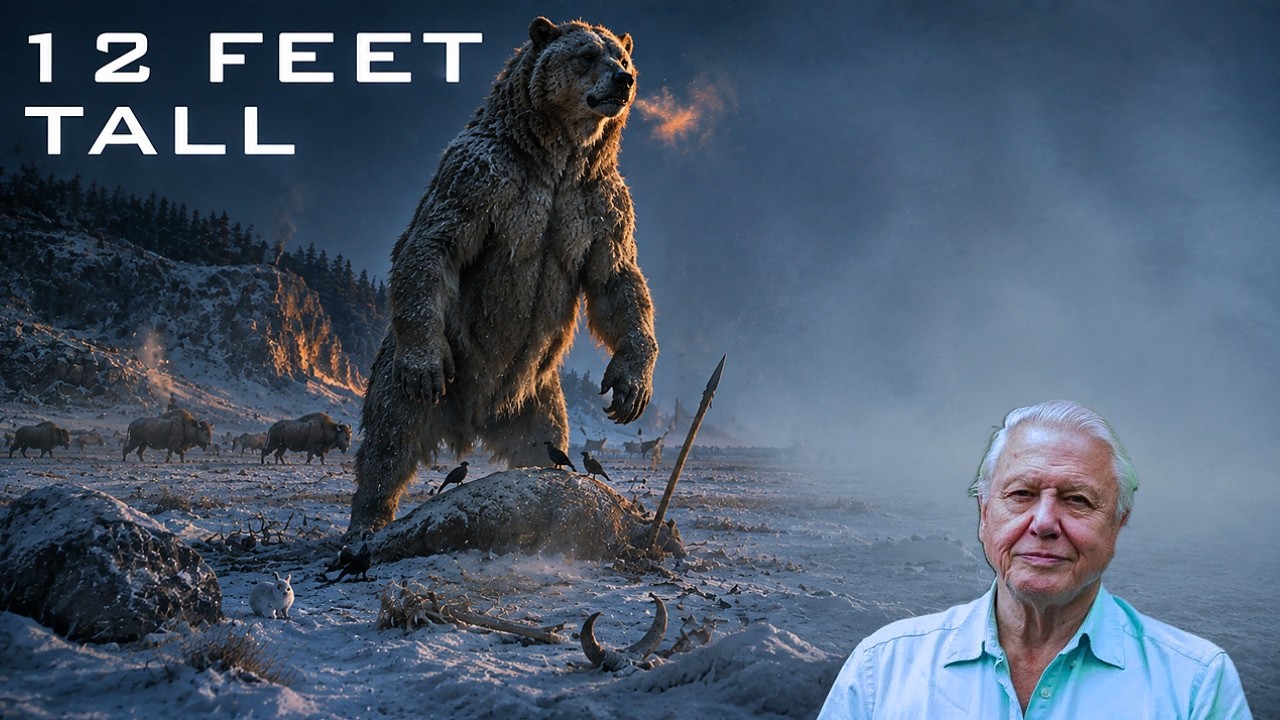
Sir David Attenborough: For 2 Million Years, Humans Were Not at the Top of the Food Chain
Keywords
Summary
194 words
Critical Evaluation
Value of the Information & Strength of the Argument
The video provides a narrative overview of prehistoric predators and their interactions with early humans. The information is presented in a dramatic and engaging manner, but the argumentation is weak. It relies on broad generalizations and lacks specific evidence, data, or expert analysis. The documentary does not delve into the scientific methods used to study these predators, such as fossil analysis or isotopic studies. The value of the information is limited for an audience seeking in-depth scientific understanding, as it primarily offers a surface-level, story-driven account. The argumentation is not solid, as it does not present a clear thesis or support it with rigorous evidence, instead relying on a chronological narrative of predator introductions.
123 words
Title / Content Match
The title is misleading as it implies a direct presentation by Sir David Attenborough, but the video is a generic documentary with no such involvement. The content does broadly cover the topic of early humans being prey, but the attribution is inaccurate.
Quality & Reliability
5/10
The video presents a narrative about prehistoric predators and human evolution, but the content is largely generic and not scientifically rigorous. It lacks specific citations, data, or expert interviews, and the title misleadingly attributes the content to Sir David Attenborough, who is not actually featured. The information is presented in a sensationalized manner, with limited factual depth.
Key Moments
Markers derived by PSI from the transcript: the creator did not define chapters.
- Introduction to the documentary, setting a prehistoric scene with a focus on a catastrophic geological event.
- Discussion of the ancient world's climate and ecosystems, with a focus on volcanic activity and environmental stress.
- Description of the trigger phase of a mass extinction event, including volcanic eruptions and ocean acidification.
- Introduction of the main topic: predators that hunted early humans, starting with saber-toothed cats like Smilodon.
- Discussion of pack-hunting predators, including dire wolves and giant short-faced hyenas.
- Introduction of other large predators such as short-faced bears, terror birds, and giant crocodiles.
- Transition to how humans overcame these threats through tool use, fire, and cooperation.
- Discussion of the domestication of wolves and the eventual rise of humans to the top of the food chain.
Cited Sources
- No specific sources cited in the video — The video does not reference any specific scientific studies or publications.
Concurring Sources
- No concordant sources identified — The video does not cite specific sources, so no concordant sources can be listed.
Dissenting Sources
- No discordant sources identified — The video does not cite specific sources, so no discordant sources can be listed.
Contribution & Novelties
The documentary offers a narrative synthesis of known information about prehistoric predators and human evolution, but it does not present new research or unique insights. Its main contribution is a dramatic retelling of the story, which may appeal to a general audience but adds little for those familiar with the topic.
Pour aller plus loin :
- Smilodon - Wikipedia — Provides detailed information on the saber-toothed cat, including its anatomy and hunting behavior.
- Dire wolf - Wikipedia — Offers an overview of Canis dirus, its distribution, and its role as a pack hunter.
- Pachycrocuta - Wikipedia — Details the giant short-faced hyena and its ecological niche.
- Human evolution - Wikipedia — Contextualizes the timeline and key adaptations of early hominins.
120 words
Radar Profile
The radar profile shows low scores across all dimensions, indicating a video with limited informational value, weak scientific rigor, and a low technical level. The content is presented in a sensationalized manner, which may appeal to casual viewers but fails to provide substantive scientific insight.