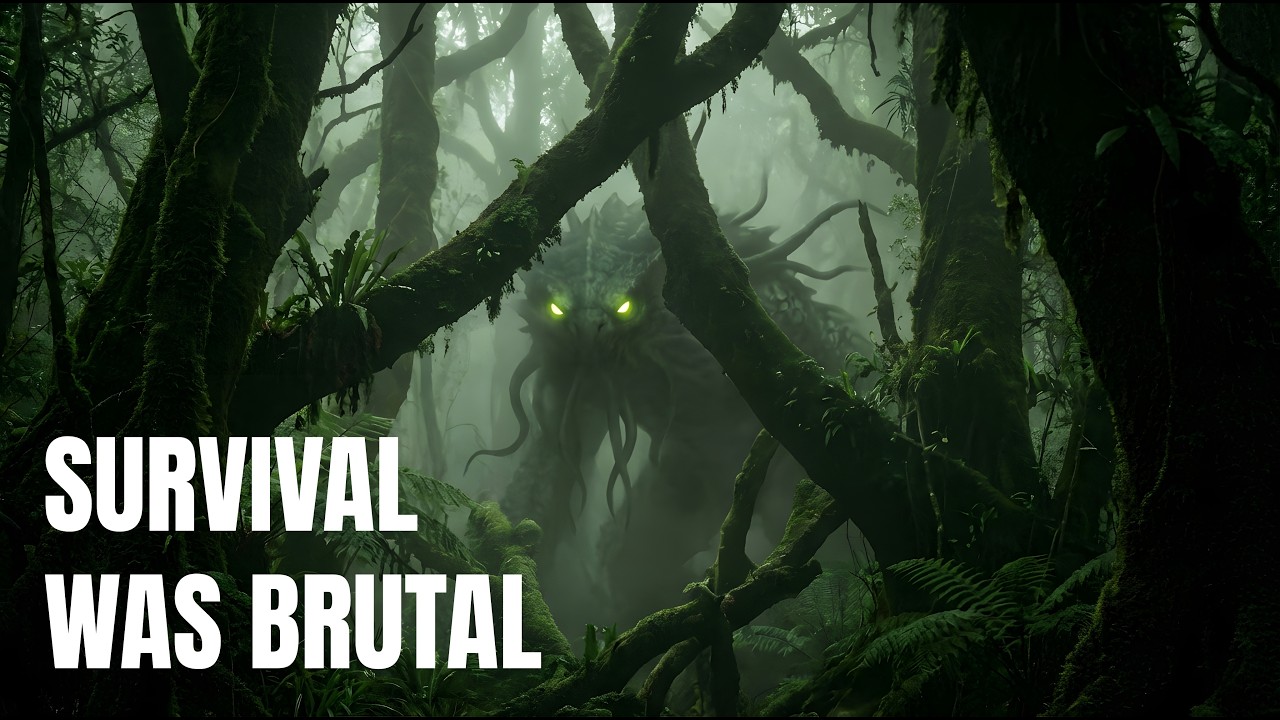
Earth Before Humans When Survival Was Brutal | Full Documentary
Keywords
Summary
141 words
Critical Evaluation
The documentary offers a sweeping narrative of Earth’s early history, from the Hadean eon to the Proterozoic, focusing on the formation of the planet, the origin of life, and the rise of oxygen. The information presented is generally consistent with current scientific understanding, covering key events such as the Moon-forming impact, the late heavy bombardment, the development of plate tectonics, and the evolution of photosynthesis. However, the presentation is highly simplified and lacks specific dates, geological periods, and references to scientific studies. The AI narration, while clear, may reduce the perceived authority of the content. The documentary does not delve into the nuances of scientific debates, such as the exact mechanisms of abiogenesis or the timing of the Great Oxidation Event. It also omits any discussion of the Ediacaran biota or the Cambrian explosion, which are crucial to understanding the evolution of complex life. The visualizations are artistic and may not accurately represent the actual appearance of ancient environments. Despite these limitations, the documentary serves as an engaging introduction for a general audience, sparking curiosity about Earth’s deep past. The lack of citations and the absence of expert interviews weaken its scientific rigor. The title accurately reflects the content, and the documentary fulfills its promise of exploring a world before humans. Overall, it is a visually appealing but scientifically shallow overview that could benefit from more detailed and sourced information.
230 words
Title / Content Match
The title accurately reflects the content, which focuses on Earth's prehistoric environments and the harsh conditions of early life.
Quality & Reliability
6/10
The documentary presents a broad overview of Earth's early history and the evolution of life, grounded in established scientific concepts. However, it lacks specific citations, dates, and references to primary sources, and the AI narration may reduce perceived reliability. The content is generally accurate but simplified for a general audience.
Key Moments
Markers derived by PSI from the transcript: the creator did not define chapters.
- Introduction to the chaotic formation of Earth from cosmic debris.
- Description of the Moon-forming impact and the creation of the Moon.
- Formation of the first oceans and the beginning of the water cycle.
- Origin of life in hydrothermal vents and the emergence of primitive cells.
- Evolution of photosynthesis and the rise of oxygen in the atmosphere.
- The Great Oxidation Event and its impact on the planet.
- Development of early ecosystems and the diversification of microbial life.
Contribution & Novelties
The documentary provides a cinematic and accessible overview of Earth’s deep history, emphasizing the harsh conditions of early life. It synthesizes known scientific concepts into a narrative that is easy to follow for a general audience. However, it does not present new research or original insights.
Pour aller plus loin :
- Great Oxidation Event — Overview of the oxygenation of Earth’s atmosphere.
- Abiogenesis — Theories on the origin of life from non-living matter.
- Hydrothermal vent — Role of deep-sea vents in the origin of life.
85 words
Radar Profile
The radar profile shows moderate scores across all dimensions, indicating a balanced but not exceptional documentary. The quantity of information is relatively high, but the quality and technical depth are moderate, reflecting the simplified nature of the content. The reliability is also moderate, due to the lack of citations and AI narration.