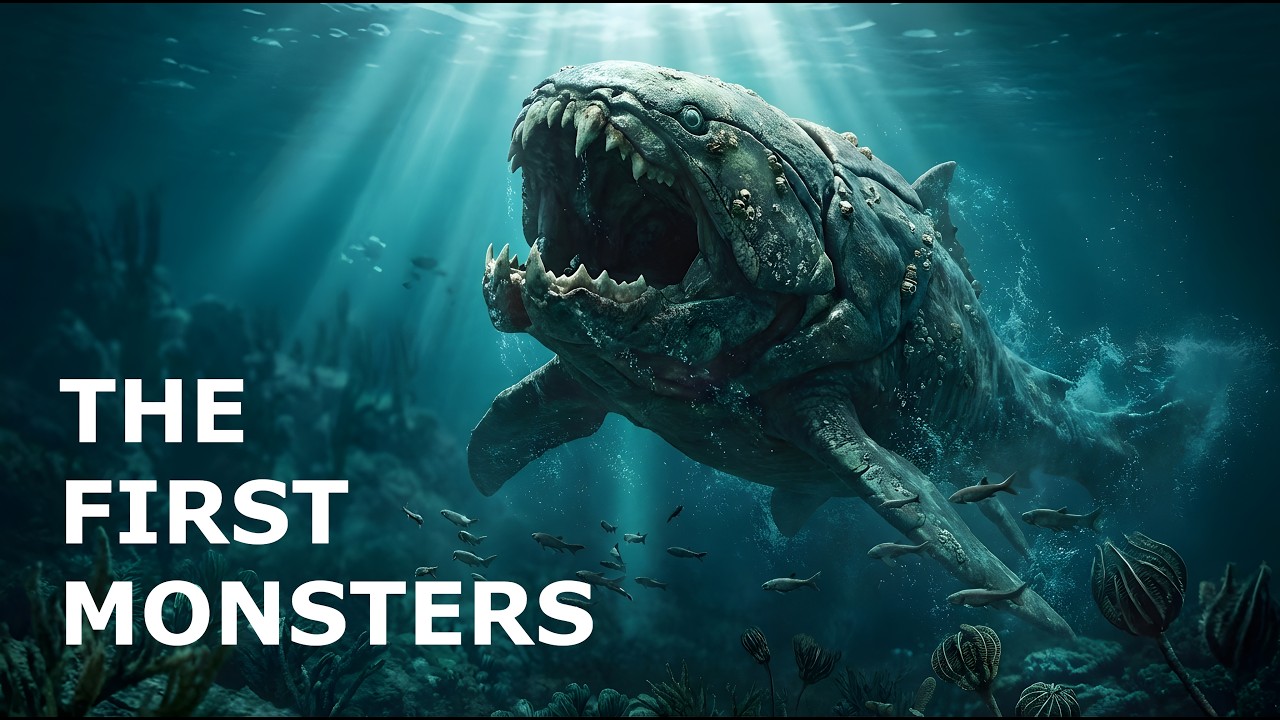
David Attenborough: When Oceans Ruled the Planet During the Carboniferous Period | Full Documentary
Keywords
Summary
149 words
Critical Evaluation
The documentary attempts to provide a sweeping narrative of marine dominance during the Paleozoic, but it suffers from several critical flaws. Firstly, the title is misleading: it prominently features David Attenborough and the Carboniferous period, yet the content barely mentions the Carboniferous and instead focuses extensively on the Cambrian explosion and general marine evolution. This mismatch is a significant issue for viewers expecting a specific focus. Secondly, the scientific rigor is lacking. The documentary makes broad claims without citing specific studies, fossil evidence, or expert opinions. For instance, it states that the Cambrian explosion occurred over 20-25 million years, which is a simplification, and it does not mention the ongoing debates about the causes and duration of this event. The use of AI narration, as disclosed in the description, adds to the lack of credibility, as it may not accurately convey scientific nuances. The documentary also tends to anthropomorphize evolution, using terms like ‘fear’ and ‘competition’ in a way that may oversimplify the mechanisms of natural selection. While the visual reconstructions are likely impressive, the narrative is often vague and repetitive, lacking specific examples of species, time periods, or geological events. The documentary does not provide any sources or references, making it difficult for viewers to verify the information presented. Overall, while the documentary may be visually engaging and suitable for a general audience, it falls short as a scientifically rigorous educational resource. The lack of specific data, the misleading title, and the absence of credible sources significantly undermine its value for those seeking accurate paleontological knowledge.
257 words
Title / Content Match
The title mentions David Attenborough and the Carboniferous period, but the content focuses more on the Cambrian explosion and general marine dominance, with only a brief mention of the Carboniferous. This mismatch is significant.
Quality & Reliability
5/10
The documentary presents a broad overview of the Carboniferous period and marine evolution, but lacks specific citations, dates, and scientific rigor. The use of AI narration and lack of named experts or sources reduces reliability.
Key Moments
Markers derived by PSI from the transcript: the creator did not define chapters.
- Introduction to the Cambrian explosion and the beginning of complex life.
- Discussion on the evolution of vision and its impact on predation.
- Overview of the first true predators like Anomalocaris.
- Explanation of the evolutionary arms race between predators and prey.
- The role of skeletons in animal evolution and growth.
- Why oceans were the primary environment for early life.
- The rise of fish and the development of jaws.
- Transition of vertebrates to land as a response to ocean competition.
- Marine reptiles and their dominance in the oceans.
- Mass extinctions and the resilience of marine ecosystems.
Contribution & Novelties
The documentary provides a cinematic overview of marine dominance during the Paleozoic, but it does not offer new scientific insights. It synthesizes well-known concepts such as the Cambrian explosion and the evolution of predation, but without adding original research or novel perspectives. The main value lies in its visual presentation and accessibility for a general audience.
Pour aller plus loin :
- Cambrian explosion — Provides a detailed scientific overview of the event.
- Carboniferous — Offers specific information about the period mentioned in the title.
- Anomalocaris — Details on one of the key predators discussed.
94 words
Radar Profile
The radar profile shows moderate scores across all dimensions, indicating a balanced but not exceptional documentary. The highest score is in quantity of information, reflecting the broad coverage, while the lowest is in technical level, due to the lack of depth and scientific detail.