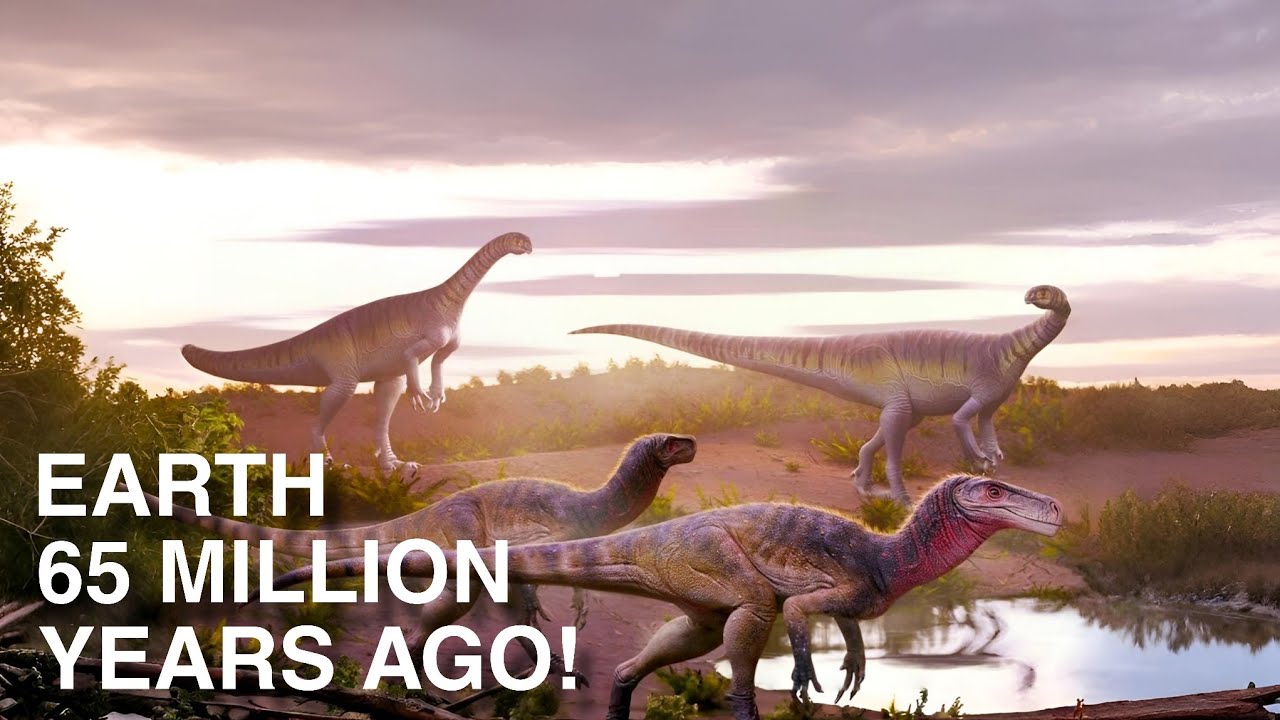
What Earth Really Looked Like in the Time of Dinosaurs | Full Documentary
Keywords
Summary
138 words
Critical Evaluation
The documentary offers a visually evocative and broadly accurate portrayal of prehistoric Earth, but its scientific rigor is limited. The content is presented as a narrative without explicit citations to peer-reviewed research, making it difficult to verify specific claims. The AI-generated narration adds a layer of artificiality, and the lack of human expertise may reduce credibility. The argumentation is coherent but relies on simplified cause-and-effect relationships, such as the direct link between volcanic CO2 and global warming, which is well-established but presented without nuance. The documentary does not address uncertainties or alternative hypotheses in paleoclimate research. The sources cited are not provided, and the description only mentions hashtags and keywords, not references. The title accurately reflects the content, which is a general overview rather than a deep scientific analysis. The target audience is likely general viewers interested in dinosaurs, and the documentary succeeds in engaging them with vivid imagery and storytelling. However, for a scientifically rigorous audience, the lack of specific data, dates, and references is a significant drawback. The documentary’s strength lies in its ability to convey the scale and dynamism of ancient environments, but it falls short of being a reliable educational resource for those seeking detailed scientific knowledge.
201 words
Title / Content Match
The title accurately reflects the content, which focuses on reconstructing Earth's appearance and environments during the age of dinosaurs.
Quality & Reliability
5/10
The documentary provides a broad overview of prehistoric Earth's climate and ecosystems during the Mesozoic era, but lacks specific scientific citations, dates, and detailed evidence. The narration is AI-generated, and the content is largely descriptive and narrative rather than rigorously analytical.
Key Moments
Markers derived by PSI from the transcript: the creator did not define chapters.
- Introduction to the Mesozoic era and the aftermath of the Permian extinction.
- Description of Pangaea's climate, including extreme heat and aridity.
- Discussion of volcanic activity and its impact on the atmosphere.
- Exploration of coastal monsoon regions and early forests.
- Overview of marine life in warm, oxygen-poor oceans.
- Breakup of Pangaea and the emergence of new climates.
- Evolution of early reptiles and plants adapting to harsh conditions.
- Transition to the Jurassic period with increased humidity and forests.
- Appearance of giant sauropods and diverse ecosystems.
- Conclusion summarizing the transformation of Earth's climate and life.
Contribution & Novelties
The documentary provides a cinematic and accessible overview of prehistoric Earth’s environments, but it does not present new scientific findings. Its value lies in synthesizing known information into a narrative format. For deeper exploration, consider the following:
Pour aller plus loin :
- Pangaea — Overview of the supercontinent and its breakup.
- Mesozoic — Era spanning the Triassic, Jurassic, and Cretaceous periods.
- Paleoclimatology — Study of ancient climates and methods used to reconstruct them.
73 words
Radar Profile
The radar profile shows moderate scores in information quantity and low scores in quality, technical level, and reliability, indicating a visually rich but scientifically shallow documentary.