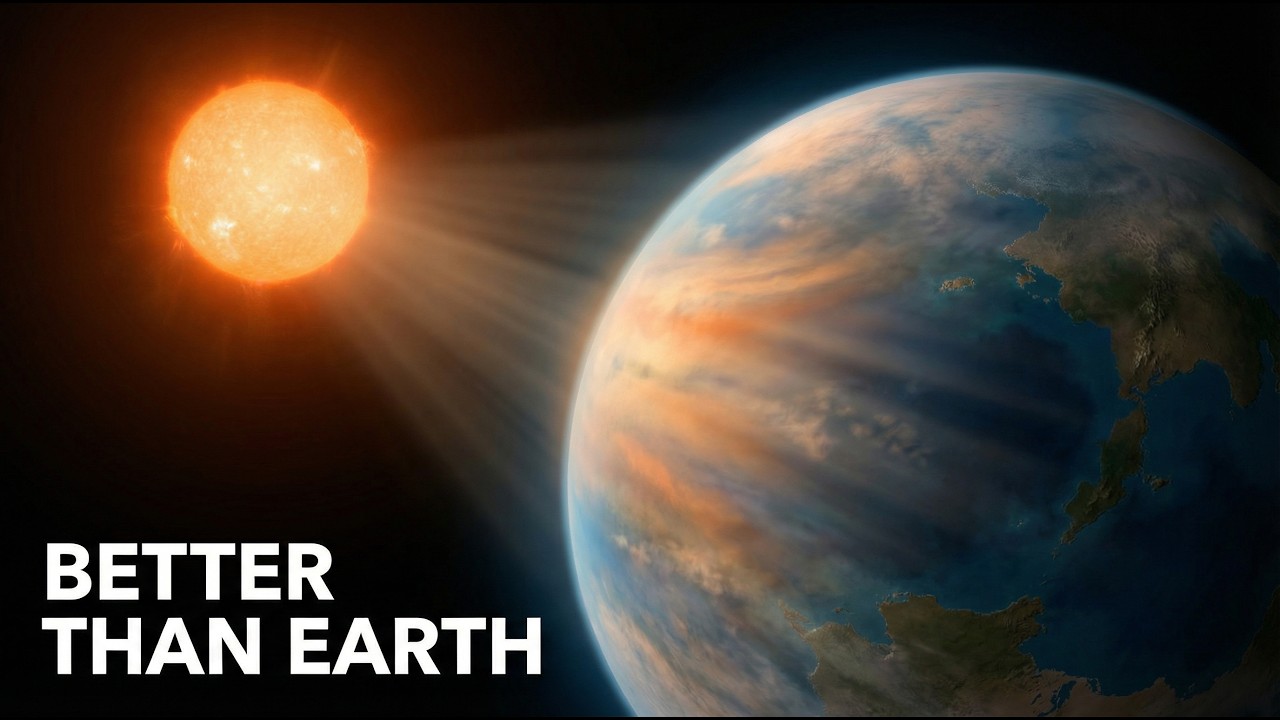
Sir David Attenborough: Scientists Found a Planets Better Than Earth With 99.7% Chance of Life
Keywords
Summary
147 words
Critical Evaluation
The video presents a highly speculative and sensationalized account of an exoplanet discovery, claiming a 99.7% probability of life without providing any verifiable scientific evidence. The narration is AI-generated, and the content lacks citations to peer-reviewed studies or specific telescope data. The argumentation is based on generalized concepts of habitability and biosignatures, but it fails to mention any actual exoplanet by name or provide details of the observations. The video’s reliance on hypothetical models and its dramatic tone detract from its scientific rigor. While it touches on legitimate topics like the habitable zone and atmospheric biosignatures, the presentation is misleading and could misinform viewers. The title falsely attributes the narration to Sir David Attenborough, further reducing its credibility. Overall, the video is more akin to science fiction than science communication, and it does not meet the standards of reliable scientific content.
141 words
Title / Content Match
The title is highly sensational and misleading, implying a confirmed discovery by Sir David Attenborough, but the video is an AI-narrated documentary without credible evidence.
Quality & Reliability
3/10
The video presents speculative claims about an exoplanet with a 99.7% probability of life, but lacks verifiable sources, specific data, or references to peer-reviewed studies. The narration is AI-generated and the content is sensationalized, reducing its reliability.
Key Moments
Markers derived by PSI from the transcript: the creator did not define chapters.
- Introduction to the discovery and its shocking implications.
- Explanation of how the planet was found and initial skepticism.
- Discussion of atmospheric spectroscopy and detection of biosignatures.
- Comparison of Earth's habitability with the new planet.
- Analysis of the planet's stability and long-term climate.
- Implications for the search for life and the future of astrobiology.
Contribution & Novelties
The video’s main contribution is its speculative narrative about a super-habitable exoplanet, but it lacks original research or new findings. It does introduce the concept of super-habitability to a general audience, but without proper scientific backing.
Pour aller plus loin :
- Habitable zone — Overview of the concept of habitable zones around stars.
- Biosignature — Explanation of biosignatures and their detection in exoplanet atmospheres.
- Super-Earth — Definition and characteristics of super-Earth exoplanets.
72 words
Radar Profile
The radar profile shows low scores across all dimensions, indicating poor quality and reliability. The video has minimal scientific substance and is largely speculative.