Earth Was Alive for 4.5 Billion Years Before Us - This Is That Story | Full Documentary
Keywords
Summary
173 words
Critical Evaluation
Value of the Information & Strength of the Argument
The documentary provides a comprehensive and engaging overview of Earth’s deep history, effectively synthesizing a vast amount of scientific knowledge into a coherent narrative. Its value lies in its ability to convey the immense timescales and the interconnectedness of geological and biological events. The argumentation is generally solid, following a chronological progression and explaining cause-and-effect relationships, such as the role of photosynthesis in the Great Oxidation Event and the impact of volcanic eruptions on mass extinctions. However, the narrative sometimes oversimplifies complex scientific debates, such as the exact mechanisms of the origin of life, and presents some speculative scenarios as established fact. The documentary’s strength is its broad scope, but it lacks depth in specific areas, which may leave advanced viewers wanting more detail.
Scientific Rigor, Source Quality, Title Accuracy
The documentary demonstrates a good level of scientific rigor, presenting information that aligns with mainstream scientific understanding. It accurately describes key events and concepts, such as the banded iron formations, the endosymbiotic theory, and the Chicxulub impact. However, it does not cite specific scientific sources or studies, which limits its verifiability. The title accurately reflects the content, and the documentary’s structure is clear and logical. The absence of citations is a notable weakness for a scientific documentary, but the overall accuracy and clarity of the content mitigate this issue. The documentary does not appear to have any significant biases or misleading information.
241 words
Title / Content Match
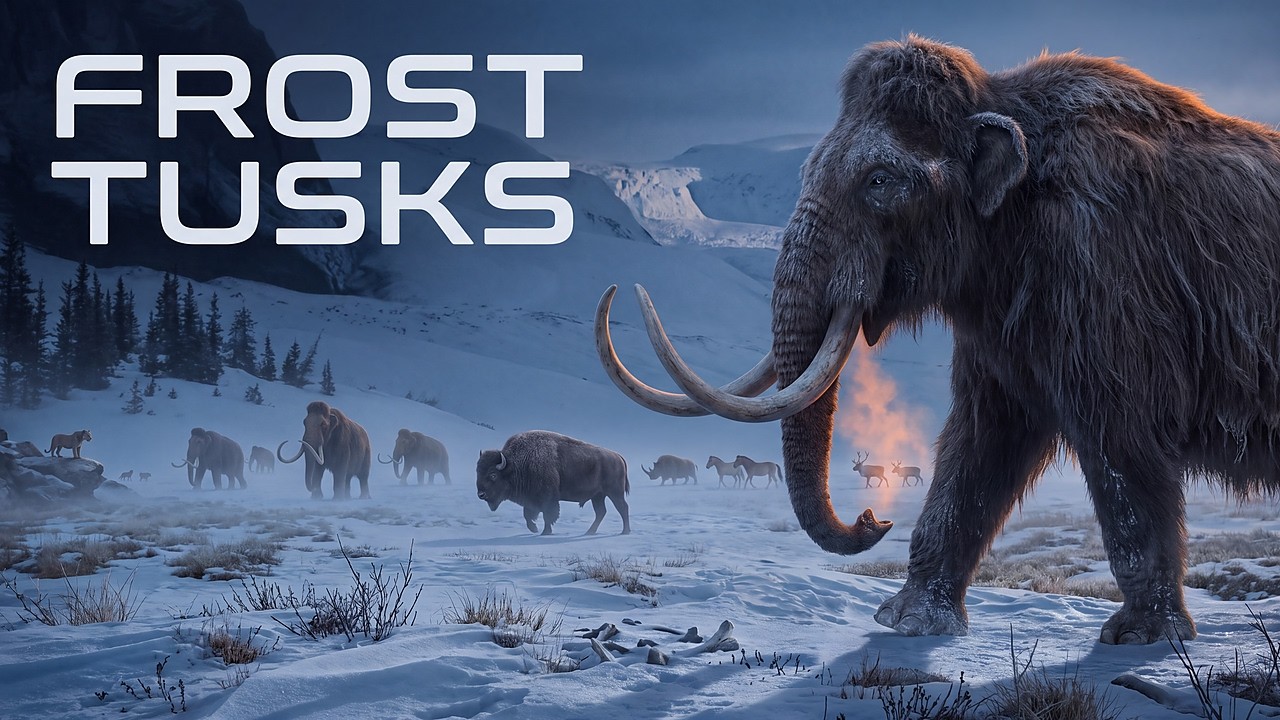
The title accurately reflects the content: a comprehensive documentary covering Earth's history before humans, from its formation to the Pleistocene megafauna.
Quality & Reliability
7/10
The documentary presents a broad, accurate overview of Earth's history, from the formation of the planet to the rise of humans, covering major events such as the Great Oxidation Event, the Cambrian explosion, and the five mass extinctions. The information is consistent with established scientific consensus, though it simplifies complex topics and occasionally uses imprecise phrasing (e.g., 'Sunday' instead of 'Sun'). The lack of citations or references to specific studies reduces its utility for advanced viewers, but it remains reliable for a general audience.
Key Moments
Markers derived by PSI from the transcript: the creator did not define chapters.
- Introduction: Earth's history before humans, the scale of deep time.
- Formation of Earth and the early molten world.
- Origin of life: hydrothermal vents and the first cells.
- Photosynthesis and the Great Oxidation Event.
- Eukaryotic cells and the endosymbiotic theory.
- Ediacaran biota and the Cambrian explosion.
- Colonization of land by plants and animals.
- The Permian extinction and the rise of dinosaurs.
- The age of reptiles: sauropods, theropods, pterosaurs, and marine reptiles.
- The Cretaceous-Paleogene extinction and the rise of mammals.
- Ice Age megafauna and the emergence of humans.
Contribution & Novelties
The documentary’s main contribution is its comprehensive synthesis of Earth’s history into a single, accessible narrative. It effectively connects major geological and biological events, providing a holistic view of the planet’s evolution. While it does not present new scientific findings, it serves as a valuable educational resource for a general audience.
Pour aller plus loin :
- Geologic time scale — Provides a detailed framework of Earth’s history.
- Great Oxidation Event — Explores the rise of oxygen and its impact on life.
- Cambrian explosion — Discusses the rapid diversification of life.
- Endosymbiotic theory — Explains the origin of eukaryotic cells.
- Permian–Triassic extinction event — Details the largest mass extinction in Earth’s history.
111 words
Radar Profile
The radar profile shows high scores in information quantity and quality, reflecting the documentary's comprehensive and accurate content. The technical level is moderate, indicating accessibility for a general audience. The overall reliability is good, though the lack of explicit citations slightly lowers the score.