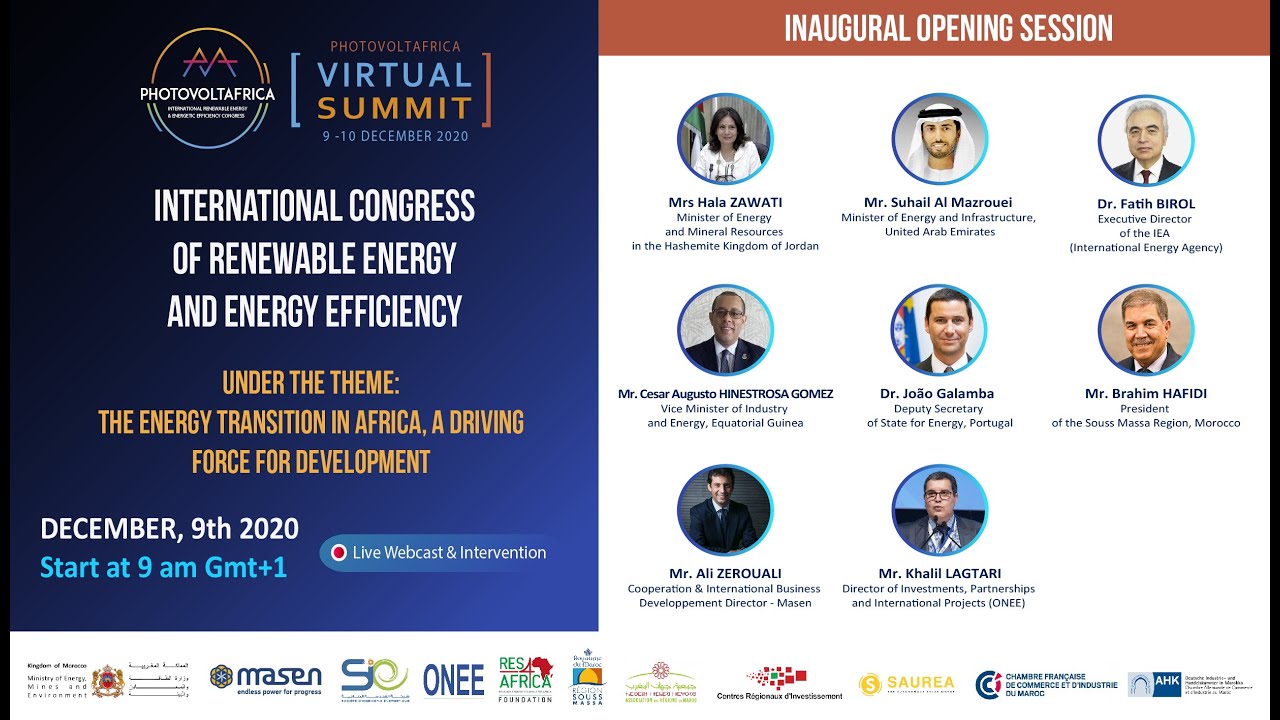
Photovoltafrica Virtual Summit 2020 Inaugural Opening Session part 1
Keywords
Summary
217 words
Critical Evaluation
Value of the Information & Strength of the Argument
The video provides valuable insights into renewable energy policies and achievements in Jordan and the UAE, as well as a global perspective from the IEA. The arguments are based on official government data and international reports, lending credibility. However, the presentations are largely promotional, with limited critical analysis of challenges or potential drawbacks. The speakers present their countries’ successes without addressing potential criticisms, such as the intermittency of renewables or the social impacts of large-scale projects. The argumentation is coherent but one-sided, focusing on positive outcomes and future targets.
Scientific Rigor, Source Quality, Title Accuracy
The scientific rigor is moderate. The speakers cite specific data and policy frameworks, but no detailed sources are provided beyond general references to national strategies and IEA reports. The video is a conference recording, not a peer-reviewed presentation. The title accurately reflects the content, which is the opening session of a summit. The quality of sources is high in terms of authority (government ministers, IEA), but the lack of detailed citations and the promotional nature reduce the overall rigor.
183 words
Title / Content Match
The title accurately describes the content: the inaugural opening session of the Photovoltafrica Virtual Summit 2020, part 1.
Quality & Reliability
7/10
The video features high-level government officials and the IEA Executive Director, providing authoritative perspectives on renewable energy policies and investments. However, it is a promotional event with limited critical analysis and no independent verification of claims.
Key Moments
Markers derived by PSI from the transcript: the creator did not define chapters.
- Opening remarks and introduction of the summit.
- Jordanian Minister Hala Zawati begins her speech on Jordan's renewable energy journey.
- Jordan's renewable energy policies and achievements, including net metering and wheeling projects.
- Jordan's energy strategy 2020-2030 and targets for renewable energy share.
- UAE Minister Suhail Al Mazrouei speaks about the Emirates Energy Strategy 2050.
- UAE's achievements in solar power, including world-record low cost and large-scale projects.
- UAE's investments in carbon capture and green hydrogen.
- IEA Executive Director Fatih Birol discusses Africa's energy access and solar potential.
- Birol highlights that solar is the fastest-growing energy source and Africa's underutilized potential.
- Birol concludes with IEA's support for Africa and closing remarks.
Cited Sources
- Photovoltafrica official website — Official website of the Photovoltafrica congress, providing information about the event and its objectives.
- Photovoltafrica LinkedIn page — LinkedIn page of the Photovoltafrica congress, used for networking and updates.
Concurring Sources
- IEA Renewables 2020 report — The IEA Executive Director references this report, which highlights solar as the new king of electricity markets.
Contribution & Novelties
The video provides firsthand accounts from government officials on renewable energy policies and achievements in Jordan and the UAE, offering insights into successful strategies in the MENA region. It also features the IEA’s perspective on Africa’s energy challenges and opportunities. The content is valuable for understanding policy frameworks and investment models, but it does not present new scientific research.
Pour aller plus loin :
- Jordan Renewable Energy and Energy Efficiency Fund (JREEEF) — Official fund supporting renewable energy projects in Jordan.
- Emirates Energy Strategy 2050 — Official UAE government page detailing the strategy.
- IEA Africa Energy Outlook 2019 — IEA report on Africa’s energy future, relevant to the discussion on energy access and renewables.
114 words
Radar Profile
The radar profile shows high scores in quantity and quality of information, reflecting the authoritative speakers and concrete data. The technical level is moderate, as the content is policy-oriented rather than deeply technical. The overall reliability is high due to the official nature of the speakers, but the promotional tone slightly reduces the score.