Carcinoma Lip: Causes & Management
Keywords
Summary
185 words
Critical Evaluation
Value of the Information & Strength of the Argument
The lecture provides valuable information on the surgical management of lip cancer, particularly the detailed reconstruction techniques and the discussion on neck dissection controversies. The argumentation is based on clinical experience and references to published studies, such as the systematic review on occult metastasis and the Dutch brachytherapy data. However, the presentation is largely descriptive, and the evidence is not critically appraised in depth. The speaker offers practical insights, such as the importance of collateral blood supply for flap viability and the preference for local flaps in most cases.
Scientific Rigor, Source Quality, Title Accuracy
The lecture demonstrates scientific rigor by referencing several studies, including a systematic review and meta-analysis on neck dissection, a lymph node metastasis prediction model, and a study from Tata Memorial Hospital. The sources are relevant and support the discussed points. The title accurately reflects the content. The speaker also acknowledges controversies and provides balanced views, such as the debate on elective neck dissection. However, the lecture does not provide detailed citations or URLs, and the quality of evidence is not systematically assessed.
186 words
Title / Content Match
The title accurately reflects the content, which covers causes and management of lip carcinoma.
Quality & Reliability
7/10
The lecture is delivered by a senior head and neck surgical oncologist, providing a comprehensive overview of lip cancer management. It includes anatomical details, staging, treatment options, and reconstruction techniques, supported by references to published studies. However, it is primarily an expert opinion without detailed data presentation or critical appraisal of the cited literature.
Key Moments
Markers derived by PSI from the transcript: the creator did not define chapters.
- Introduction and anatomy of the lip
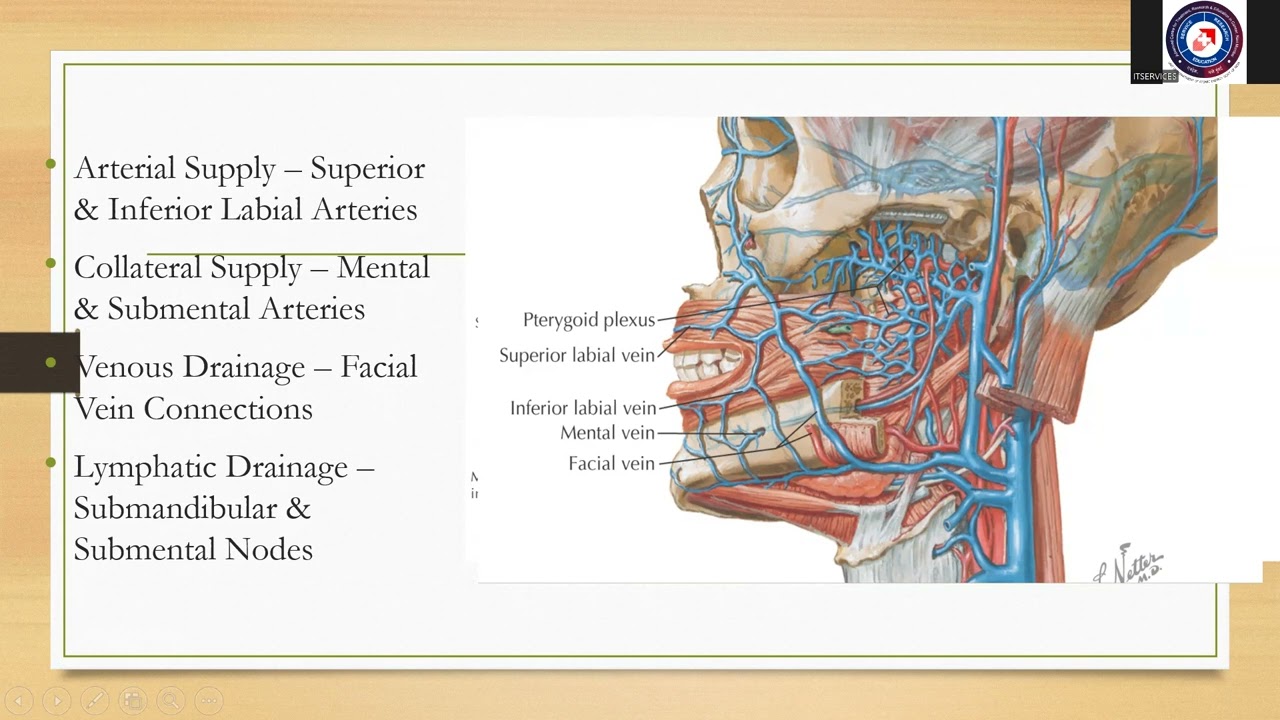
- Blood supply and its importance for reconstruction
- Etiology and risk factors
- Staging of lip cancer
- Management principles and role of neck dissection
- Reconstruction techniques for lower lip defects
- Reconstruction for upper lip and free flaps
- Brachytherapy and discussion on sentinel lymph node biopsy
Cited Sources
- Systematic review and meta-analysis on occult metastasis in lip cancer — Referenced in the discussion on neck dissection, showing low risk of nodal metastasis.
- Lymph node metastasis prediction model (326 patients) — Referenced to identify high-risk features for neck dissection.
- Study on role of neck dissection in early-stage lower lip cancers — Small cohort study showing no difference in survival with or without neck dissection.
- Dutch data on brachytherapy for lip cancer — Largest data supporting brachytherapy for small lesions or commissure involvement.
- Study from Tata Memorial Hospital (Punam ma'am) — Retrospective study on prognostic factors in lip squamous cell carcinoma.
Concurring Sources
- Systematic review and meta-analysis on occult metastasis in lip cancer — Supports the low risk of nodal metastasis in early lip cancer.
- Dutch data on brachytherapy — Supports the efficacy of brachytherapy for small lesions.
Dissenting Sources
- Study on role of neck dissection in early-stage lower lip cancers — Small cohort study with limited power, but suggests no survival benefit from elective neck dissection.
Contribution & Novelties
The lecture provides a comprehensive and practical overview of lip cancer management, emphasizing surgical techniques and reconstruction options. It highlights the importance of collateral blood supply for flap viability and discusses the controversial role of neck dissection with evidence-based recommendations. The inclusion of brachytherapy as an alternative for early lesions adds to the therapeutic options.
Pour aller plus loin :
- Lip cancer - Wikipedia — General overview and epidemiology.
- Squamous cell carcinoma of the lip - PubMed — Recent research articles.
- AJCC staging system - American Cancer Society — Detailed staging information.
- Brachytherapy for lip cancer - Radiopaedia — Overview of brachytherapy technique.
103 words
Radar Profile
The radar profile shows high scores in information quantity and technical level, reflecting the comprehensive and specialized content. Quality and reliability are moderately high, but the lack of detailed citations and critical appraisal slightly lowers the overall score.