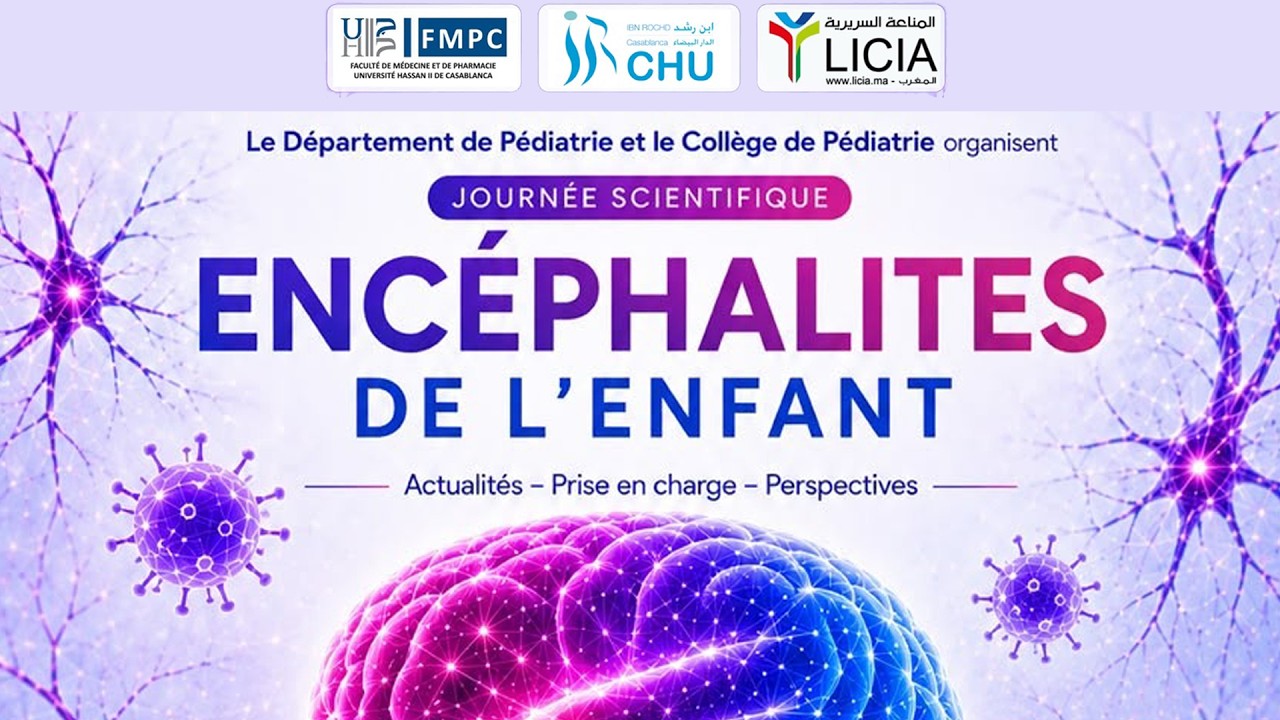
Encéphalite infectieuse et post infectieuse
Keywords
Summary
132 words
Critical Evaluation
Value of the Information & Strength of the Argument
The presentation offers valuable clinical insights, particularly the emphasis on early recognition of behavioral changes as signs of encephalitis, and the practical advice on lumbar puncture and PCR timing. The argumentation is solid, based on international criteria and recent epidemiological data, though it relies heavily on expert opinion without detailed references. The speaker effectively communicates the importance of distinguishing infectious from immune-mediated encephalitis, as treatment approaches differ significantly.
Scientific Rigor, Source Quality, Title Accuracy
The scientific rigor is high, with references to the International Encephalitis Consortium criteria and two French epidemiological studies. However, specific citations are not provided in the video, and the speaker does not mention sources by name. The title accurately reflects the content, which is focused on infectious and post-infectious encephalitis. The presentation is well-structured and clinically relevant.
140 words
Title / Content Match
The title accurately reflects the content, which covers infectious and post-infectious encephalitis in children.
Quality & Reliability
8/10
Presentation by a professor of pediatric neurology, based on international consensus criteria and recent epidemiological studies. The content is clinically relevant and practical, but lacks detailed citations and peer-reviewed references.
Key Moments
Markers derived by PSI from the transcript: the creator did not define chapters.
- Introduction and plan of the presentation
- Definition of encephalitis and classification into infectious and immune-mediated
- Diagnostic criteria from the International Encephalitis Consortium
- Epidemiology of infectious encephalitis in children
- Diagnostic workup: lumbar puncture, PCR, and MRI
- Treatment of infectious encephalitis: antivirals and antibiotics
- Herpes simplex encephalitis: clinical presentation and management
- Imaging findings in herpes simplex encephalitis
- Prognosis and algorithm for diagnosis and management
Cited Sources
- International Encephalitis Consortium criteria — Mentioned as the basis for diagnosis
- French prospective cohort study (2007) — Cited for epidemiological data on encephalitis in children
- French prospective cohort study (2016-2019) — Cited for updated epidemiological data
Concurring Sources
- International Encephalitis Consortium — Provides diagnostic criteria consistent with the presentation.
- Herpes Simplex Encephalitis in Children — Supports the clinical features and management discussed.
Contribution & Novelties
The presentation provides a practical, up-to-date overview of encephalitis in children, emphasizing the importance of early recognition and the distinction between infectious and immune-mediated forms. It highlights recent epidemiological changes, such as the emergence of arboviruses and parechovirus, and offers practical tips for diagnosis and management.
Pour aller plus loin :
- International Encephalitis Consortium — Consensus criteria for encephalitis diagnosis.
- Herpes simplex encephalitis — Overview of HSV encephalitis.
- Autoimmune encephalitis — Review of autoimmune encephalitis, including anti-NMDA receptor encephalitis.
79 words
Radar Profile
The radar profile shows high scores in quantity and quality of information, with a moderate technical level. The reliability is high, reflecting the expert opinion and use of consensus criteria. The overall balance indicates a well-rounded presentation suitable for medical professionals.