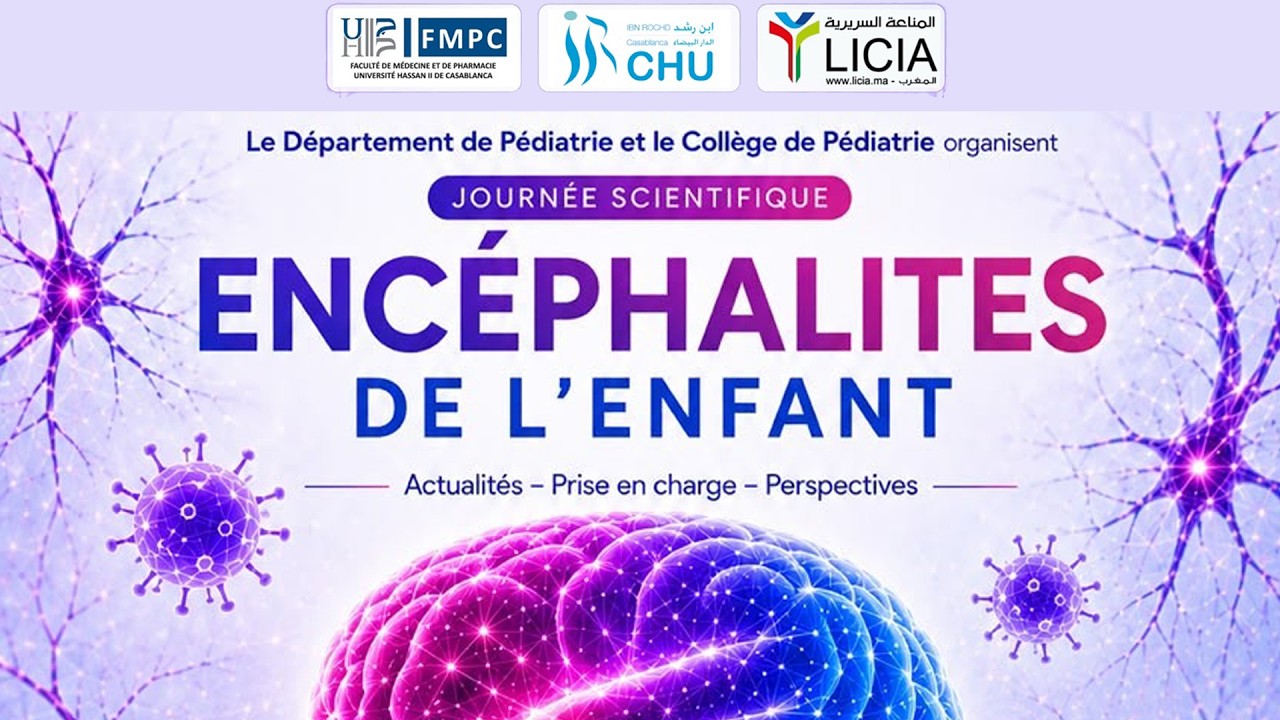
Encéphalites auto immunes Pr CHAHID Imane
Keywords
Summary
268 words
Critical Evaluation
Value of the Information & Strength of the Argument
The lecture provides high-value information for clinicians, particularly pediatric neurologists and intensivists. It offers practical diagnostic algorithms and treatment protocols based on current evidence and expert experience. The argumentation is solid, supported by clinical cases and references to established criteria (e.g., Graus 2013). The speaker emphasizes the importance of early recognition and treatment, which is crucial for improving outcomes. The discussion of specific antibodies and their clinical associations adds depth. However, the presentation is largely anecdotal, and the speaker does not provide systematic evidence or meta-analyses. The argumentation is persuasive but relies on expert opinion rather than rigorous data synthesis.
Scientific Rigor, Source Quality, Title Accuracy
The scientific rigor is moderate to high. The speaker demonstrates deep knowledge of the subject and references key historical milestones and diagnostic criteria. However, specific sources are not cited in the lecture, and the description provides no links. The title accurately reflects the content. The lecture is well-structured, moving from general concepts to specific cases and treatment. The speaker acknowledges limitations, such as the cost of antibody testing and the need for further research. Overall, the content aligns with current medical literature, but the lack of formal citations reduces its verifiability.
206 words
Title / Content Match
The title accurately reflects the content, which is a comprehensive lecture on autoimmune encephalitis.
Quality & Reliability
8/10
The presentation is given by a medical professor (Pr CHAHID Imane) with clear expertise in pediatric neurology. It covers a specialized topic (autoimmune encephalitis) with detailed clinical cases, diagnostic criteria, and treatment protocols. The information is consistent with current medical knowledge, though it is an expert opinion rather than a systematic review. The speaker references established criteria (e.g., Graus 2013) and mentions specific antibodies and syndromes. Some limitations include lack of formal citations and reliance on personal experience.
Key Moments
Markers derived by PSI from the transcript: the creator did not define chapters.
- Introduction to autoimmune encephalitis, emphasizing its frequency and the film 'Brain on Fire'.
- Historical background: first cases in 1968, discovery of anti-NMDA antibodies in 2007, and expansion in 2010.
- Incidence and epidemiology: 0.8-1.54 per 100,000, anti-NMDA most common in children.
- Types of antigens: surface vs intracellular, and their implications for treatment response.
- Clinical case of Sarah: presentation with seizures, altered consciousness, and movement disorders.
- Clinical case of Mohammed: similar presentation, EEG findings, and diagnostic challenges.
- Diagnostic criteria (Graus 2013) and the importance of clinical features.
- Treatment strategies: early immunotherapy, escalation to second-line agents, and ICU management.
- Prognosis and key messages: early treatment improves outcomes, search for tumors, and consider AE in subacute presentations.
Contribution & Novelties
The lecture provides a comprehensive clinical overview of autoimmune encephalitis, with a focus on pediatric cases. It offers practical insights into diagnostic challenges and treatment protocols, emphasizing the importance of early recognition. The speaker shares personal experience and highlights regional considerations, such as consanguinity as a prognostic factor. The discussion of specific syndromes like MOG antibody disease and FIRES adds depth. The lecture reinforces the need for a high index of suspicion and empirical treatment.
Pour aller plus loin :
- Anti-NMDA receptor encephalitis — Overview of the most common autoimmune encephalitis.
- MOG antibody disease — Detailed information on MOG-IgG associated disorders.
- Graus criteria for autoimmune encephalitis — Original paper by Graus et al. (2016) on diagnostic criteria.
- Brain on Fire (film) — Film based on Susannah Cahalan’s memoir, illustrating the diagnostic journey.
132 words
Radar Profile
The radar profile shows high scores in quantity and quality of information, reflecting the comprehensive coverage and expert knowledge. The technical level is also high, indicating advanced medical content. The overall reliability is strong, though the lack of formal citations slightly reduces the score. The profile suggests a lecture that is both informative and trustworthy for a specialized audience.