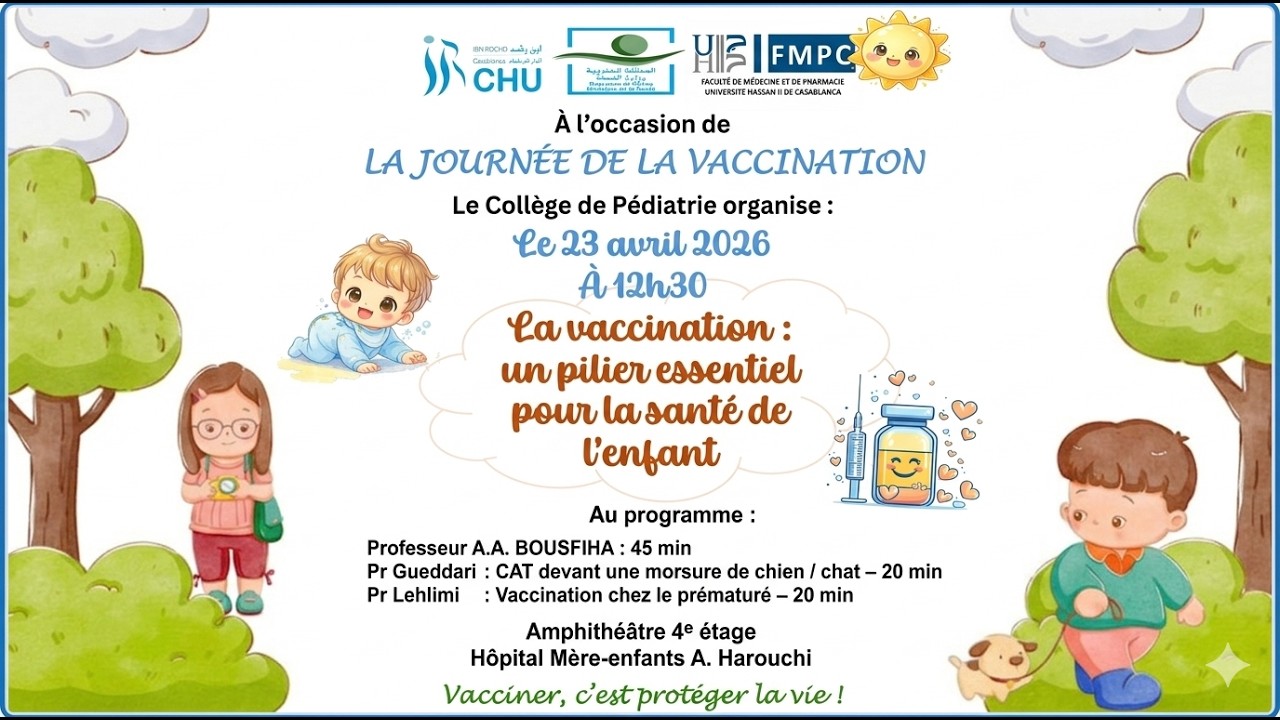
LA JOURNÉE DE LA VACCINATION
Keywords
Summary
223 words
Critical Evaluation
Value of the Information & Strength of the Argument
The video provides valuable insights into the Moroccan national immunization program, including the rationale behind the vaccination schedule and the scientific basis for vaccine timing and combinations. The speakers are experienced pediatricians and experts in the field, lending credibility to the information. The argumentation is generally logical and evidence-based, with references to international guidelines and historical examples of vaccine controversies. However, some claims are made without detailed citations, and the presentation style is conversational, which may reduce the perceived rigor. The discussion of vaccine hesitancy is particularly valuable, as it addresses common misconceptions and provides counterarguments based on scientific evidence.
Scientific Rigor, Source Quality, Title Accuracy
The scientific rigor is moderate to high. The speakers reference the Moroccan national immunization program, WHO recommendations, and historical vaccine controversies, but they do not provide formal citations or references. The quality of sources is generally good, as the speakers are experts and the information aligns with established medical knowledge. The title accurately reflects the content, which is a recording of a vaccination awareness day. The video does not include any advertising or sponsorship segments. The content is presented in a professional setting, and the speakers are credible. However, the lack of formal citations and the reliance on oral presentation may limit the overall rigor.
220 words
Title / Content Match
The title accurately reflects the content, which is a recording of a vaccination awareness day organized by the College of Pediatrics, featuring expert presentations on vaccination schedules and practical issues.
Quality & Reliability
7/10
Content is delivered by recognized experts in pediatrics and vaccination, with references to national programs and international guidelines. However, the presentation is largely oral, with limited visual aids and no formal citations, and some statements are made without detailed evidence.
Key Moments
Markers derived by PSI from the transcript: the creator did not define chapters.
- Opening remarks by the moderator, emphasizing the importance of vaccination and the role of pediatricians.
- Professor Bousfiha begins his presentation on the essentials of vaccination, discussing the goals of the talk and the national program.
- Discussion on the best gifts for new parents: vaccination against hepatitis B and pertussis.
- Clinical case presentation: a 6-year-old child with syncope after vaccination, differentiating syncope from anaphylaxis.
- Explanation of the difference between adverse events and side effects, and the importance of vaccination for herd immunity.
- Discussion on vaccine hesitancy, including historical controversies (hepatitis B, MMR) and the role of misinformation.
- Overview of the Moroccan national immunization program, including the committee structure and achievements.
- Detailed explanation of the immunization schedule, starting with hepatitis B, BCG, and polio vaccines.
- Discussion on the pentavalent vaccine, its composition, and the rationale for the timing of doses.
- Explanation of the pneumococcal vaccine, including the change to a 13-valent vaccine and the coadministration issue.
Cited Sources
- Moroccan National Immunization Program — Referenced as the basis for the vaccination schedule and achievements.
- WHO recommendations on immunization — Mentioned in the context of the national technical committee and global strategies.
- Wakefield study on MMR and autism — Cited as an example of fraudulent research that fueled vaccine hesitancy.
Concurring Sources
- WHO Immunization Data — Provides global immunization coverage data and trends, consistent with the video's claims about vaccine impact.
- Morocco Ministry of Health — Official source for national health programs, including immunization.
Dissenting Sources
- Vaccine safety concerns — Some viewers may have concerns about vaccine safety, but the video addresses these by citing scientific evidence and debunking myths.
Contribution & Novelties
This video provides a comprehensive overview of the Moroccan national immunization program, including the latest updates and the scientific rationale behind the vaccination schedule. It offers valuable insights for pediatricians and healthcare professionals, particularly in Morocco, on how to address vaccine hesitancy and implement the national program effectively. The discussion on the coadministration of vaccines and the specific challenges in the Moroccan context is particularly useful.
Pour aller plus loin :
- Vaccination schedule in Morocco — Official WHO country page for Morocco, which may include immunization data.
- Vaccine hesitancy — Overview of vaccine hesitancy, its causes, and consequences.
- Hepatitis B vaccine — Detailed information on the hepatitis B vaccine, including its efficacy and safety.
- MMR vaccine and autism controversy — Historical account of the Wakefield controversy and its impact.
- Pneumococcal conjugate vaccine — Information on PCV13 and its use in immunization programs.
142 words
Radar Profile
The radar profile shows high scores in quantity and quality of information, with a strong technical level, indicating a detailed and expert presentation. The reliability score is slightly lower, reflecting the lack of formal citations and the conversational style, but overall the content is credible and well-structured.
💬 Sur les 0 commentaires analysés, aucune tendance n'a pu être dégagée.