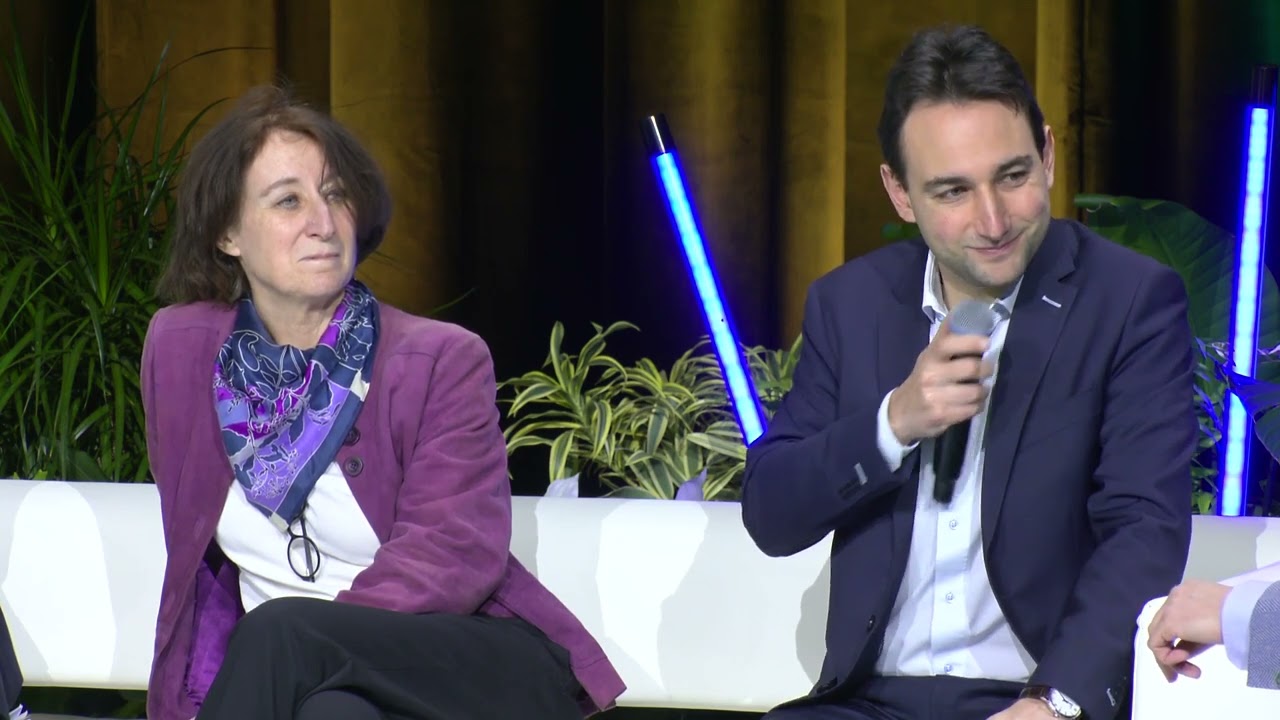
ENR : UNE STRATÉGIE TERRITORIALE
Keywords
Summary
144 words
Critical Evaluation
Value of the Information & Strength of the Argument
The discussion provides valuable insights into the practical implementation of renewable energy at the territorial level. The panelists argue convincingly that localizing energy production can improve public acceptance and economic resilience. They emphasize the need to move beyond abstract environmental arguments and instead demonstrate direct benefits to consumers and communities. The argumentation is solid, grounded in real-world examples such as SNCF’s renewable projects and Arkolia’s solar rooftops for farmers. However, some claims lack empirical data, and the discussion occasionally veers into opinion rather than evidence-based analysis.
Scientific Rigor, Source Quality, Title Accuracy
The scientific rigor is moderate; the panelists are experts, but they do not cite specific studies or reports. The sources are primarily their professional experiences and general knowledge. The title accurately reflects the content, focusing on renewable energy as a territorial strategy. The discussion is well-structured but lacks formal citations, which limits its scientific robustness.
156 words
Title / Content Match
The title accurately reflects the content, which focuses on renewable energy as a territorial strategy.
Quality & Reliability
7/10
The discussion features experts from consulting, industry, government, and politics, providing a well-rounded view. However, it is a roundtable debate without formal citations or data verification, and some claims are based on personal experience rather than peer-reviewed sources.
Key Moments
Markers derived by PSI from the transcript: the creator did not define chapters.
- Introduction of panelists and topic.
- Nicolas Goldberg discusses the need to relocalize energy systems and the role of renewables.
- Ambroise Poulet-Tamasicchio explains Arkolia's solar rooftop business model for farmers.
- Emmanuel Mroz presents SNCF's renewable energy strategy and land use.
- Discussion on the importance of PPAs and price stability for industrial consumers.
- Debate on the coexistence of nuclear and renewable energy in France's future mix.
- Closing remarks on the need for local acceptance and tangible benefits.
Cited Sources
- POwR Earth Summit — The event where this roundtable took place.
Concurring Sources
- ADEME — French agency for ecological transition, which supports renewable energy projects.
Dissenting Sources
- Nuclear power in France — Some argue that nuclear energy alone can meet decarbonization goals, conflicting with the panel's emphasis on renewables.
Contribution & Novelties
The video provides a unique perspective on the territorial strategy of renewable energy, emphasizing the importance of local acceptance and direct benefits. It highlights innovative business models like Arkolia’s solar rooftops and SNCF’s use of its landholdings. The discussion offers practical insights for policymakers and industry stakeholders.
Pour aller plus loin :
- Power Purchase Agreement (PPA) — A key concept discussed for stabilizing energy prices.
- Energy transition in France — Context on France’s energy policies and challenges.
- Solar power in France — Overview of solar energy development in France.
89 words
Radar Profile
The radar profile shows high scores in information quantity and quality, with moderate technical level and reliability. This indicates a well-rounded discussion that is informative but not highly technical, suitable for a general audience interested in energy policy.
💬 No comments were provided for analysis.