Example: Classes in the Infant Kinematic Data
Keywords
Summary
151 words
Critical Evaluation
Value of the Information & Strength of the Argument
The video provides a clear, step-by-step demonstration of data preprocessing for a real-world classification problem. The value lies in its practical approach: it shows how to handle categorical variables, compute derivatives, and create meaningful labels for different prediction tasks. The argumentation is solid, as the presenter explains the rationale behind each step, such as why the action variable is categorical despite integer encoding, and how to define onset labels using vectorized operations. The demonstration of error handling (e.g., fixing length mismatches) adds authenticity. However, the video does not discuss alternative methods or compare different approaches, limiting its depth. The focus is on implementation rather than theoretical justification, which is appropriate for a tutorial but may not satisfy viewers seeking deeper insights.
Scientific Rigor, Source Quality, Title Accuracy
The video is scientifically rigorous in its technical execution: the code is correct, and the explanations are accurate. However, it does not cite any external sources, references, or related work, which reduces its credibility as a standalone scientific resource. The title accurately reflects the content, as the video indeed focuses on preparing infant kinematic data for classification. The description provides minimal context, but the video itself is self-contained. The lack of citations is a notable weakness, but the clarity and correctness of the tutorial partially compensate. Overall, the scientific rigor is moderate, with a strong emphasis on practical implementation over theoretical grounding.
238 words
Title / Content Match
The title accurately reflects the content, which focuses on preparing infant kinematic data for classification.
Quality & Reliability
7/10
The video is a tutorial that demonstrates data preprocessing and label creation for a machine learning classification task. It is clear and methodical, but lacks citations and external references. The technical content is accurate and well-explained, but the absence of sources and the narrow scope limit its scientific depth.
Key Moments
Markers derived by PSI from the transcript: the creator did not define chapters.
- Introduction to the infant kinematic dataset and the assistance action variable.
- Explanation of the assistance action categories (0-8) and their meanings.
- Overview of preprocessing steps: computing velocities and dropping NaN values.
- Definition of pipeline classes: DataFrameSelector, ComputeDerivative, and DataSampleDropper.
- Loading the dataset and inspecting its columns.
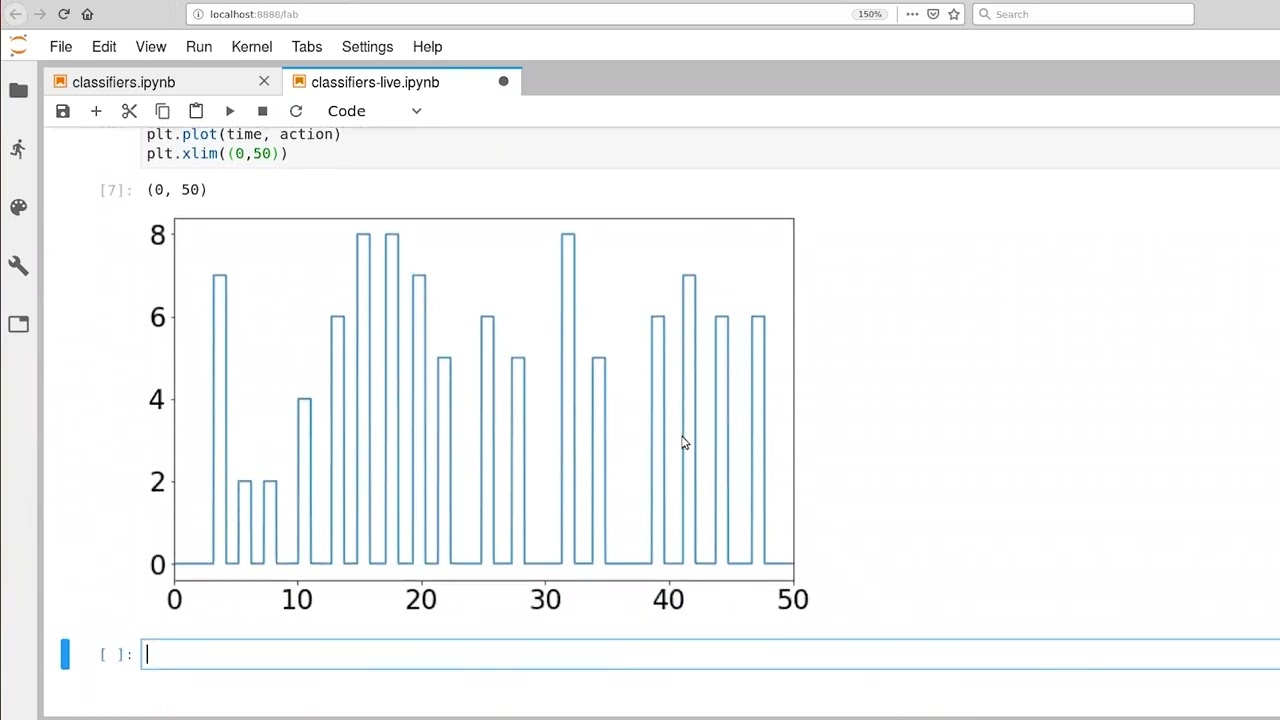
- Visualization of the assistance action over time.
- Creating pipelines for feature selection and label extraction.
- Generating class labels for assistance onset, power steering, and gesture.
- Fixing length mismatch in labels and plotting the results.
Cited Sources
- No external sources cited in the video or description. — The video does not mention any external references.
Contribution & Novelties
The video provides a practical, hands-on demonstration of preprocessing infant kinematic data for classification, which is a niche application. Its originality lies in the specific dataset and the creation of onset labels for different assistance types. The tutorial is clear and reproducible, making it a useful resource for practitioners. However, it does not introduce novel methods or theoretical contributions.
Pour aller plus loin :
- scikit-learn Pipelines — Official documentation on pipelines, which are central to the video’s approach.
- Pandas dropna — Documentation for the dropna method used to handle missing values.
- NumPy boolean indexing — Explanation of boolean indexing used for label creation.
103 words
Radar Profile
The radar profile shows balanced scores across all dimensions, with a slight emphasis on technical level and information quality. This indicates a well-rounded tutorial that is both informative and technically sound, though not exceptional in any single area.